


Writings
The work of Richard C. Ledes

I Dug Digger
The film Digger, by Director Alejandro G. Iñárritu, is graveyard humor that uses the alienation effect of foregrounding rather than hiding its theatricality. In this it is reminiscent of To Be Or Not To Be (1942) by Ernst Lubitsch. At the time it first appeared, Lubitsch’s film—now considered by many his masterpiece—was largely panned and considered in poor taste—particularly its reference to a concentration camp. Jack Benny, who stars in it, remained deeply proud of it despite the harsh criticisms it received—including from his father, a Jewish immigrant who walked out from the premiere when he saw his son wearing in the film a Nazi uniform. Like Lubitsch’s film Iñárritu’s film masterfully has divided audiences, which isn’t great for the bottom line but I think will make it endure as a film to see again in the future. The director takes on the developing climate disaster in which we live while the oil companies manipulate governments, democratic and otherwise, and we remain fascinated with the spectacle of the disaster in which we live. The spectacle is usually without the discomforting level of alienation that Iñárritu makes part of his storytelling. It begs the question what we, the audience, will do. This has been a question that theater and film have sometimes dared solicited from their audiences, from Greek tragedy in its relation to the Athenian demos to African cinema, whose works, as arguably its most renowned early practitioner Ousmane Sembene argued, should be valued according to how vigorous a debate they provoke among the members of their audiences. There is a clear reference to Brecht in the modern evolution of this approach. The film’s mocking celebration of the glorious messenger we imagine will come riding in and its disgust with our complacency are a provocation for taking multiple actions to resist, to—in Walter Benjamin’s inversion of the image of the train of history—to try anything in order to throw the emergency brake: “Marx says that revolutions are the locomotive of world history. But perhaps it is quite otherwise. Perhaps revolutions are an attempt by the passengers on this train—namely, the human race—to activate the emergency brake.”

A New Revision of the New
As a small boy staying up late in the 1960s, I saw, on my family’s black and white tv with the antennae known colloquially as “rabbit ears,” a skit about a man flying economy class on a plane. It was on the Ed Sullivan Show, which was, for me at 8, very grown-up, very sophisticated. The Ed Sullivan Show was a variety show that consisted of a range of skits, from vaudeville to stand-up comedians that were at the time iconic for popular culture, like Jack Benny and Milton Berle. Later on, it would be on the Ed Sullivan Show that I would experience for the first time the Beatles. This particular evening, at the end of the skit about a man flying economy on a plane, the man hears the captain’s voice announce, “Economy passengers, I want to thank you for riding with us today... First class passengers, we will be landing in five minutes.”
Of all the skits I ever saw on the Ed Sullivan Show, the last joke of this one is all I remember. I was hardly a “red diaper baby”——my parents had met while my mother was working for the Republican Party and my father had been a short time before honorably discharged from the Marines——and yet the only joke from the Ed Sullivan Show that I remember from this time of innocence is about class.
I returned at the start of this summer from Europe——before it burst into flames from the climate change that billionaires and oil companies spend their money to convince us is a hoax. I had been there for many months, working on various film projects. Upon my return, I learned that because of identity theft my Medicare Plan Part B had been cancelled. I went to the local office of the Social Security Administration. I once had to report a lost U.S. passport in Krakow when Poland was a Soviet-bloc communist country. It was good training for the U.S. under Trump today. It may seem paradoxical to compare the U.S. under Trump with Poland under Soviet-style communism but in both cases when visiting state agencies I have gotten the distinct sense of an empire crumbling. In both systems at both times employees work in systems ransacked by the powerful, in the offices of which photos of the biggest fools represent power.
The U.S. today seems to me like a strange place where artificial intelligence installed by a dysfunctional airline could decide mid-flight that only first class passengers actually get to land. In fact, isn’t that what the U.S. has become, or what its ruling class aspires to it becoming?
In May, I was at Cannes with Super Athens, a film I decided to make in solidarity with Palestine on a shoestring budget after Netanyahu said in the future Israel would be Super Sparta. Super Athens is what I would call a drone film. The art critic Claire Bishop in her book Disordered Attention writes about the trope in Modernism of displacing the terminology of evolving tactics of warfare into the realm of the arts, beginning with the Italian Futurists. My use of drones to describe a kind of contemporary filmmaking is partially inspired by this tradition. It is also the case that the use of drones is arguably as ubiquitous in contemporary filmmaking as in contemporary warfare. This intersection of war and cinema makes me think back to 1986 at the brasserie La Coupole in Paris interviewing Paul Virilio, author of War and Cinema, about the crash of the Space Shuttle Challenger——the actor Jean-Pierre Léaud walking up to our table, looking me in the eyes, approaching from behind Virilio, and then bending towards me over Virilio’s shoulder and saying to me very sincerely, “Il est trés intelligent,” and then disappearing. The most salient point Virilio made speaking to me was that the last communication from the ship sustained a fiction of human control when there wasn’t any.
War and cinema are conjoined again tightly in the drone. Drones are the expression of——to use a neologism of the French psychoanalyst Jacques Lacan——the hainamoration——the relation of hate to love such as we see emblazoned on the knuckles of Robert Mitchum’s character in Night of the Hunter (1955)——contained in today’s ubiquitous scopophilia. We love to look, we are constantly distracted by looking, and we destroy by looking, including by looking but not witnessing what we see. Most of all, I coin what I call drone films because of their ideological maneuverability. Short films on the internet and even feature films with ultra-low budgets are like drones that spool out a hair-thin fiber-optic, impervious to restraints works with larger budgets encounter. In addition to Super Athens being a drone film, it is an essay film. The editing process has been long, frustrating at times, but I am satisfied that now it is able to transmit something significant at last.
The reputation of Cannes as a festival is financed——as is the dominant global film industry——by the construction of films the size of aircraft carriers. Those of us who care to look closer, however, know this is far from the only kinds of films that this renowned festival of France celebrates——including the work of Hong Sang-soo that inspired my film Ikonophile Z——of which you can now purchase a Blu-ray. As I have written before, Cannes still retains links to its time when it stood as the pre-eminent beacon in cinema for anti-fascism, when Naziism was on the rise and the Venice Film Festival was identified with Mussolini and Italian fascism. My friend the historian Tangui Perron in an interview in the periodical Jacobin entitled Class War on The Red Carpet recently wrote about these often-overlooked roots of the Cannes Film Festival.
Two films in the States that have been unexpected hits this summer started as what could be called drone films. Of the two of them, I have been particularly impressed by Backrooms by Kane Parsons. The main press keeps focusing on the young age of the filmmakers of these two films. Youth with no qualifiers is one of the oldest tropes that frequently serves to hide something important in plain sight. The importance of Backrooms goes far beyond this cliché.
The ideological maneuverability of drone films is key because we are living through a time such as Gramsci described being the 1930s in his Prison Notebooks. At that time, imprisoned by Mussolini, he wrote: “The crisis consists precisely in the fact that the old is dying and the new cannot be born; in this interregnum a great variety of morbid symptoms appear.”
Yes, Backrooms, which is set mostly in a furniture store without customers in a deserted shopping mall in the U.S. in the 1990s, is analogously about the arrival of the internet and foreshadowing our current experience of the arrival of AI but it is most importantly about the interregnum that we have entered and the variety of morbid symptoms that define it.
Among the endless detritus that plays a role in Backrooms is a t-shirt found in a laundry room and worn by one character upon which is emblazoned the words “Stop Apartheid.” The shirt reads like a golden oldie but it takes on new meaning——it screams——after the clampdown on free speech on American campuses about Israel’s blatant infliction of genocide on the Palestinians of Gaza——the emperor has no clothes——they are all on the floor of a room to which he finds it impossible to return and so stands utterly naked.
In the 1970s I was one of the students at a small private college occupying the administration building in order to get the trustees to divest from companies doing business in South Africa. Flash forward over forty years to a little over a year ago, I was at a dinner given by the parents of one of the students graduating beside my daughter from another small private college. The bear in the room that evening appeared by the end of the meal: most of our children and many of their classmates were facing various kinds of disciplinary action——loss of employment, banishment from attending classes on one of the campuses of the affiliated colleges, loss of financial aid and deportation——as punishment for participation in peaceful protests that dared to call what Israel is carrying out against Gaza——including with the latest weapons of the world’s remaining super power——a genocide. The U.S. Congress wanted access to all communications about these horrible naive young people who didn’t understand that what was happening was just business as usual. Now the violence is reaching a new all-time high in the West Bank as Israeli Settlers carry out daily pogroms on Palestinians, trying to expand their ethnic cleansing. The suppression of free speech by the power of money wielded by both the U.S. government and private American benefactors has effectively gagged free speech on campuses.
The immediate connection that evening at the dinner to apartheid in South Africa——the one unmistakably referenced on a t-shirt in Backrooms——is that many of the parents——myself included——were of the generation whose education had included refusing to accept apartheid in South Africa as business as usual. I can’t speak for all of the other parents but many of us transmitted to our children what we thought we had learned, that exercising our right to speak out was an important part of our education——of our role in society as young people lucky enough to get an extraordinary education. I remember from among my student activities in particular the pride I sensed in our silence the time we formed two rows between which the trustees walked as they exited a meeting. For a week we occupied the administration building while allowing it to continue to conduct business. America’s universities and colleges sometimes were punitive but nevertheless generally tolerated our acts of free speech——often carried out with the support of faculty. But now, in the wake of the targeted killing of journalists and medical workers——and small children by snipers——including with the use of guns mounted on quad copter drones (see this June 2026 UN report) what we have experienced is a clampdown and an aggressive silencing of the free speech of the young people we have raised far surpassing what we could have imagined. As we shared the desserts downtown in Manhattan at the home of our hosts, the lessons we had transmitted to our own children turned out to have been naive and this has left me feeling bitter and outraged but not alone.
The t-shirt in Backrooms points to the surrealism of historical forgetting we are asked to accept today. A film like Backrooms——which, on the face of it, isn’t a political film——can still stylistically show a maneuverability that raises it heads and shoulders above the most recent work of a filmmaker who has many times in the past made films that remain memorable to me. I am speaking about Disclosure Day by Stephen Spielberg. At the end of that overhyped disaster, when they show the whole world glued to screens watching the same images exclusively on major networks, I thought this is really the last gasp of a dying ideology. I find myself trying to remember the words to Gil Scott-Heron’s “The Revolution Will Not Be Televised.”
There is a small gallery in Athens called the Red Carpet Project Space. It’s run by Kimona Venieri. The art it exhibits by various artists shares an irreverence to unspoken cultural standards that for the most part I find much more relevant than the red carpet of major festivals today that exclude talking about Gaza and the ongoing genocide. The use of a red carpet at festivals goes back to the Oscars in 1961 and from the start was given a patina of antique value by association with the red carpet that Clytemnestra lays out for her husband Agamemnon in the Greek tragedy named after Agamemnon by Aeschylus. It expressly therefore references spilled blood. The small Athenian gallery’s evocation of this red carpet is for me much more engaging and timely than its reflexive use has become by major festivals.
The Agamemnon is the first play of the only extant trilogy we have of Greek tragedy, The Oresteia. This trilogy is all about the tenuous establishment of justice in the patriarchy of Athens. Agamemnon returns with Cassandra. She is a Trojan priestess to Apollo that Agamemnon has taken as a prize following the pillaging of Troy. The departure of the Greek armada against Troy had been initially delayed until Agamemnon carries out the sacrifice of Iphigenia, his daughter whose mother is Clytemnestra. Aeschylus in his use of the Greek language emphasizes a link between the complexity of the stitching of the net in which Clytemnestra traps her husband after he steps off the red carpet and her own complexity of thinking. Aeschylus implies figuratively a connection between the thinking of women and the structure of a net. Our own word “complex” has folded into it this same association through its etymological link to a fold——still present in the French word from the same Latin root, un pli, a fold. This complexity is not biological but manifested in the context of a dominant order to which it represents a resistance, as Mari Ruti wrote about in her book Penis Envy and Other Bad Feelings (2018).
The works exhibited in the Red Carpet Project Space in Athens generate a complex reflection on the Scotch tape——the kind that doesn’t become invisible——holding together the current world order. We live in a time that requires complexity of thinking even as complexity is suppressed.
While the collecting of data requires that our differences be reduced to categories of the same, for which the Latin root is idem. Our English word “identity” is derived from this Latin root. It occurs to me——as I try to deal with the fallout of identity theft—that the concept of identity itself can be used——and frequently is——to steal from us the complexity and contingencies of our relationships of solidarity.
I once was in Beirut for the wedding of the son of an old Iranian friend. The bride was Palestinian. I was having a marvelous time in Beirut. I figured I would be lost during the actual wedding. It turned out the bride was Greek Orthodox——a community with which I have been intimately involved throughout my life, even though I am not myself Greek Orthodox. I had the feeling that day that no other member of the groom’s family felt as home as I did with the particularities of the ceremony. Last week I returned to thinking about Beirut when I saw Do You Love Me? (2026) by Lana Daher, at Metrograph Cinema on Ludlow Street. Do You Love Me is a marvelous complex but lucid film that is the culmination of years of archival work by Daher. It is constructed from clips from the work of many other filmmakers from Beirut and beautifully joined with a soundtrack of music from Beirut that reflects the filmmaker’s experience working as a DJ. The films by other filmmakers from which she drew her clips and then with her editor and co-writer Qutaiba Barhamji wove them together is carefully organized and cataloged on a website devoted to the film Do You Love Me. The design of the homepage reminds me of Early American patchwork quilts with which it shares more than a superficial similarity. This crafted conjunction of a film to a website is evocative of the complexity being generated between the arts and their unfolding relation to their evolving audiences. This transgressing of boundaries, this celebration of the complexity of the patchwork which is Beirut and which is the city in which I write this, New York City, and the current innovation of the arts in their relation to their audiences remain not only a hopeful sign but a force for change, so that a new revision of the new of which Gramsci spoke can be born.

Resisting Disavowal
Cannes 2026: I find the market that takes place at the same time as the festival to be, on the one hand, a collection of amicable meetings between potential collaborators and colleagues and, on the other hand, to be haunted — like in the kinds of films Jacques Tourneur made in Hollywood in the 50s — by the feeling that we are like cattle in a slaughterhouse. I have myself mostly been immersed in the first impression but occasionally sense the second poking through.
Thanks to my friend Tangui Perron, author and retired film archivist of the CGT (Conféderation Générale du Travail), I was able to join a packed audience watching a short amateur film made of the first Cannes film festival following WWII. In the images of this short film, edited in camera, there was all the frivolity that one expects from Cannes: on a pleasure boat, as champagne flows, young men and women joyfully exhibiting their bodies through revealing clothing, for each other and for the cameras. At the same time, there was the proximity of the unfathomable death and destruction of the war that had just ended. The silent film was simultaneously narrated by Comrade Tangui. He explained, at one unexpectedly solemn moment in the otherwise bubbling excitement on screen, that what we were watching was a minute of silence being observed for those who had died in the war that had recently ended. The final shots of the film captured the effects of an unexpectedly violent storm that had just passed through the Mediterranean seaside town of Cannes. These images showed floating in the water the remnants of exterior sets that had been built to mask the incompleteness of the renovations necessary to resurrect the festival. Pieces of wood floated in the water and I remembered going to the beaches of Normandy in 2014 and filming the waters where the Allies had landed and died in ways that still speak of the chaos that had accompanied their best efforts and sacrifices.
My purpose in Normandy filming the beaches with a local guide had been to make a short film for an American audience to underline that the return of fascism in Europe — starting in Greece — was not to be taken lightly.
French Philosopher Barbara Stiegler and historian Christophe Pébarthe write in their book Démocratie! Manifeste (Democracy! Manifesto, 2023) that ancient Athenian democracy cannot be seen for us today as a model — with its exclusion of women and the use of slavery — but as a starting point for the emergence, elaboration and articulation of the concept of collective power by a people sharing equal rights and assuming control over their own lives. For these two thinkers, both of whom have been recently active in the French political scene and still are, this starting point, this “seed,” ce germe, remains urgently relevant at our current moment, when representative democracy — a concept whose legitimacy even to call itself democracy they question — is in crisis.
A key value of their work, from my perspective, is to focus on the vital role for Athenian democracy of the annual performance of tragedies produced each year by a hybrid system of government and private financing. Similar to the role of tragedy for the demos of Athens — at least to my way of thinking — is the role of cinema for Africa, as the great African filmmaker Ousmane Sembene (1937-2007) put forward and implemented around films as what he called education du soir. Although he admitted a preference for novels and writing, Sembene wrote that he had determined that cinema had a far wider reach into the working class and broader strata of African society than the novel. When I think of Greek culture from a longer historical perspective, the arguments of Sembene about cinema’s ability to reach an audience with significant levels of analphabetism remind me of the arguments made in favor of the Icons by the Iconophiles in the 15th century: precisely, that Icons could spread the gospels to the illiterate. Sembene labored to set up inside and outside of multiple metropolitan centers of Africa places in the evening to view and discuss films. The contemporary African artist Christian Nyampeta has translated Sembene’s practice into a less centralized practice. The work of Nyampeta thrives on what the art critic and writer Claire Bishop calls disordered attention in her eponymous book (2024).
I feel a solidarity and affinity with the approach of both Sembene and Nyampeta. As a boy, I remember Qgo (his name was Hugo but I called him Qgo because of a speech impediment I had). He was a Bouvier, a large sheep dog covered in long always-uncombed hair. My father, who by then had volunteered to serve in the U.S. Marines both during WWII and the Korean Conflict, was trying to make a living as a book publisher. A writer had abandoned the dog, leaving it, after abusing the animal, to starve, tied to a bed, while the writer had departed for overseas. The writer’s agent offered my father this dog who became one of the most important companions of my childhood. When Qgo and I would return, smiling broadly, from exploring the woods and running through fields of long grass, he would always be coated in burrs, seed pods that disseminate themselves through being carried away. This was the idea for me of how people could appreciate and take something away from Athens Sanctuary (2024), a video installation combining dance, techno music and Greek tragedies that we filmed in a marble quarry just outside Athens. My goal with this kind of work in media arts is akin to Nyampeta’s translation of Sembene’s project of education du soir. I want visitors to carry something away, un germe.
At Cannes this year, as I travelled from one stand to another, from one party to another, from one pavilion to another, meeting people and carrying on conversations, I imagine myself and my interlocutors — in a time when most of us at the Cannes film festival carry video cameras built into our portable phones — were potentially part of the extended renaissance of Sembene’s idea, disseminated through new kinds of translation enabled by new forms of technology.
On the other hand, there is the use of AI by monstrously large and narrowly controlled concentrations of capital to replace labor in making films. Godard once said, if the companies that control Hollywood could make more money producing only one film a year then they would only make one film. Although Hollywood’s presence this year at Cannes was significantly diminished, this logic has continued to expand. I associate this with the omnipresence of what I started by describing as a slaughterhouse — the French word forces itself on me — un abattoir.
At the Palestine Pavilion in Cannes the name of a group of French film professionals advocating on behalf of Palestine is Palestine sauvera le cinéma. Translated into English, this is “Palestine will save cinema.” That feeling of being in a slaughterhouse clearly brings to mind Israel’s destruction of Gaza using methods that it has now extended to Lebanon. It also carries associations with the effect of AI on the future of employment in the film industry.
Dan Georgakas, (1938-2021) was a Greek American poet, editor of the magazine Cineaste and anarchist historian from Detroit: He was my friend and a mentor. Our discussions and his support for my work remain immensely important to me. He was perhaps best known as the co-author of Detroit: I Do Mind Dying (1975), a history of the League of Revolutionary Black Workers, to many of whose leaders he had become a friend and ally as a student at Wayne State University in the late 60s and early 70s. In his book, Georgakas cites the expression coined by members of the League: ni***rmation. This term was meant to refer to what was called by management in the auto industry “automation” and that, it was said, would speed up and lower the labor costs of the manufacture of automobiles. This was being trumpeted just as Black workers were gaining traction in the unions. The League’s use of the term occurs to me now as I think of the role of AI in the film industry. Its expansion coincides with the rise of ethnonationalisms in many parts of the world but most pertinently in the U.S., where laws passed to counteract the racism of Jim Crow are being dismantled as the ideology of the U.S. becomes openly modeled by Trump and his allies on The Birth of a Nation (1915) by D.W. Griffith — a film that both notoriously mythologized the origins of the Ku Klux Klan and, hosted by President Woodrow Wilson at a screening in East Room, was the first feature film ever screened at the White House.
What will be the first Christian nationalist remake of The Birth of A Nation to be shown in Trump’s new Ballroom? Perhaps it will show how the risk posed by people of color immigrating has been stopped by Trump’s brand of fascism. The Trump Ballroom has been described as being outfitted like a bunker and having attributes of Ancient Greek architecture. The associations with Hitler’s bunker, I suppose, are purely accidental but they are nevertheless evocative. As I have written elsewhere in connection to my film Foreclosure, The Birth of a Nation contains a representation of the white sheet of the Klan implicitly analogous to the white screen of cinema and advocating that cinema can play a defining role in the construction of an ideology of race.
This is not to blame the technology of AI anymore than to blame cinema itself for how it is used. I think Bernard Stiegler (1952-2020) was making an important point when he borrowed the Greek term pharmakon from the use Socrates makes of it in Plato’s Phaedrus to describe writing. Therein Socrates retorts to the enthusiasm evinced by his young companion for writing by referring to it as a pharmakon, meaning thereby that it can be either a medicine — an aid to memory — or a poison — destroying memory. Stiegler takes pharmakon more widely to apply to the contrasting ways technology can be used. AI can be seen as having this same contradictory set of possibilities. However only a multipolar effort to turn it away from the role of poison that it otherwise will have in the hands of the vanishingly small oligarchy that now determines its use will succeed. For this, both as film viewers and makers, we can take inspiration from Nyampeta’s work, for example from Sometimes It Was Beautiful (2018) and find new ways of translating into contemporary practices Sembene’s education du soir, with its echos of the role of Greek tragedy in regard to the democracy of Athens. More data will not do it. The work of the Slovenian writer and critical theorist Alenka Zupančič has made clear in her book Disavowal (2024) that knowledge in the form of information can be perversely disavowed, acknowledged cynically and used paradoxically as a strategy against doing anything. What is needed is not just the right information but works of art, including cinema, and audiences brought together as they pass through a field of aesthetics and through Leaves of Grass.

Psychology
As someone who has spent years navigating the ecology of interpretation in which the works of Lacan re-engage with his readers, I am wary of what is usually referred to as “psychology.” I feel a tinge of pain every time a young person in response to hearing I have made fiction films with screenplays based on the fictional works of Lacanian psychoanalysts tells me they are taking a course in psychology, thinking this will put them in contact with psychoanalysis. In most cases, nothing could be further from the case. Lacan himself was dismissive of what he saw as the underlying ideology of psychology. He was referring to it as the institutions that have appropriated psychology as a title, frequently reducing the breadth of what one imagines could be covered by such a discipline to its role in the governing ideology of capitalism. In the United States psychologists only became licensed to see patients following WW2. Psychoanalysis in the United States during this same period suffered a similar fate—largely losing the revolutionary qualities that continued to exist in the writings of Freud and among some of those who became psychoanalysts and their patients afterwards. For the most part, after the Holocaust and the Second World War had directly affected so many clinicians who fled from Europe, adaptation became the dominant paradigm in a United States obsessed with the threat of communism. However, exceptions existed then and have continued to exist. A personal memory makes it impossible for me to forget this.
In the second grade I was sent to see a psychologist at the public school I was attending. The private school my younger brother and two younger sisters attended had not accepted me. I don’t know the reason I was not accepted but as a young child, I was told later, I had a pronounced speech impediment. I could not pronounce the letters “R” or “L.” My name was “Wichard Weeds.”
Once a week a person whom I later learned was a psychologist would take me in the morning into a small room adjoining the empty cafeteria and play board games with me. I have no memory of him having ever said I had any kind of problem or that there was anything about me that needed fixing. What I do remember is years later my mother told me that he had told her that if he ever had a son he would want him to be like me. I have never forgotten this.
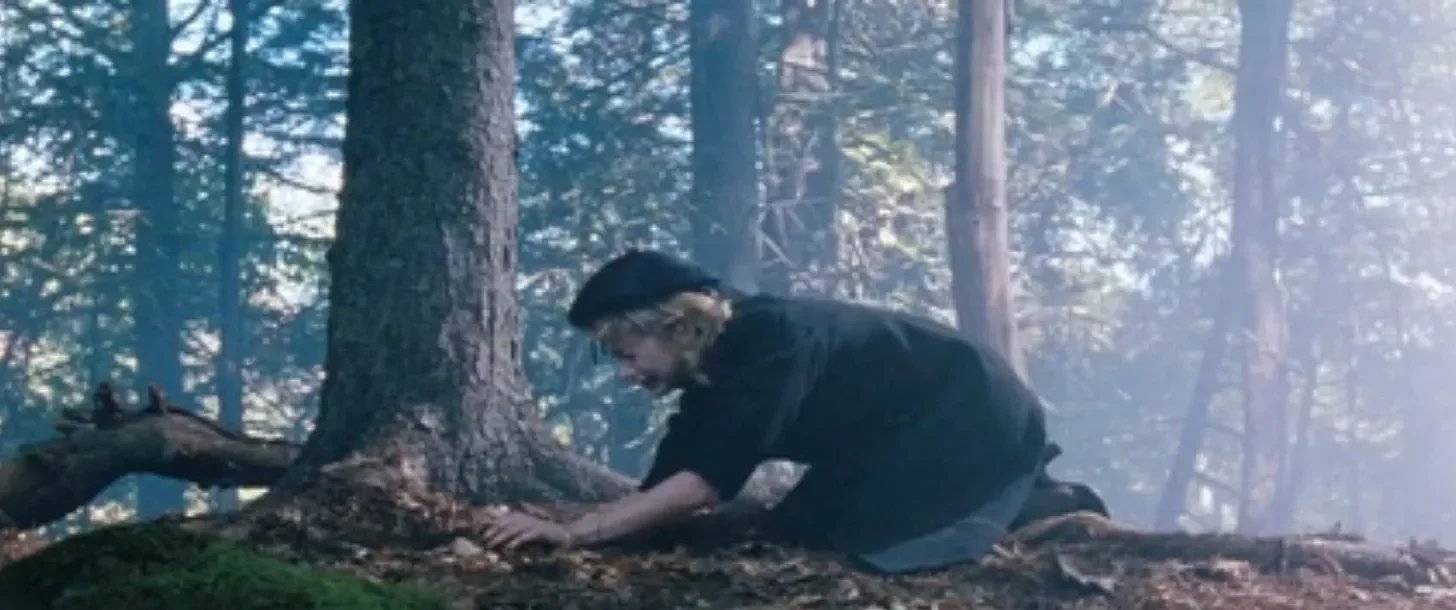
Anna (Michelle Williams) mourning the death of her brother in A Hole In One
As I have recounted elsewhere, my mother’s brother, her only sibling, who had been named Richard after her father, had spent ten years in a Veterans Psychiatric Hospital. Diagnosed with schizophrenia, he had been twice selected for a transorbital lobotomy but the chief psychiatrist on both occasions had ruled against the recommendation. Around the time I was sent to see the psychologist, my uncle died, when—either intentionally or accidentally—he was hit by a train a short distance from the hospital. Now, thinking back, I recall how deeply concerned my mother always was that I might be like her brother. I remember her telling me that I needed to not stand out or I risked being taken away. My being sent to see a psychologist must have intensified her fears. I like to think the psychologist picked up on how deeply concerned she was with what his diagnosis—his judgement—might mean for me. His telling her that if he ever had a son that he hoped he would be like me he must have known would alleviate to some small degree her fears, and for this reason, I imagine, she remembered what he said and later told it to me. He had not offered a diagnosis about me to my mother but had instead spoken about his own desire.

The Greeks of V13
While attending, as a day-student, a private boys’ school in Katonah, New York, at the age of thirteen in 1969, I remember very clearly being shown Night and Fog by Alain Resnais. The Holocaust and the Civil Rights Movement became the foundation in my mind of what formed an ethical citizenship in the United States, with the pursuit of equality of all its people under the law being its guiding principle. It occurs to me now that both of these came with an indelible iconography of what could happen if these struggles were abandoned or replaced with hatred.
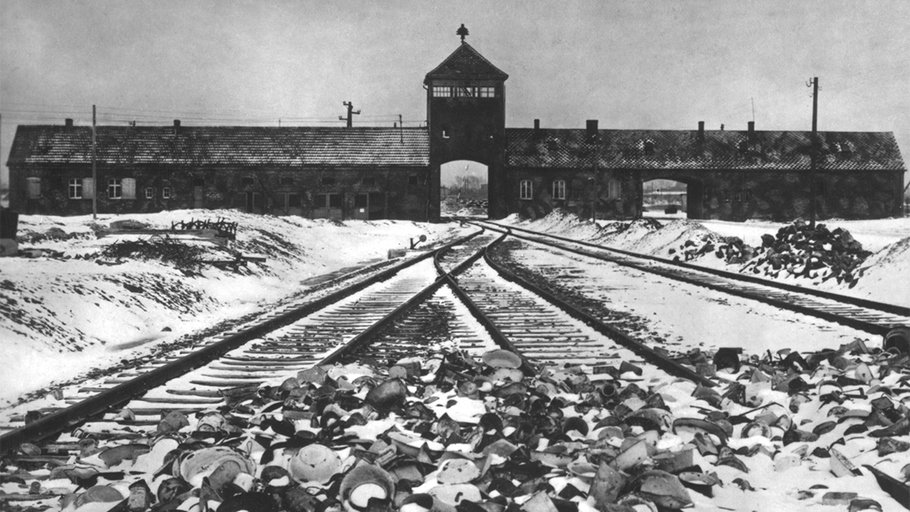
Nuit et Brouillard, Dir. Alain Resnais, 1956
In my late 20s, returning from Europe after around seven years, I felt very lucky when I was given an opportunity to write regularly on video, film and performance art for the magazine Artforum. I had been doing this for over a year when I proposed I write about a curated group of videos playing in the basement of Artists Space. It was a collection of videos made by Palestinians living in Gaza and the West Bank, entitled Uprising: Videotapes on the Palestinian Resistance. It was organized by Elia Suleiman and Dan Walworth. My editor accepted my proposal but when I turned in the review he said it made no sense. I rewrote it. I got the same response. I had absolutely no doubt at that point that I had crossed an invisible line, that I wasn’t supposed to review a collection of videos made by Palestinians. I was completely thunderstruck. I tried another art magazine that was publishing my reviews and received an even more hostile response. I felt that, without making it explicit, they were asking me to be complicit in a racist denial of representation that broke with my primary ethical imperatives but that otherwise I might risk being called an antisemite. I asked a friend whose opinion I respected about what I should do. He said the choice was mine but that if I pursued what might lead to an allegation by me that Artforum was biased against Palestinians, it would likely change my life and necessarily become a major focus of it. I walked away from the fight. I was conflicted about this choice but I didn’t pursue it further. A month later they told me that I was no longer needed to write small reviews in the back of each issue.
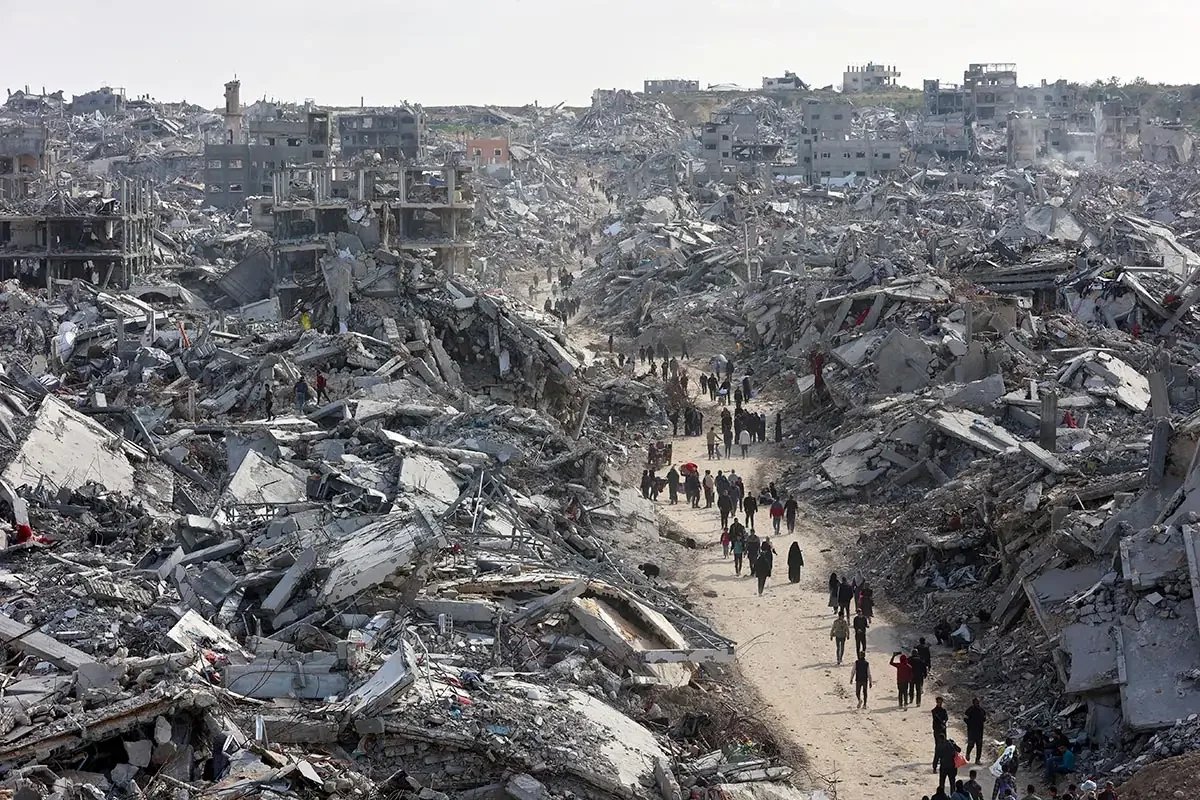
Palestine, Gaza, Jabalia refugee camp destroyed, photo: Omar Al-Qattaa
It took me over ten years to make the film V13, my film based on the play Vienne 1913 by French Lacanian psychoanalyst and my friend Alain Didier-Weill. It might never have happened if Alan Cumming hadn’t agreed to play Sigmund Freud and stuck with the project for many years. I always knew that making V13 would make me face the silence in which I had been complicit but I had confidence that through working with the play of Alain Didier-Weill, with its exploration of Freud, psychoanalysis and the rise of the Nazi Weltanschauung, it would allow me somehow to return to this same set of issues and this time not walk away.
I miss Alain, who died in 2017. I always enjoyed spending time together with him, either one-on-one–I remember countless times we met at the cafe Le Select–or with our friends and members of our families. I made two feature films based on his writings, The Caller (2008), which won a prize at the Tribeca Film Festival for Best Made in NY Film, and V13. The development of these two film projects provided the basis for a friendship I was fortunate to share with Alain for over twenty years, up until his untimely death in 2017. I never thought of what we did together as work but I was always working with Alain’s writings.
One of Alain’s most Quixotic choices in Vienne 1913 was to create for Hitler a prehistory of hating the ancient Greeks before hating the Jews. The young man who is known only as Adolf at the beginning of the film at the end of V13 announces his full name, Adolf Hitler. In his final meeting with Molly, a young woman working in the men’s shelter where he has been living, Adolf explains to her the Viennese origins of his particular brand of hatred for Jews. We can see how this hatred has become the solution to both his personal and political problems. At the beginning of the film, it’s the Greeks–meaning the ancient Greeks–that he hates. As far as I can discover through research, Adolf’s passage through a period of hating obsessively and with singular intensity the ancient Greeks is completely a creation of Alain’s. In Mein Kampf, Hitler speaks of the Romans, the Greeks and the Aryans as sharing common genetic roots. Many ethno-nationalist movements which had their beginnings in Europe at the end of the 19th century thought of Ancient Greece and their own nation in similar ways. The whiteness of Greek statues was read as proof of the concept of a white European race. It’s no small thing for Alain to have completely invented for Adolf’s youth the hatred for a particular people and their culture. Racism against modern Greeks has been a regular feature of European culture, even very recently, but not ancient Greece. Alain’s conception of the Greeks as the object of Adolf’s hatred, I would argue, is derived from Greeks such as we find their culture portrayed in the writings of Freud and not as ancient Greece was recruited into the mythical histories of European ethno-national movements at the end of the 19th century. Freud’s thinking about the ancient Greeks is focused on Greek tragedies composed in Athens. These works of poetry address profoundly alterity as an ineluctable part of each person and of society–what the French philosopher Jacques Derrida referred to in ancient Greek culture as “the irruption of the other.”
I propose that for Freud there was a confluence between, on the one hand, his experience of growing up in his Jewish home and his understanding of Jewish culture–as Betty Fuks illustrates in her book Freud and the Invention of Jewishness–and, on the other hand, ancient Greece, in particular, the experience of reading Greek tragedy. Both cultures give a fundamental importance to the role of the stranger, to exile and to alterity. This is not to say that for Freud these two are identical but that for him this shared aspect of these two traditions was generative of an aspiration to universality that is despised by Adolf in V13. Alain shows us different formulations of universality—including Christianity, Marxism and psychoanalysis—being transformed and transmitted through encounters with both of them.
Freud’s conception of Greece, therefore, differs radically from the Hellenism imagined by ethno-nationalist movements and eugenicists and adopted by these movements at the end of the 19th century–including by Zionism. Alain never mentions Zionism in Vienne 1913, although it was another nationalist movement, of particular relevance, emerging at this same time in Vienna. I propose that this silence on the part of V13 while the film highlights a fictional hatred of Hitler for the Greeks can fruitfully be read together.
Freud’s last monumental work, Moses and Monotheism, which argues in favor of the hypothesis that Moses is Egyptian–an Arab–completely undermines the model of racial purity that Zionism shared with other ethno-nationalist movements in Europe. These movements projected onto the imperialism of ancient Periclean Athens the new 19th century biomedical discourses of race and eugenics that accompanied colonialism. The reception of these concepts that originated in Europe was not limited to Europe. They were enthusiastically embraced elsewhere. They were present in Jim Crow and immigration laws in the United States where they were championed by its own nativist movement. This is where I chose to film V13, taking present day New York for Vienna in 1913. In Turkey, the Turkish nationalist movement known as the Young Turks, inspired by European nationalist movements of this same period, carried out the genocide of the Armenians with the aim of creating an ethno-nationalist state. The genocide of the Armenians also subsequently included the genocide of other Christian Orthodox communities in Turkey, including the Greek Orthodox, to which my paternal grandparents belonged until they fled to the United States in 1922.
Last year, in the winter of 2024, I was in Athens to attend a screening of my film Adieu Lacan at the Greek Film Archive. I was re-reading at this time the late Palestinian-American scholar Edward Said’s seminal essay “Freud and the Non-European,” which he wrote about Moses and Monotheism and which is now published with a postscript by the scholar of psychoanalysis Jacqueline Rose. A Greek online publication asked me to write on what it felt like to be a filmmaker of Greek descent returning to screen a film in the homeland of his paternal grandparents. This request and reading Said’s essay drove home for me that my Greek ancestors had never lived within the national borders of Greece, even if the Pontian Greeks have lived in communities around the Black Sea since the 8th century BCE. I began to think of the important and irreducible role of estrangement in my affiliation to Greece.

Jacqueline Rose, in an essay published in the New York Review of Books in 2004, with the title In Our Present-Day White Christian Culture, and with the subtitle, Jacqueline Rose on Freud and the Rise of Zionism, writes,
Watching the rise of Jewish persecution and Zionism together, Freud was well placed to ask the question that has returned to us so brutally since 9/11: how do you save a people at one and the same time from hatred of others and from itself?
Freud’s last great work – Moses the Man and Monotheistic Religion (I take the title from Underwood’s new translation) – is his final, urgent attempt to address this question. He makes Moses an Egyptian, thereby ‘robbing’ his people of their ‘greatest son’. Arguing that the monotheistic religion was founded not once but twice, by two disparate peoples brought together through the upheavals of their history, he sows dissension in the tribe. He does not want his people unified. Or, if he does, he wants them unified differently: not created once in an act of divinely sanctioned triumphant recognition, which henceforth will brook no argument, but torn internally by a complex, multiple past. He wants, as Edward Said stressed, a group that might be capable of imagining itself as founded by a stranger.
The Hellenism manufactured in Europe in the 19th century was an imaginary past according to which there was once a pure white race completely segregated from others, defined as biologically determined races. “In Greece,” writes Theodor Herzyl, the founder of modern political Zionism, “we are at the world’s cradle.” This fantasy about Greece arguably has recently resurfaced in a speech of Israel’s Prime Minister Benjamin Netanyahu in which he proposed that Israel now needs to become a “Super Sparta.” I am drawing a radical distinction between this vision of ancient Greece that Theodor Herzl would evoke and the one that inspired Freud, and which is defined by its unstable and unresolved relation to alterity, the other.
In their essay Of Europe: Zionism and the Jewish Other in the book Europe After Derrida, Sherene Seikaly and Max Ajl state that what distinguishes Zionism from the other ethno-nationalist movements of the same period is that its project evolves into creating outside of Europe a state elsewhere that wants to separate itself from Europe and in doing so become European. I recognize that I am leaving aside several other ideas of what Zionism could be, but I am speaking of Zionism from the perspective of today, when Israel has clearly become a state employing an ideology of racial superiority and having carried out a genocide against the Palestinians that makes clear that Israel considers them an inferior colonized race.
Zionism–again according to Seikaly and Ajl–at its beginnings proposed two imaginary acts of purification at the same time: the first was to abstract the Jewish people from Europe, where they had been regularly treated as scapegoats and seen as a contamination, culminating in the Holocaust, and, for the second act of purification, to rid themselves of so-called Oriental contaminations. The second act of purification was proposed as necessary by Zionists like Theodor Herzl and Max Nordau, co-founder of political Zionism, physician and notably the author of the book, Degeneration, so that the new state could give birth elsewhere to what were seen as European values. Orientalism–which, by the way, is a racial category into which my paternal grandparents would have been placed–is accused of being the cause, according to Nordau, that Jewish men tend to be too intellectual and therefore too feminine, which he wants to replace with a “muscular Judaism.” Seikaly and Ajl write, for Theodor Herzl, ‘the Jews of the medieval ghetto in Germany were an “Oriental tribe”...they wore “Oriental costume”; their speech was “Oriental”’ (Kornberg 1993:24). It was this orient that had to be purified and erased.
If we want to capture in a single image the contrast between the Zionist approach of this period and Freud's approach to this other who comes from the East, we can start by looking at Freud's couch covered by Persian rugs. Freud himself spoke of it using the German word die Couch or das Ruhebett but in private correspondence would sometimes use the French derived from the Persian word, divan. Ernest Jones, in his biography of Freud, refers to “Freud’s famous Oriental divan.” With Freud, I propose, one Orientalizes or one Westernizes from the East, one speaks with and is spoken by the other within; in a formulation indebted to Derrida, we can say that to be Western, one finds oneself elsewhere and looks toward the West. This is a relationship to the other for which we can find a precedent in Greek tragedy and with which Freud found an affinity with the importance of the other in Judaism.
The standard English Edition translated by James Strachey of Freud’s collected works extends to twenty-three volumes. In the very last printed article, preceding the index, he recounts being asked to write about antisemitism but declines to do so, instead writing that he would prefer if someone who is not Jewish write about it. This can be interpreted many ways. I read it as eliciting the international solidarity that would soon prove to be absent during the Holocaust. As someone who is not Palestinian I hear Freud’s statement as eliciting today solidarity with the Palestinians when the United States and Germany are the two largest suppliers of arms to Israel in its carrying out of a genocide, starvation and ethnic cleansing against them. Freud’s choice not to speak can also be seen as a way of avoiding the reduction of the human subject to identity. In the world at that time, during the Second World War, there were everywhere around Freud forms of ethno-nationalism and ideas of eugenics that take as given a reductive conception of identity. Of course, this could be found among the Nazis, but also among the Americans, the English, and also among the Zionists. In this context, his essay Moses and Monotheism can be read as a direct challenge to the eugenic conception that Zionism shared at that time with the other ethno-nationalist movements that surrounded Freud.
If Freud wanted, as I would argue Alain Didier-Weill proposes in Vienne 1913, to universalize a dimension of Judaism through psychoanalysis, then it was necessary to establish the other—that is, non-identity—at the heart of Judaism and implicitly reject the idea of race that is fundamental to Zionism in the same way as it is to other ethno-nationalist movements of this period. V13's fiction regarding the Greeks—substituting Freud's Greeks for the Greeks of Zionism—is a way of simultaneously naming and displacing the truth of the distance between Freud's Judaism and Zionism.
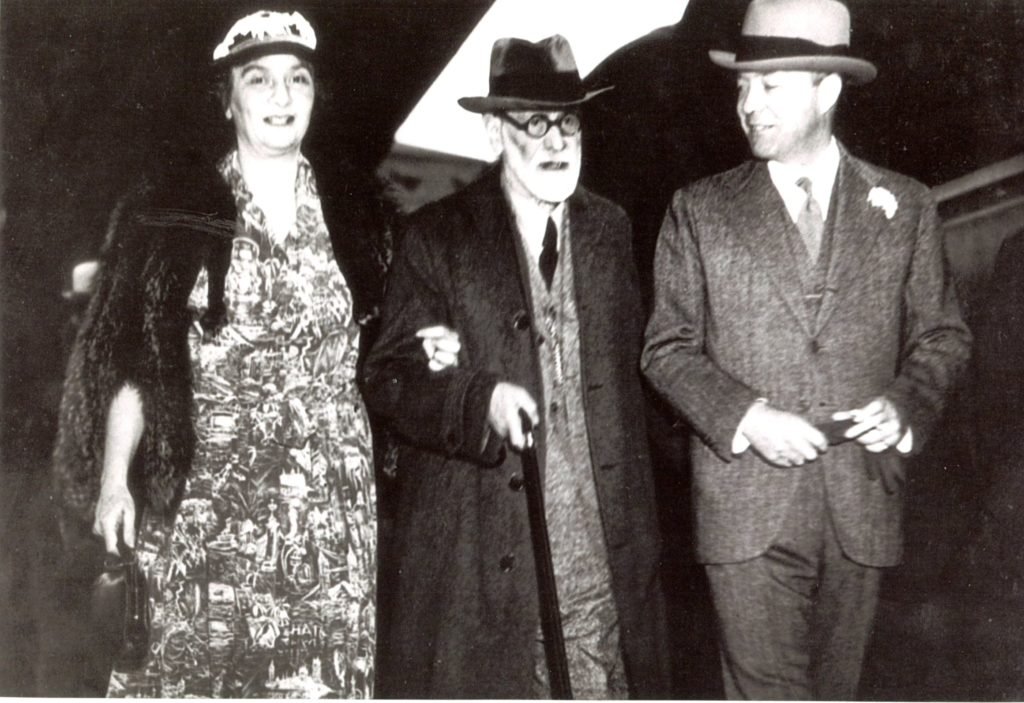
Sigmund Freud in London
As you know, the Freud Museum in London today is the house where Freud lived with his wife Martha and their daughter Anna after fleeing the Nazis in Vienna, and where he died in 1939. Earlier this year, 2025, I was invited to screen V13 at this house and, after the screening, to be interviewed by the English Lacanian psychoanalyst Janet Haney. While the film was playing, I waited in what had been the cabinet of Anna Freud. I reflected on what it must have been like for her father Sigmund Freud not only to escape Vienna at the age of 82 but to have undertaken the enormous effort to restart his work in London. It was here at the Freud Museum in London that Edward Said gave his lecture Freud and the Non-European, after having been given and later had withdrawn an invitation to give a lecture at the Freud Institute in Vienna. Asked after the screening of V13, what I thought Freud would have wanted to talk about, I started my answer by saying simply, “Gaza.”
Before the screening, while the museum was closed, I was given permission to wander through Freud's study beyond the regular visitor limits. I took a photo of the small statue of Athena that Freud always claimed was his favorite of the small statues of gods and religious figurines that he collected. Several works of art brought by Freud from Vienna changed locations in his new exile residence, but this small statue remained in the same place, at the center of the desk. Our host, during our visit, the caretaker of the house whose father had been the caretaker of the house for Anna Freud, informed me that Freud died in a bed he had asked to be placed in front of his desk. From here, I noted, he could see his collection of statues, principally Athena.

It is the dimension of non-identity that he found in his reading of Judaism and Greek tragedy. This link between Judaism and the other—as Betty Fuks and Edward Said have pointed out in different ways, in their readings of Moses and Monotheism—is the reason why, in my opinion, Freud not only took to London a small statue of Athena, his favorite sculpture, but also gave it the same position: the unconscious for which he draws inspiration both from Jewish Scripture and Greek Tragedy.
Alain’s fiction of Hitler hating the Greeks of Freud rather than loving the Greeks of European ethno-nationalist movements was certainly one important element of Vienne 1913 that drew me to making V13.
Works Cited
Didier-Weill, Alain. Vienne 1913. Aubier, 1991.
Freud, Sigmund. Moses and Monotheism: Three Essays. Translated by Katherine Jones, edited by James Strachey. The Standard Edition of the Complete Psychological Works of Sigmund Freud, vol. 23, Hogarth Press, 1964, pp. 1–137.
— “Anti-Semitism in England.” The Standard Edition of the Complete Psychological Works of Sigmund Freud, vol. 23, London: Hogarth Press / Institute of Psycho-Analysis, 1964, pp. 291–303.
Fuks, Betty Bernardo. Freud and the Invention of Jewishness. Translated by Paulo Henriques Britto, Agincourt Press, 2008.
Jones, Ernest. The Life and Work of Sigmund Freud. 3 vols., Hogarth Press, 1953–1957.
Ledes, Richard, director. Adieu Lacan. 2021.
— director. V13. 2022.
Nordau, Max. Dégénération. Félix Alcan, 1892.
Resnais, Alain, director. Night and Fog (Nuit et Brouillard). 1956.
Rose, Jacqueline. “In Our Present-Day White Christian Culture: Freud and the Rise of Zionism.” London Review of Books, vol. 26, no. 13, 8 July 2004, p. 14.
Said, Edward W. Freud and the Non-European. Verso, 2003.
Seikaly, Sherene, and Max Ajl. “Of Europe: Zionism and the Jewish Other.” Europe after Derrida: Crisis and Potentiality, edited by Agnes Czajka and Bora Isyar, Edinburgh University Press, 2013, pp. 120–133.
https://www.justiceinfo.net/en/145834-gaza-darfur-genocide-convention.html

V13 in regards to the European Holocaust & Genocide in Gaza
Here is a video in which I talk about V13 in regards to the European Holocaust and the Genocide in Gaza. I also include the transcript. I have more to say. This was based on remarks I made during a Q&A following a screening of V13 on Kinema. I am grateful for the messages of support.
Transcript:
Hi, I’m Richard Ledes, the director of V13.
August is the month when eighty years ago the United States dropped two atomic bombs on Japan–the first one on Hiroshima and the second one—about which I will have more to say—on Nagasaki. The use of these atomic weapons by the United States make Japan the only country against which nuclear weapons have ever been used. The German Jewish philosopher and political activist Gunther Anders wrote extensively about the significance of the use of these two bombs. Anders was briefly married to Hannah Arendt. He survived the Holocaust by immigrating first to France, where in Paris he was active in the anti-fascist movement, and then to the United States. He argued that the use of the two atomic weapons showed that warfare had become depersonalized and could be carried out virtually without human contact, following a purely technical process. He compared their use to the industrialized killing at Auschwitz. There is no doubt that we are seeing this technical process again in the Israeli ai-assisted genocide against the Palestinians of Gaza.
The work of Gunther Anders is a good example as to why it is crucial to be able to contrast and compare what happened during the European Holocaust and what Israel is now inflicting on the Palestinians. It also points to why universities must not be stopped from hosting these vital discussions by the false equation of antisemitism with criticism of Israel. The young people speaking out against the genocide and being disciplined by universities for not remaining silent are precisely the people who should be given an opportunity to engage with the European Holocaust in which more than six million Jews were murdered and with contrasting and comparing it in multiple ways to the current ongoing genocide. One vital way of doing this is through the work of Gunther Anders as well as of Hannah Arendt, Primo Levi, Zygmunt Bauman and others, whose profound engagements with their experience as Jews of the European Holocaust and the echoes they found afterwards in consumer society can help to clarify the present and point us towards reaching self-determination for Palestinians and security for both people and for the region as a whole. Killing journalists using drones because they do not tell the story Israel wants to hear or labeling as antisemitic students who are protesting against Israel’s genocide—as its actions have now been widely acknowledged to be by prominent scholars and major human rights organizations including within Israel—will not lead to a sustainable future for either Israelis or Palestinians.
Perhaps the most important choice I made in V13 was to shoot it in the United States, taking current New York City for Vienna on the eve of WWI. The United States is a key player in both genocides. In Mein Kampf, Hitler writes admiringly of the United States’ discriminatory practices in regards to immigration. And James Q. Whitman, as I have written before, documents in his book Hitler’s American Model the importance of the Jim Crow laws as a model for Hitler’s laws to remove citizenship from German Jews. It is also the Jim Crow laws that come first to mind for the Black American writer Ta-Nehesi Coates when he visits the West Bank and sees how access to water is segregated along religious lines that makes evident the ideology of Jewish supremacy that holds sway in Israel.
In V13 behind Freud in his office I placed a large photograph of the silhouette of a soldier standing beside a ladder. This silhouette was created by the initial bright light and intense heat of the atomic blast of Nagasaki. Greg Mitchel, the director of the recent movie Atomic Football, about the aftermath of the first two atomic bombs, commented in a recent interview on the similarity of the aerial shots of Hiroshima and Nagasaki to Gaza. He described what is happening today in Gaza as an atomic bomb in slow motion.
I put this nuclear shadow on the wall in Freud’s office partly because the ladder recalls Freud’s father whose name was Jacob and at the same time underlines a more complicated relation between the winners and losers of WWII and their relation to technology, especially the technology of cinema.
Of course, the most important difference between the European Holocaust and the one Israel is inflicting on the Palestinians is that today we are ethically called to stop the ongoing one while at the same time preventing the rise of antisemitism that Israel and its allies are fueling. Stopping the current genocide will effect the interpretation of the end of the earlier one and this is why a significant effort has been mounted to prevent free speech in regard to thinking the two of them together. We know the official narrative ending–the classic Hollywood ending–to the European Holocaust. It has always been the creation of Israel. However the work of Gunther Anders, Primo Levi and Zygmunt Bauman among others make clear that this cure for the crimes of European ethno-nationalism and racial supremacy always carried the possibility, at the very least, of giving no rise to more European ethno-nationalism through a repetition camouflaged by colonialism, by Europe’s Heart of Darkness. This is what makes the open letter of 1948 to the New York Times signed by Hannah Arendt and Albert Einstein, along with other Jewish intellectuals, so prescient. They called out the fascist proclivity of Israel embedded in its treatment of the Palestinians that has now fused with the fascist proclivity within the United States. Israel has turned out not to be a conclusion but a repetition—not an exact repetition— and in the difference there remains the possibility for change but it is far from a foregone conclusion.
I am not Jewish, Israeli or Palestinian. Freud in the last article appearing in his collected works recounts his being asked to write about antisemitism. He declines, saying it would be better if someone who is not Jewish would speak about it. Similarly the Pulitzer Prize winning Palestinian poet Mosab Abu Toha in a recent interview calls for solidarity from the international community. We must not reduce humanity to the sum of its identities but see how we can be connected through our shared political desire-–behind which arguably can be found the unwritten law which Antigone evokes or can be found what the critical theorist Todd McGowan has called the universality of non-belonging. As human-beings, defined ineluctably as outsiders, exiled into language as speaking beings, we must find a way to take action to end the current genocide in which the United States is a full partner just as it is the location where I filmed V13.

The Great Famine Μεγάλος Λιμός
Do we believe that when Ehud Olmert, the former prime minister of Israel, compared the “humanitarian city” Israel plans to build in the south of Gaza to a "concentration camp" that he was being antisemitic?
Many of our universities in the United States have departments of Holocaust and genocide. We need to be able to ask ourselves not only what each of the terms “Holocaust” and “genocide” mean historically but also about the meaning of the “and.” Our society’s increasing refusal to allow this is causing people to leave the field. Marianne Hirsch, the daughter of two Holocaust survivors, has taught for years as a genocide scholar at Columbia University. She wonders if she can still use the books of Hannah Arendt. Arendt was a major German Jewish thinker who knew first hand the horrors of the Nazis' protracted extermination of Jews in Europe. Arendt’s writings about what steps the Nazis took to lay the groundwork for the Holocaust are cited often, including by myself, and considered by many required reading for anyone who wants to reflect deeply on the Holocaust. Arendt was also critical of the founding of Israel and signed an open letter to the NY Times, when she became deeply troubled by the direction she felt Israel was taking. This letter was also signed by Albert Einstein and deserves to be read again in our present circumstances. Will teaching Arendt now be a criminal act, Hirsch very reasonably asks herself. She speaks about this in a recent interview she gave to the Associated Press. The same interview quotes her saying, “A university that treats criticism of Israel as antisemitic and threatens sanctions for those who disobey is no longer a place of open inquiry…I just don’t see how I can teach about genocide in that environment.”
Members of my children’s family were in Athens during what is known in Greece as “the Great Famine,” 1941-1944. There are traumas they experienced during that time inflicted by the Nazis that still haunt them. Coincidentally I have been told many important Greek films were destroyed during this period because short strips of celluloid were converted by starving members of the population into combs to remove lice. Am I not to write that I think of this and reflect on the use of starvation along with ethnic cleansing and genocide by the Nazis as Israeli drones fire on what the Israeli whistleblowers who manned them themselves describe as unarmed Palestinian civilians while Gaza collectively is being starved to death?
At the time of the Nuremberg trials prosecuting the Nazis, there were no laws on the books against genocide, because it had not yet been imagined as a crime and therefore had not yet been included into international law, as it is today. Lawyers for the prosecution looking for a precedent to allow for prosecution in such a case, referred in their discussions to Antigone, as one of two precedents for evoking an unwritten law. In the eponymous play written by Sophocles she appeals to an unwritten law that trumps the law of tyrants. Now there is a case requiring a higher law again, this time in regard to the genocide taking place in Gaza. No human law that makes it illegal to speak the truth against the crime of genocide can be considered in conformity with the higher unwritten law associated with Antigone at the Nuremberg trials. Netanyahu and other current political Israeli leaders constantly evoke the Holocaust to defend their acts. Let them talk. Their speech should be protected to the degree that it conforms to existing laws protecting free speech. But so should the speech of Jews and others who think it is important to think and speak about the Holocaust and genocide together, including the genocide of the Palestinians of Gaza, and oppose the current policies of Israel on this basis.

If it's genocide, why so slow?
If the Israelis are acting like the Nazis, by committing genocide, why aren’t they eliminating Palestinians even quicker, since they have the technological means?
It is important to realize that—starting from the time Hitler came to power in 1933—the Nazis combined the planning and eventually the use of two methods to eliminate European Jews: ethnic-cleansing and genocide, the latter with increasingly technologically sophisticated methods. The first approach is sometimes referred to as the “First Solution” that they used in combination with the “Final Solution." Over time, they shifted more to the Final Solution, which they had described from the beginning. You can read about the combined use of these methods in, for example, James Q Whitman’s book Hitler’s American Model (Princeton, 2018) and Egan Bloom’s book Arthur Ruppin and the Production of Pre-Israeli Culture (Brill 2011).
However, there are other factor besides technology. First, there are also psychological and symbolic considerations, including of law. In terms of law, the Nazis felt it was necessary to remove citizenship from German Jews before undertaking the Final Solution. Inspired by Jim Crow laws in the United States, they created a second lower status of citizenship for Jews in 1935. Israel legislated a second lower form of citizenship for their Palestinian citizens in 2018. The Palestinians of the Occupied Territories, which include Gaza, are stateless. As Hannah Arendt described the status of statelessness, they have been deprived of the right to have rights. In terms of psychology, there is by both ethno-nationalist states not only the use of advanced technology but also of the logic of deception—including self-deception—and also at present the use of a logic of "disavowal," which has become increasingly important in our current information societies. You can read about this latter logic in the book Disavowal by Alenka Zupančič (Polity 2024).
In conclusion, the State of Israel is not only committing genocide against the Palestinians; like the Nazis did against the Jews of Europe, it is committing both genocide and ethnic-cleansing. For bureaucratic and ideological reasons, I would argue, the perpetrators need to maintain both of these approaches today, as they did then.
“I decide who is a Palestinian.”
Sound familiar? Close. Right?
Actually, Trump said about Senator Schumer on March 18th from the White House, “As far as I’m concerned, he’s become a Palestinian. He used to be Jewish. He’s not Jewish any more. He’s a Palestinian.” The reason why I misquote Trump and, to this extent, fictionalize this statement by him is to point out its similarity to another statement.
In the course of my film V13 , which is now in the process of being released, the character "Adolf "(Samuel Levine), who by the end of the film has assumed fully his last name, "Hitler," credits two sources for his own brand of antisemitism: one source is the radical German tribalism preached by a Viennese group centered around the newsletter Ostara and the other source is a much more popular and even fashionable form of antisemitism that passed as everyday currency in gentile Europe at the start of the 20th century. The main proponent of this second popular form, whom Adolf also refers to in the film, is the Viennese mayor Karl Lueger. Lueger’s most infamous statement is doubtlessly “I decide who is a Jew.” The resemblance to the recent statement by Trump is unmistakable.
V13 was filmed in present day New York City, but its narrative remains strictly limited to Vienna in 1913. Nevertheless, the way I shot the film provokes its audience to think about the past which it represents in terms of the present we are living through. It does not tell us what to think about this relationship. It encourages a critical view of history. The screenplay is based on the play Vienne 1913 by the French psychoanalyst and playwright Alain Didier-Weill, who died in 2017. Nevertheless. the drama he created that is at the heart of the film seems incredibly relevant.
I propose that the statement by Trump and the one by Lueger imply that loyalty to a particular politician is the determining factor in whether a person can be identified as belonging to an ethnic group vulnerable to unimaginably extreme violence (the Holocaust was still twenty years in the future but many of the Jewish immigrants in Vienna in 1913 were survivors of Russian pogroms). It should not be lost on us that statelessness both defines the Palestinians of Gaza and, according to Hannah Arendt, was a crucial step—a sine qua non—for transforming Jews who had been German citizens into victims of the Holocaust. Like Hannah Arendt herself experienced, these German Jews first had to be deprived of their German citizenship and be made stateless. In this way, they lost the most important human right, according to Arendt, “the right to have rights.” I would argue that this is the implicit threat contained in Trump’s statement. He can identify Schumer and other Jewish U.S. citizens who do not show loyalty to him personally and his policies with a group that is both stateless and targeted with genocide, specifically the one that Israel, with crucial support provided by the U.S., is inflicting upon the Palestinians of Gaza.
Steve Bannon has stated that the greatest threat to Israel comes not from radical Islamic extremists but from sectors of the American Jewish population. "The number one enemy to the people in Israel are American Jews that do not support Israel and do not support MAGA. MAGA and the evangelical Christians and the traditional Catholics in this country have Israel's back. They have the Jews' back. The biggest single enemy to the Jewish people are not the Islamic supremacists. The biggest enemy you have is inside the wire, progressive Jewish billionaires." The Evangelical Christian Zionists, who Bannon asserts have Israel’s back, believe that God’s plan is for Jews to return to Israel forming a racially defined ethno-nationalist state, mirroring the white supremacist Christian state that they envision for the U.S. under Trump’s leadership. Once back in Israel, at the Second Coming of Christ, Jews will have a choice between converting to Christianity or burning in Hell. The Christian Evangelical support for Israel is very overt in the violence it directs towards Jews and Judaism--it is hidden in plain sight.
The title of a 2023 article by Jewish Currents editor-at large Peter Beinart puts it succinctly "Antisemitic Zionists Aren’t a Contradiction". This article, with its meticulously referenced research for conclusions about the inverse relation in the U.S and Europe between support for Israel and antisemitism, is the one document I would wish you all to read. Beinart carefully documents the evidence that expressions of antisemitism regularly co-exist with expressions of support for Israel among the Christian groups backing Trump. Beinart writes, "Trump’s fondness for Israel and antagonism toward American Jews stem from the same impulse: He admires countries that ensure ethnic, racial, or religious dominance. He likes Israel because its political system upholds Jewish supremacy; he resents American Jews because most of them oppose the white Christian supremacy he’s trying to fortify here."
If we want to speculate realistically about what Trump envisions for those Jews whom he alone in his own sick mind can decide are Palestinians—along with others of us whom he defines as enemies of the fascist white supremacist state he is trying to install in the U.S.—you really have to turn to the movies, more specifically, to The Birth of a Nation by D.W. Griffith. This film is about the so-called "birth" of the Ku Klux Klan. The Ku Klux Klan, colloquially known as "the Klan", is the infamous white supremacist group whose popularity was declining until around the time following the release of Griffith’s film. In 1927 Trump’s father was arrested at a Ku Klux Klan rally in Jamaica Queens, according to a NY Times article published the next day. The film is renowned for the rhetorical cinematic power Griffith brings to bare on the goal of promoting white supremacy and for its hideously racist and vile portrayal of Black people. However, despite the racial inferiority it imputes to Blacks, the film also spends time showing that not all Blacks are bad. No, there are good Blacks who know their place, and then there are those who, it purports to demonstrate, deserve to be terrorized by the Klan. This division between those of us who know our place and those who do not is the future Trump has already started to realize through arguing that the religious, cultural and ethnic identity of a person can be decided by Trump. Thanks to technology the fantasy is that those of us guilty of betraying Trump’s racist vision will be identified and made bereft of any rights—as the Trump administration is trying to achieve in the case of Mahmoud Khalid.
Elon Musk recently mimicked the thinking of the other main source to Hitler’s alchemical creation of the Nazi Weltanschauung that we see portrayed in V13. According to this German nativist set of beliefs Christianity is only a Trojan Horse of the Jews to weaken the German people by distancing them from their ancient tribal roots. Speaking to the extreme right-wing German party Alternative for Germany (AfD), Musk urged members of the audience to not feel guilty but instead recognize their ancient roots, "The German people are really an ancient nation which goes back thousand of years," he continued, "I even read Julius Caesar was very impressed (by) the German tribes.” Commenting on Musk's address to the AfD following Vice President Vance's support for the same party when he visited Germany a short time before, Jason Stanley, Yale professor of philosophy and author of Erasing History, said, "when Elon Musk spoke to the AfD, he talked about Julius Caesar praising the German tribes for their warriors 2000 years ago. And he said, 'You should be proud of that past.' In other words, German identity is blood and soil, as the Nazis said. Musk is not praising Germans who are Jewish. He’s not praising my German family, my German Jewish family. He’s praising the 'blood and soil' Germans. That’s the side that—that’s the conception of German identity that we intervened to support. The vice president of the United States went there and didn’t meet with the German chancellor. He met with the head of a party that’s considered too extreme, too hateful for other far-right and anti-immigrant parties in Europe to ally with. That’s how bad the situation is. They normalized that party."
We need to get the American Congress to start impeaching Trump now. Ralph Nader argues this is our only way out. I am for dismantling, in anyway we can, the fascism Trump and his cohorts are implementing. We may not have much time. Going back to the Democrats may seem like an unappetizing repetition for many of us but in every repetition there is an opportunity for change and we should fight for it—starting now.

Mahmoud Khalil is free
I have sometimes doubted my choice of No Human Is Illegal as the title of my 2017 film that I made about undocumented immigrants—who, in the film, I consistently refer to as “refugees”—forced to remain on the island of Mytilene and not allowed to proceed further into Europe.
The declaration “No human is illegal” is often attributed to Elie Wiesel, the Romanian-born American writer, Nobel laureate, and Holocaust survivor. My own research has only been able to verify a time when he is reported second-hand to have said this. The reason I originally chose this title is because it was spray-painted on the encircling wall of Camp Moria, the largest and most notorious of the locked camps for immigrants when we were on the island. This declaration was finally covered over when the wall was painted with a fresh coat of white paint, just as we were leaving and just before Pope Francis was to arrive.
For sure, the title is an oversimplification. Nevertheless, the college students who were volunteering to help me find an audience for the film were adamant that they wanted to keep the title.
Earlier this week, when Mahmoud Khalil was released, he was asked what his message was to other immigrants in America. He answered by saying, "No Human Is Illegal." I felt a new rush of gratitude for the young people who had made me stick with this simple premise for its title.
My experience on Lesvos making that film with Florina Titz, Valentina Caniglia, Tammy Douglas and the other members of the crew marked me. I was fortunate to be working with three such extraordinary women filmmakers. They pushed for us to interview and hear the experiences of numerous women among the undocumented migrants. Thanks to these three women we were able to get interviews that otherwise we would never have been able to obtain. Each night over dinner we would process that day’s experiences and prepare for the next day.

The video installation Athens Sanctuary, opening in Athens June 28th at the Lofos Art Project and running through July at the gallery is my return to working in Greece. Athens Sanctuary is also, in a way, my return to our experiences on Lesvos and to my own working with the politics of these memories. With Athens Sanctuary I do this through Greek tragedies condensed into dance and music that are so integral to this form of drama.

Queer Freud
Played by Alan Cumming, does Freud read queer in V13? I think that’s an open question. Freud saw psychoanalysis as an important ally to universal emancipation—especially in regards to what for Freud touched upon human sexuality. I think as a figure of emancipation is the way Freud is presented in V13—through Alain’s writing (Alain Didier-Weill) and Alan’s performance (Alan Cumming), as well as through my direction.
Siegfried Kracauer, the German Jewish film theorist, was a friend and intellectual compatriot to Walter Benjamin, the great unorthodox fellow German Jewish Marxist who is quoted near the start of V13. Kracauer was critical in his writing about the American star system. He argued that, if an actor is a star it makes it impossible to appreciate the actor’s performance without associating their career on a meta level beyond the role being played. Yet Alfred Hitchcock put this to good use when he made Psycho (1960). By casting Janet Leigh as Marion Crane, he purposely misled early audiences to expect that such a big star would still be alive at the end instead of dead at the bottom of a shower a mere 30 minutes into the film. Similarly, I was very aware in casting Alan as Freud of Alan’s activism for LGBTQ rights. I had also seen him live on Broadway in Cabaret in the role of the Emcee with Michelle Williams in the role of Sally Bowles (Michelle Williams starred in my first feature film, A Hole In One, 2004). As anyone who regularly reads my newsletter knows, Stanley Kubrick is a filmmaker of utmost importance to me. Alan’s performance in a single scene as the hotel clerk who flirts with Tom Cruise’s character in Eyes Wide Shut (1999) is an unforgettable tour de force burned into my brain.
Alan Cumming’s activism and queer roles can arguably be said to be inflected in how we read his performance as Freud and absolutely this is how I think Freud, were he alive today, would have wanted it.
Happy Pride Month,
Richard

Fred Won't Move Out: I Imagine My Family Singing Together
My family when I was growing up lived on a dirt road in Katonah, a small town outside of New York City. Around a quarter mile from where we lived, the dirt road runs alongside a reservoir. The entire town of Katonah was moved in 1897 to accommodate the expansion of the water system for New York City. Today beneath the water of the reservoir are the foundations of the old town.
In 2009, my mother and I were taking a walk together, headed towards the reservoir, when she started to explain to me her interpretation of what seemed to me a random event of no particular importance but seemed to worry her. The object of her concern was an approaching car. Cars are rare on the dirt road but we did have neighbors and fishing is permitted on the reservoir. She explained that she thought the driver was intentionally driving towards her. The car continued driving past us. A few months later, she told us at Christmas that she had been diagnosed with Alzheimer's. At first, I doubted this could be the case. Her own mother had retained an extraordinary memory at the end of her life, including after she had suffered a stroke.
From my mother I once learned——I don’t remember at what time——that when I was a small child and my brother an infant, she had been persuaded by her mother not to attend her brother Richard’s funeral. What I didn’t know until I uncovered it in my late 30s was that her brother had spent the last ten years of his life being treated for schizophrenia in a veterans’ psychiatric hospital. This ended when he either intentionally or accidentally left the grounds of the psychiatric hospital and was hit by a train. His records show he had been considered a candidate for a lobotomy. In January of the year I was born——I was born in November, making three Richards in my mother's life for what would turn out to be a very short time——the psychiatrist in charge wrote: "This patient has responded to Thorazine and a few electroshock treatments with considerable improvement, and lobotomy at this time again is not recommended." The word that stands out for me is "again."
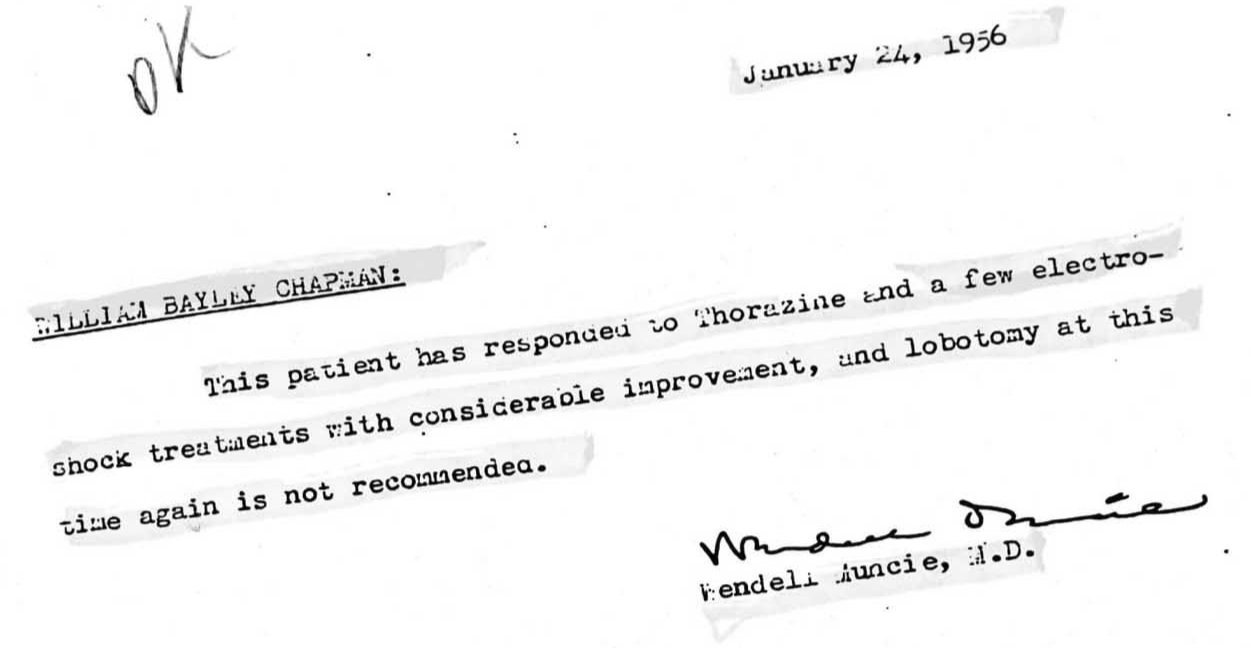
“Again.”
In my 20s, many years before my mother’s death, while my family was living in the same house on the dirt road that led to a reservoir, learning that my grandmother had suffered a stroke, I had made plans to drive down to Baltimore to visit my grandmother in a hospital. When I told my mother of my plans, she warned me that my grandmother would be unable to communicate and that she would be unaware that I was even in the same room with her. My mother further warned me that seeing my grandmother in such a state could be detrimental to my health. I connect my mother’s reaction to her own mother’s final illness to my mother’s memory of having once been advised by her mother not to attend her brother’s funeral. On one occasion my mother broke down in tears and told me about visiting her brother in the hospital with her mother. She said through her tears that her mother had only been able to speak about social events in Baltimore. My mother’s family, like my own family when we were children, was in the Baltimore Social Register, which has nothing to do with socialism.
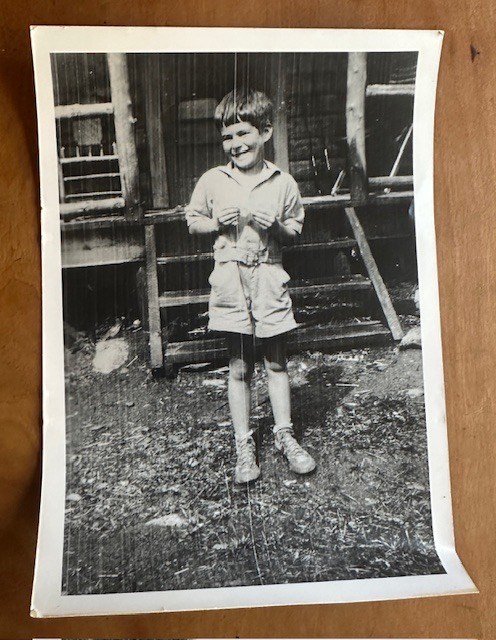
My mother’s brother Richard during a summer in Canada.
My mother felt her brother had been abandoned in the psychiatric hospital. The train that hit and killed him had been traveling towards Baltimore. One time she told me she thought he had been trying to get home.

teeth, teeth, tooth, struck by train
Knowing my grandmother had a love of poetry, I ignored my mother’s warning and drove to Baltimore with the Oxford Book of English Verse in the death seat. As I opened the anthology in the sterile hospital room, I could see half of my grandmother’s face was frozen like a mask. I remember the feel of the delicate paper as I leafed through the pages and found a poem I thought she might know. Her life story had been complicated before her only son’s death by the premature death of her first husband in a car accident. After his death, she had married Richard Chapman, my grandfather. The first Richard Chapman would eventually die of heart failure less than six months after the death of the second Richard, his son.
In the hospital room, I began to read Shakespeare’s sonnet that begins, “When in Disgrace with Fortune and Men’s Eyes.” She began to make noises with her throat. I realized that—despite her voice being distorted by the effect of the stroke—she was reciting the sonnet aloud with me. Our voices together reciting that sonnet by Shakespeare had a feeling of what I can only describe as a revelation—a word I also use to describe my feeling when I read the psychiatric records of her son who was my mother’s brother. After my mother died, I would have this experience again during the filming of Fred Won’t Move Out, shouldering the second camera in a scene in which the members of the family in the fictional film sing together. As a filmmaker I know how to manufacture a feeling of revelation. I distrust it. Yet there are times when a revelation persists through rereading and, for me, this has been true of these three moments.
After that last Christmas lunch in the dining room which would soon become her bedroom, when she could no longer take the stairs to the second floor, my mother looked incredulous as she told us she had been diagnosed with Alzheimer's. I too was incredulous. However it soon became clear that my mother was—in a different sense of the term than I had previously considered—losing her mind.
The catalyst for my writing and directing Fred Won’t Move Out, my fourth film, was the possibility of filming in the house where my family had lived for over thirty years. My mother’s deteriorating mental and physical condition from Alzheimer’s and my father’s increasing lack of mobility and mental clarity had led them and our family to make plans for them to move into the neighborhood in the city where I and one of my sisters were raising our families. This is when the possibility of filming in the house had occurred to me. Also, my ability to make films was deteriorating in many ways. I too needed to make a move. Largely improvised, the film Fred Won’t Move Out became a leap into the unknown that proved salvational for me as a filmmaker and for my sense of how filmmaking was integral to my life as an artist.
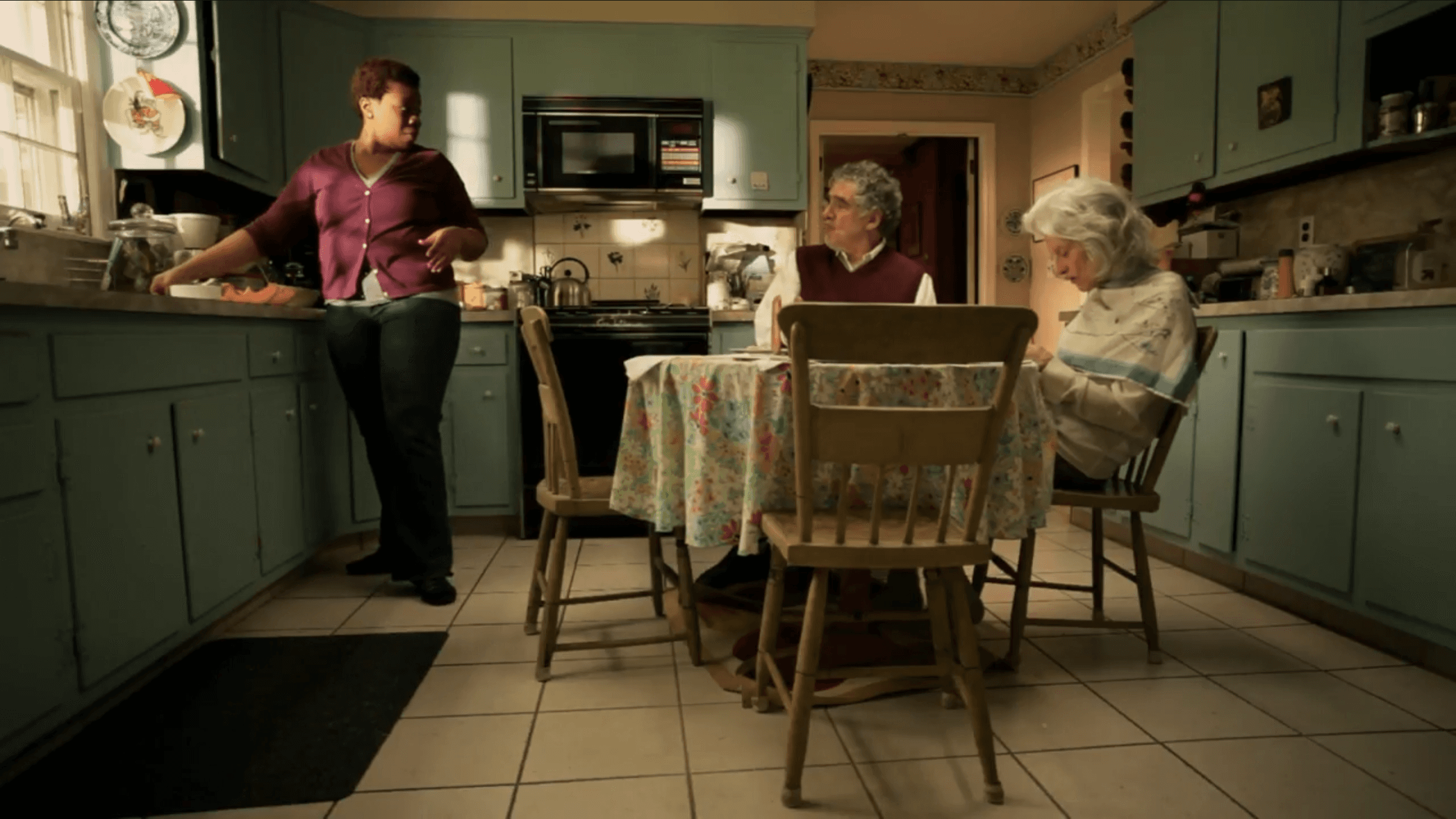
Still image from Fred Won’t Move Out
Fred Won’t Move Out gave me an opportunity to go farther in the direction of improvisation than I had done previously. From the start of conceiving of it as a fiction film, I felt I would be sustained by my intimate connection to the story, to the characters and also to the location. The first performer I asked to be in it was Elliott Gould, with whom I had previously worked in my second film, The Caller. Of Elliott Gould’s performance in Fred Won’t Move Out, the British Film Institute (BFI) would eventually name it one of his ten best performances.
While filming one day during The Caller, I had asked Elliot Gould and Frank Langella, with whom he was co-starring, to improvise a few lines of dialogue in order to get us out of a scene. Gould does this like a distinguished jazz musician. Listening to Gould improvise triggered a desire inside me of which Fred Won’t Move Out would be the realization.
I knew Elliott Gould’s work mainly through his acting in the films of Robert Altman. Altman is a filmmaker of the greatest importance for me. Not only because of his work but because a former professor of mine, Helene Keyssar, had been writing a book on him at the same time that I was studying theater with her. There was no film program then at the college I was attending and she was an exceptional source of encouragement for me and my work. Also, before the days of readily available VHS tapes——she and her husband, the philosopher Tracey Strong, would screen 35 millimeter prints of films in their living room̉——including those by Altman. Altman was known for his use of improvisation and Gould’s extraordinary performances, particularly in The Long Goodbye, had made him an actor for whom I have the greatest admiration and respect.

Still image from Fred Won’t Move Out
With Fred Won’t Move Out I wanted to work quickly. I wasn’t certain how long I would have the house and because elements of the story and the place where we were filming were so deeply engrained in my memory, and because Elliot Gould had said yes, I was confident that I wanted to work in this way.
I had been away at private schools most of my education and envied my siblings who had stayed home for most of theirs. This meant that I had a certain nostalgia and had carefully studied how the sun rising and setting illuminated the walls and the antique American furniture my mother had inherited and brought from Baltimore. I remember climbing in the trees that surrounded the house and contemplating the lives of its occupants, consisting of my family, the people who worked there and the other people who passed through it. I was mesmerized by the prospect of filming here. This was the film I could make with my eyes closed, and I realized I needed to close them if I wanted to find my way forward as a filmmaker.
We shot sequentially, filming the scenes of the story in the order in which the film would be assembled. I knew Altman was one of the very few directors who insisted on working this way. Filming in the order in which the story will eventually appear on the screen has great advantages for the cast and for the crew. Film productions are usually obliged to shoot in an order largely dictated by the budget and the distance between locations. Filming in the order of the story usually would be considered an indulgent luxury. In such a case, an actor, for example, cannot spontaneously give her character a trait in the first scene when she knows she has already shot later scenes in which this trait of her character would have to be present. Shooting sequentially allows us——cast and crew——to improvise as we go along. It frees us to include new ideas about the characters and ways of filming as they develop that would otherwise have to be excluded. While this way of working is usually ruled out by issues of cost, for a few filmmakers——including two of the most important for me, Robert Altman and Michelangelo Antonioni——this has been a line in the sand, a deal-breaker. Because Fred Won’t Move Out would be filmed entirely in one location, in the house where my family had spent the majority of their time while I was growing up, I was able to film in the order in which the story unfolds.
We planned to shoot over three weeks. Each Sunday before the following week’s filming I would send out a draft of the breakdown of scenes and dialogue for the coming week to the actors and crew. I let them know that I might choose to improvise additional scenes at the last moment.
Also as a consequence of how we were working——not knowing what scenes would be added for the following week——all the actors were required to be present as much as possible over the entire three weeks. This strengthened the sense of community between the cast and main members of the crew.
One very interesting character in the film is a music therapist. Altman had been known to cast non-professionals in the roles they played in their actual lives and this influenced me to ask the film’s composer and musical consultant, Robert Miller, if he would play the role in the film of a music therapist. On my film The Caller, to which his great score had contributed immeasurably, I had seen Robert, when working with actors, exhibit skills that I thought would make him credible as a music therapist working with a family, one of whose members has Alzheimer's.
The crew was led by Valentina Cangilia as the director of photography. From Naples, Italy, Caniglia and I have so far collaborated on four feature films, most recently Adieu Lacan. Working with her on this film introduced me to one of my most gifted and persistent collaborators. I was determined to work with the Canon 5D, a prosumer camera that was popular with low-budget filmmakers at the time. I also occasionally wanted to operate a second camera. She was up for the challenge.
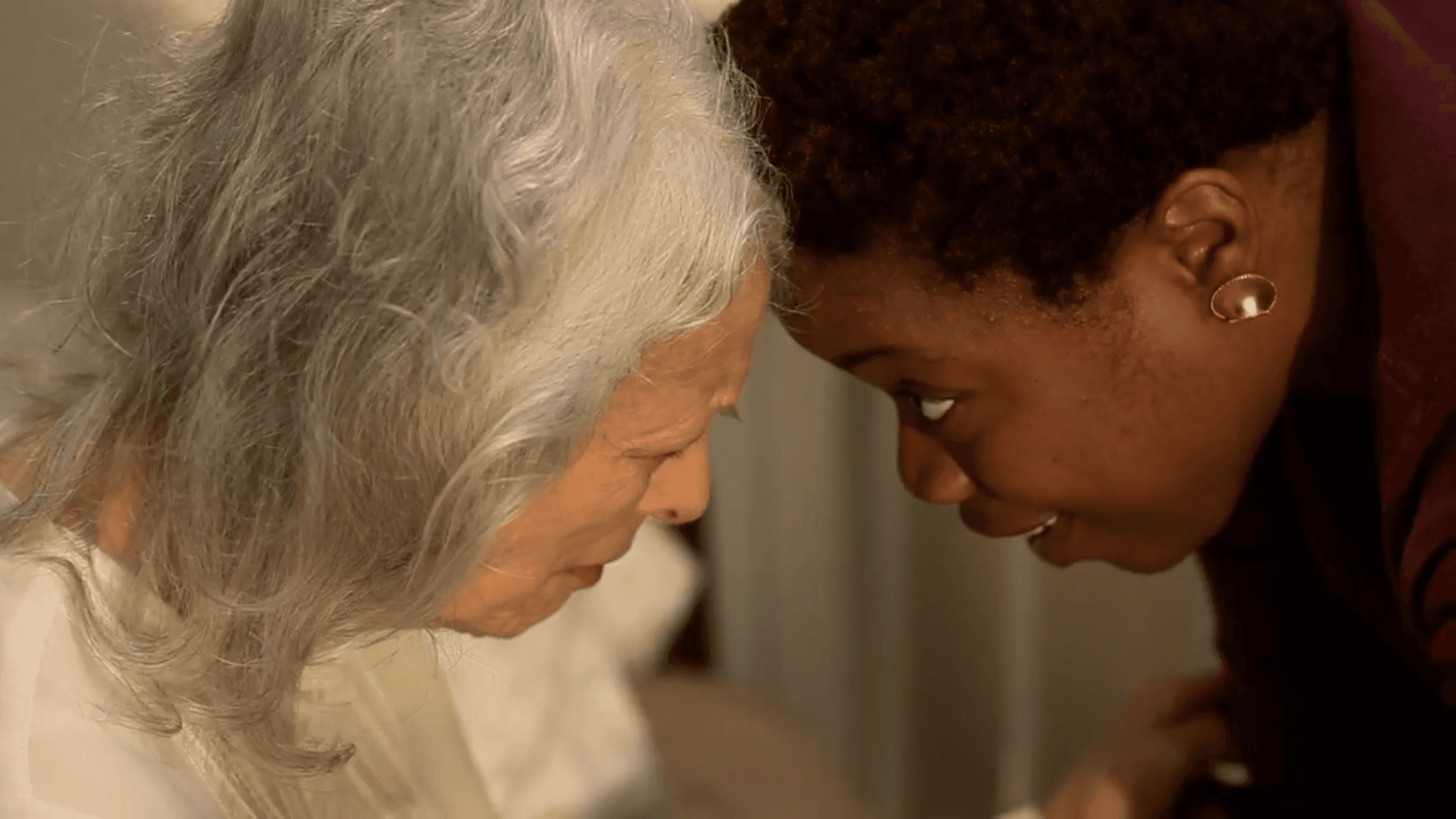
Still image from Fred Won’t Move Out
As fate would have it, my mother unexpectedly died prematurely from complications indirectly connected to Alzheimer’s, just a short time before we were scheduled to begin filming. I doubted whether I could go ahead but it would have meant canceling the production. I decided to begin filming as we had previously planned. Our cameras were rolling on Judith Anna Roberts in the role of Susan, a woman with Alzheimer’s, as she lay on a portable bed in the dining room of the house where only a short time ago my mother had slept. The settings were exactly the same, including the furniture and even the plastic bottles of pills. I never spoke to the cast or crew about how intense this was for me but everyone contributed to an atmosphere on the set that was conducive to my continuing to do the film.

Still image from Fred Won’t Move Out
Fred Melamed plays a character loosely inspired by myself. He and I had been friends at college and for the decades since then at the time of casting. I had followed the great performances he had provided to directors such as Woody Allen and the Coen Brothers. He came to me the day before we began shooting and said, “Richard, if Elliott Gould is playing a character loosely based on your father——or inspired by your father——and I am playing a character based on or inspired by you, then your family is Jewish. This should be part of our improvisation.” I agreed with the analysis of my old friend.

Still image from Fred Won’t Move Out
As I stayed nearby during the filming in a small cabin on the property of a home my brother owns, I began to reread one of my favorite books on Sigmund Freud, Freud and the Invention of Jewishness, written by the Brazilian Lacanian psychoanalyst Betty Fuks. The first time I read it, I had been struck by how illuminating I had found it about the work of Freud from a Lacanian perspective. In particular, I appreciated her emphasis on exile as a dimension of psychoanalysis that Freud develops out of his Jewish roots. Speaking of the importance of exile as a theme in Judaism, she cites the French writer Maurice Blanchot, from his book The Infinite Conversation:
“There is a truth of exile and there is a vocation of exile; and if being Jewish is being destined to dispersion—just as it is a call for staying without a place, just as it ruins every fixed relation of force with one individual, one group, or one state——it is because dispersion, faced with the exigency of the whole, also clears the way for a different exigency and finally forbids the temptation of Unity—Identity.”
Connecting this to the invention of psychoanalysis by Freud, Betty Fuks writes, “Psychoanalysis creates conditions in which subjects may come to experience what is foreign to them; Freud’s invention brings about a radical separation between the subject and the identical...This exile consists in making the subject seek——in the discomfort of repetition and in the gradual deconstruction of one’s own idolatry (narcissism of the ego and imperative of the superego)——what is most foreign to one: the confrontation with the unknown. To experience analytic exile is a learning of alterity: it allows the subject to search for a word to name what is both intimate and foreign.”
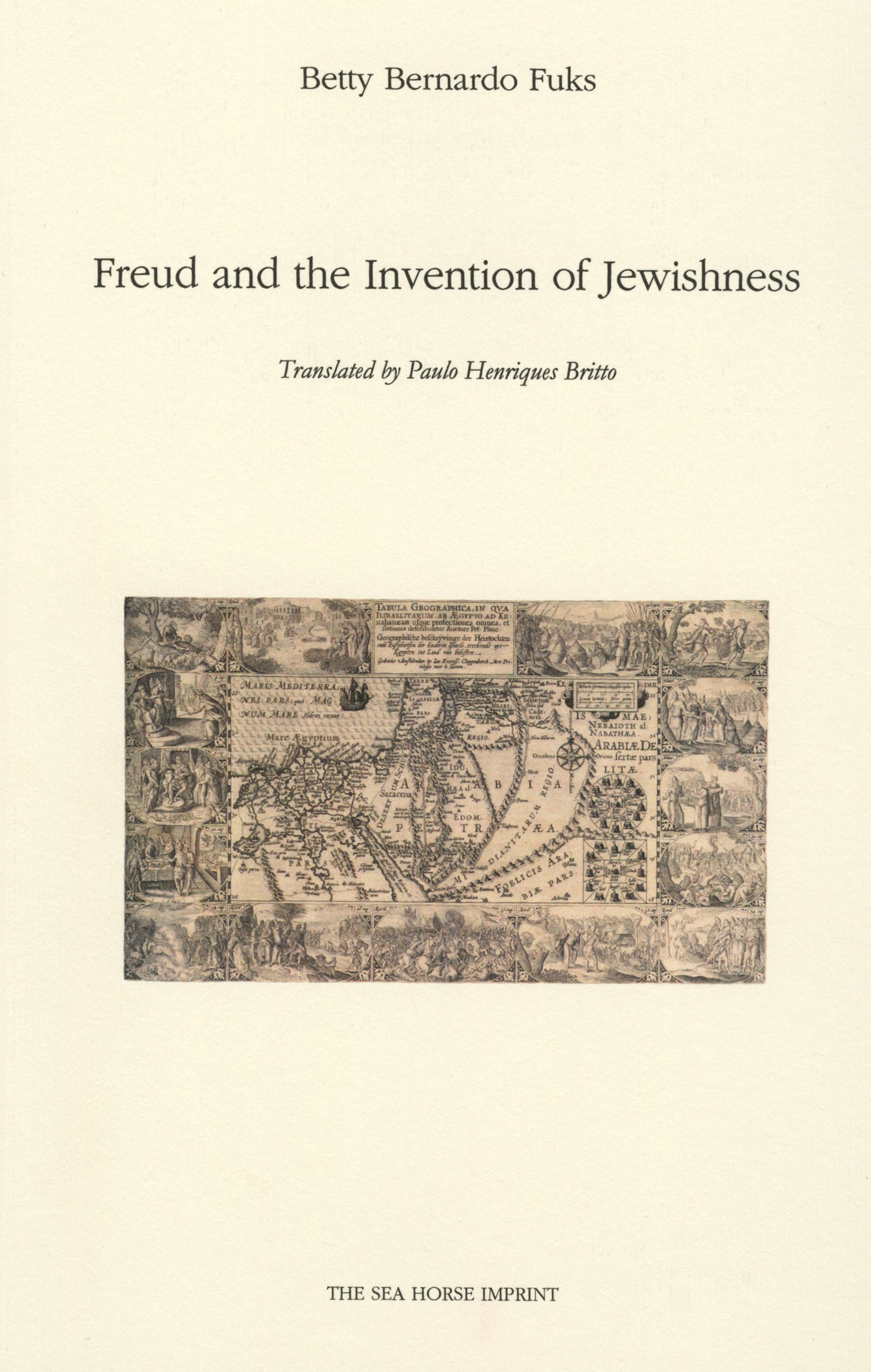
Fuks, Betty Bernando. Freud and the Invention of Jewishness. Translated by Paulo Henriques Britto, Agincourt Press, 2008.
It’s over a decade since we filmed in Katonah. Lately, in Athens, I have been reading again a famous essay by the Palestinian writer and intellectual Edward Said, entitled “Freud and the Non-European.” Its subject is Moses and Montheism, a late essay by Freud that is also crucial for Fuks. Said points to what he observes to be Freud’s “irremediably diasporic” and “unhoused” relation to his own Jewish heritage and sees in it a universal dimension. Said writes, “In our age of vast population transfers, of refugees, exiles, expatriates and immigrants, it can also be identified in the diasporic, wandering, unresolved, cosmopolitan consciousness of someone who is both inside and outside his community.”
For Fuks, Moses and Monotheism brings out a further dimension of exile intrinsic to Judaism that will provide an essential source of inspiration to Freud’s invention of psychoanalysis. Freud argues that Moses is Egyptian. At the heart of Jewish identity is a relation to the Other, writes Fuks. Said extends Freud’s postulation about the place of the Other at the origin of Jewish identity to include other people——including implicitly the Palestinians, for whose rights Said battled his entire life. He thereby can be said to be fulfilling a destiny for a key element of Judaism that inspired Freud's invention of psychoanalysis. As Jacqueline Rose, the well-known writer on psychoanalysis, Judaism and feminism, puts it in her postface to Said’s article, “...Freud believed——and some of the tensions described by Said can, I think, be traced to this belief——that it was the task of Jewish particularity to universalize itself.”
I have often thought that my father’s choice to not invite his parents to his wedding had to do with their being poor immigrants from a country in the South of Europe. However, reading in Athens the title of Said’s article, “Freud and the Non-European,” I am conscious that our family’s roots also contain a non-European origin. As Pontians, my paternal grandparents were diasporic Greeks fleeing in 1923 a genocide in Turkey being carried out by that country’s own form of extreme ethno-nationalism——for which it had found inspiration in Europe. For me, my paternal grandparents are Greeks, identified with the place sometimes known as the "cradle of Western Civilization,” but also, as Pontians, they are non-European. In Athens for a screening of my film Adieu Lacan at the Greek Film Archive, I began to wonder how much this had to do with my father’s choice not to invite them to his wedding. Some of the official documents my paternal grandparents carried as immigrants identified them as “Oriental.”
As I began to reflect on filming Fred Won’t Move Out after again rereading the book by Betty Fuks, exile started to appear to be at the heart of this film, in a different way for each of the characters. The nurse Victoria (Mfoniso Udofia) is a recent immigrant from Africa, working in a white household, separated from her husband and family in order to make a living and support them. Fred (Elliott Gould) and Susan (Judith Anna Roberts) both face in different ways exile from the home they made together and in which they raised their children; Susan additionally faces exile through her worsening loss of memory; Fred faces his own disabilities of aging and the loss of the control of his future that he has taken for granted as the family patriarch. Lila (Ariana Altman), their grandchild, is on the threshold of adulthood and leaving behind childhood. This is apparent in the film through her exploration of the spaces on the margins of the family space, such as the stonewall that marks its furthest boundary or the dark and cluttered barn. The daughter of Fred and Susan, Carol (Stephanie Roth Haberle), who drives up from the city with her brother Bob (Fred Melamed) and her daughter Lila, faces the loss of both of her parents. We see from the first greeting between Carol and her mother Susan a closeness and intimacy that is exceptional. At one point in the garden, which her mother has cared for since they first lived in the house, she begins to cry, comforted and witnessed only by her brother Bob. The music therapist——also named Bob——is going to be out of a job. He is representative of the new gig economy and has had taken from him the previous generation’s confidence to be able to rely on a wage that would support him raising a family. The son Bob has chosen filmmaking as a profession. Out for a walk, he runs into a childhood friend (played by myself). His childhood friend has chosen a more lucrative career in financial services. Bob is faced with exile from his assumptions of a heroic future of seeing his films on the big screen and must instead largely reconcile himself to the new world of streaming.
You may have noticed, I suspect, that I associate exile with a paradoxical loss. I think this is fair. For Lacan, our entry into speech marks a loss, which at best sets each of us on a journey, an Odyssey, from which there is no return—except fleetingly through our desire. Without this loss, we are lost in madness.
Thinking of all these different forms of exile, I am reminded of how Lacan reinterpreted Freud’s famous statement, wo es war, soll ich verden, “where it was, I will be.” Ego-psychologists had interpreted this to mean that the ego must come to dominate where the nomadic id——representing the unconscious——once roamed. Lacan, on the other hand, takes a different route, interpreting the “I” of the statement to be the subject who emerges through speaking and who must accept her exile from any fixed identity, and come to accept her nomadic relation to unconscious desire.

Still image from Fred Won’t Move Out
As I operated the second camera and Valentina Caniglia operated the first camera, the family created by the actors gathered around the character inspired by my then recently deceased mother. When together they began to sing familiar show tunes, I was overcome with gratitude for my family, for the work I was doing and for those working with me.

Happy Mother's Day
I received this message today. It was sent to the email address form on my web site. I want to share it with you. I rarely get a compliment that means as much to me personally as this one does. We can consider it a postface to my two prior essays on lobotomy and on my first feature filmA Hole In One. I’ve removed the email address and all the proper names. My short film the writer is speaking about, The Gate of Heaven, can be found here. Happy Mother’s Day.
Message:
Hello Richard, and Thank you so much for your heartfelt and deeply touching short film about the cemetery where my mother lays entombed. I watch it religiously about once a month, with bittersweet memories of that God awful place where I was conceived, born, and weened (for the first year of my existence until being placed in foster care) . Used to dread visitations which were mandated until I was 9yo , but somehow, your short film gives me a sense of closure and peace of mind. Despite the fact that I'll never know which one of those numbers was assigned to my birth mother [name witheld] . Please let me know if you have a dvd of "Gate to Heaven" available for sale, as it holds a special place in my heart . Kind Wishes, [Name witheld]

From my short film The Gate of Heaven - The Cemetery of the Harlem Valley Psychiatric Center.

Lobotomy Encore (Part II)
While doing research for my dissertation which would become the research for A Hole In One, I met a person who told me that his mother had pursued getting a lobotomy for a long time until eventually she succeeded. Having always assumed that all people who were lobotomized were forced to undergo this treatment, I was stunned to hear about someone whose conscious desire led them to pursue this mode of treatment. Through further research I learned that there existed a small but significant number of people who had not been lobotomized against their will but who had actively sought out a lobotomy, often successfully. I was struck by the existence of such a group because it appeared to blur the line between lobotomy and contemporary pharmaceutical products. I became aware of how lobotomy was actively promoted by the physician who invented it as an almost miraculously simple and foolproof treatment for mental illness. This had led some people to find themselves in the cure just as people today often ask for pharmaceutical products after they see the treatments advertised as representing “the cutting edge” or after they read about them on social media.

Anna (Michelle Williams) finding the grave of her brother marked only with a number in the cemetery of a psychiatric hospital in my first feature fiction film A Hole in One (2004).
A Hole In One is about Anna (Michelle Williams), a young woman in 1953 who wants a lobotomy and her homicidal boyfriend, Billy (Meat Loaf), a small-time hood who doesn’t want her to get one. The story takes place in a fictional place named Icetown, symbolized by a celestial ice pick. Besides Anna and Billy, the story also involves a small number of other characters; these include: a traveling neurologist, Walter Ashton (Billy Raymond), who performs transorbital lobotomies; a traumatized Korean War veteran (Tim Guinee), who falls for his boss Billy’s girlfriend Anna; Billy’s daughter (Merritt Wever) who is set upon discovering the wonders of jello; Anna’s brother Bobby (Jonathan Watton) a veteran who dies in a V.A. psychiatric hospital, two henchmen of Billy (John Paul Tremblay and Robb Wells of the Trailer Park Boys) and Dan, a Black taxi driver who is less than sanguine about Anna’s suggestion that lobotomies might help Black people to adapt to integration (Wendell Pierce).
From the perspective of narrative fiction I was intrigued by the possibility of creating, on the one hand, a protagonist whose goal would repel an audience, disturbing any reductive identification with her, and, on the other hand, an antagonist who was repulsive despite his wish that his girlfriend not get a lobotomy.
Another of the clinical groups, besides the Payne Whitney History of Psychiatry Section, with which I came into contact while doing research for my doctoral dissertation was a Lacanian psychoanalytic association. One of the first seminars I attended was on Lacan’s Seminar XX: Encore. On the cover of the French edition is Bernini’s Ecstasy of Saint Theresa. I was struck by this visual image in relation to the brilliant and beautiful psychoanalyst giving the seminar. Lacan focuses in this seminar on Feminine Enjoyment (a kind of “Jouissance” only existing on the female side of the graph Lacan proposes, although this does mean it is assigned by biology). This combination of a beautiful woman who is also intellectually brilliant elaborating Lacan’s enigmatic seminar on feminine sexuality and a kind of jouissance that is outside the logic of the phallus was totally irresistible. I may have been doing Lacan’s work a terrible injustice by my aphoristic style of starting to make sense of it, but I was diving right in–not starting at the beginning–and was immediately hooked.
I also learned at this time that Lacan had referred to psychosis as a hole in what he calls the symbolic order of language. One day, I visited a psychiatric hospital in Far Rockaway for elderly psychotic patients. I visited with a friend who was a retired psychiatrist who had been for many years on the staff of the Payne Whitney Psychiatric Clinic and a member of the History Section of this clinic where I learned so much. We went to visit her aunt who had been living there as a patient for many years. At the time of her initial psychotic break, her aunt had been working as what her aunt called “a taxi dancer.” “Taxi dancers,” I learned, was a slang term for women who worked at dance halls and were paid to dance with men. The term refers to the women “driving” the men around the dance floor. As we stood beside her, her aunt looked out the window of the psychiatric hospital beyond the crumbling road along the shore to the Atlantic Ocean and talked about the danger posed by all the holes in the ground. Listening to Lacan’s seminar Encore, I also was fascinated by the homophony between “whole” and “hole.” Although not in a way I could formalize, these associations filtered into my work on the screenplay and are retained in the different ways I heard the film’s title A Hole In One. It was at this time that I began to write a screenplay about a woman who wants a lobotomy.
Freud’s concept nachträligkeit is sometimes translated into English as “retroactivity.” Simply put, the idea is that future actions change the past. It was only after making the feature fiction film Adieu Lacan, 19 years later, in 2022, that I began to think of the work of Lacan as influencing all of my films, including the two films I would make next Ikonophile Z (2023) and especially V13(2024).
In the course of location scouting for A Hole In One, I became aware that decommissioned psychiatric hospitals are regularly used as locations for low budget films. While our film has only a few scenes that take place in a psychiatric hospital I was enthusiastic about using such a location. It would provide an historical link for the cast and crew to the subject of our film. We found such a hospital outside of Halifax Nova Scotia, Canada. The production designer Bill Flemming did an extraordinary job of building the sections of Icetown that we see in the film in different parts of the grounds of the hospital. As cast and crew arrived during pre-production I gave regular tours of the grounds of the hospital. It even had a surgical theater that was presumably used for psychosurgery. In the film you can see this theater. In it Anna (Michelle Williams) is being readied to receive electroshock as a form of anesthesia in preparation for being lobotomized by Doctor Walter Ashton (Bill Raymond). In our movie he practices the new form of lobotomy that at the time of our story was getting great buzz in the press—strategically orchestrated by its inventor—and sweeping the country, the transorbital lobotomy.
The transorbital lobotomy came in at a really great price point in the 1950s. During World War II, the American military discovered its own brand of cathartic treatment for what we now call Post Traumatic Stress Disorder (PTSD), then known as “shell shock.” They conceived of their unique brand of cathartic treatment as derived from psychoanalysis. For a few years during and after WW2, military clinicians were largely convinced that it was successfully providing alleviation of symptoms after a short period of treatment. During the treatment a veteran who suffered from shell shock was coaxed into speaking about his symptoms and earlier traumatic events in his life, sometimes using drugs to make it easier for him to speak. You can see this form of treatment being practiced in John Huston’s film Let There Be Light (1946). Huston’s film was shot on Long Island at Pilgrim State Hospital, whose asbestos-filled remains I have visited. The hospital was one of many large psychiatric hospitals built as the war ended in a burst of optimism and government spending on the state and federal levels. As seen in Huston’s film clinicians were confident that a large number of patients could be cycled in and out of such institutions after a short period of treatment like cars or tanks turned out on an assembly line. However, the hospitals soon filled with patients who had become permanent residents. The individual states that were on the hook for financing these hospitals and for their upkeep were in search of a less expensive solution. Eventually the answer was dumping prior hospital residents into imagined “communities,” which were in many cases neighborhoods being dismantled under what was called “urban renewal.” The justification was that the arrival of miracle pharmaceutical products alone was sufficient to treat severe forms of mental illness, absolving the states of any responsibility for not only maintaining large psychiatric hospitals but also for providing any kind of supportive housing. The first of these drugs was Thorazine. Transorbital lobotomy arrived just before Thorazine. It reportedly could be performed–and often was–using an icepick. No surgical training was required. You lined up the icepick with the angle of the nose, inserted it near the eye, pierced the orbital cavity of the skull with a tap of a hammer on the back of the icepick and away went troubles down the drain—or so it was reported in the New York Times, Life Magazine and countless other media of the time. The inventor Walter Freeman often helped write the articles and provided photos. We use many of the headlines from the period in the film, including “Easier Than Getting A Tooth Pulled” (a headline which also made it into Suddenly Last Summer (1959). What really made transorbital lobotomy successful–far beyond previous forms of lobotomy–was that it did not require rendering the patient unconscious using general anesthesia, which was expensive and time-consuming. Instead, electroshock was used. Electroshock was another go-to treatment of the period for many forms of mental illness, including schizophrenia, and was therefore readily available at psychiatric hospitals. It did not require advanced medical degrees in order to administer it—far from it, any underpaid orderly with no medical training could administer it and often did. The use of electroshock to prepare a patient for a lobotomy radically reduced the cost and amount of time required to perform a lobotomy and—from the point of view of hospitals looking to cure the bottom line—it appeared to be a miracle cure in every sense of the word. The one completely executed transorbital lobotomy to which the audience is treated in A Hole In One matches shot-by-shot a short film Dr. Freeman made exclusively for a medical audience—you’ll understand why exclusively if you see my film.
For around a year after I finished A Hole In One I was like the ancient mariner in Samuel Coleridge’s eponymous poem: Almost any conversation with any complete stranger I seemed to somehow segue easily into talking about transorbital lobotomy. I remember one couple at a party who had come for a few drinks and some light banter and were sucked into learning that the icepick first used was one made by the Uline Ice Company and that I had found it in a cardboard box stored in a library’s archive...
The action of A Hole In One takes place during Mental Health Week in June of 1953. I fictionalized the precise period of time when this actual week-long celebration took place so that it coincides with the electrocution of the Rosenbergs. I basically sought to show Anna in an insane world in which her bouts of sanity are a major handicap.
I am grateful that Michelle Williams chose to accept the lead role. When we spoke by phone the first time she told me the night before she had dreamed she was reading Freud. It was an auspicious beginning. Her commitment to her role—to a grueling schedule while she did our film and met her commitment to a television series—inspired everyone involved with the film.
The penultimate scene of the film shows Anna and Tom visiting a graveyard with identical round markers, each grave differentiated from the others by a sequential number stamped on it. Comparing the stamped numbers to the one she has scrawled on a piece of paper, Anna and Tom find the grave of her brother. This scene was added based on a discovery I made early in the process of location scouting. Among the first decommissioned psychiatric hospitals I visited was the Hudson Valley Psychiatric Hospital. During my visit I was guided by a representative of the town. For generations the hospital had offered steady employment to the people living around it. Since its closing, it had become a burden to the same town and a visual eyesore along the main highway running through it. Once upon a time, as a boy being driven by my father to a private boarding school (the one attended by Colin DeLand and myself), I had observed patients sitting outside on the benches and their attendants standing nearby. For years now the buildings of the hospital had stood without lights or people. As the tour of the immense cavernous buildings connected by underground tunnels circled back to where we had started, the town’s representative suggested that we conclude my visit, unless I wanted to see the cemetery—adding that no one had ever asked her to see it. I requested that we visit it. We traveled by car through a golf course where the representative explained the patients had once caddied for the doctors. We came to a rusting arch with letters made from metal cables that read “Gate of Heaven.” It defined the entrance of an area surrounded by stone walls and covered by brush and weeds. Despite this covering, it was possible to make out approximately an acre covered by identical round cement markers, each one topped by a metal disk into which a number was stamped. This is where those who had died at the state psychiatric hospital had been buried. Later I learned this was a widespread practice at psychiatric hospitals, reportedly in order to protect families from the shame associated with mental illness. Seeing me work my way through the weeds covering these monuments, the face of the representative seemed to me to change, as if she were becoming conscious for the first time of what this place signified for those buried beneath and their loved ones. My mother had, consciously or not, made me curious enough that I had spent years uncovering what had happened to her brother Richard and here I was analogously pulling back thorn bushes from these neglected graves. I used this graveyard as in inspiration for the scene at the graveyard near the end of A Hole In One. I also returned here with director of photography Steve Kazmierski after making A Hole In One and made a short documentary video about it.

Foreclosure (2014)
Near the end of the millennium, some five years after leaving Paris, approaching the end of my time in graduate school, driving on the Cross Bronx Expressway with my fiancée and my uncle Jimmy, headed into the Bronx to meet part of my father’s family, I listened as Jimmy turned to my fiancée and told her how smart her future husband’s father had been to get himself admitted into the psychiatric ward of Bellevue Hospital. I thought, "What the fuck?"
The film I watched most often in Paris while Reagan was president in the 1980s was The Shining by Stanley Kubrick. It became the inspiration for my first horror film, Foreclosure (2014). However, my connection to the film was not only that of a cinephile.

Bill (Michael Imperioli) and Raymond (Bill Raymond) meet Christina (Meital Dohan) at the front door of the house Raymond has inherited after his brother's suicide. Foreclosure (2014)
During this time, John Bertucci, an expatriate American filmmaker and environmental activist, edited my first 16mm short film Animals (1984). He also taught me how to use the weekly Parisian publications that featured listings of all the film screenings in the city. I learned to organize my free time each week around seeing films. It was a golden age of small cinemas throughout Paris, showing both a wide variety of films from the entire history of cinema and films recently released. Inspired by the Cinematheque that Henri Langlois had founded in Paris, these small cinemas sometimes grouped films according to filmmaker, according to nationality, genre, even according to–it appeared– “what the fuck—fuck your categories.” It was exhilarating. While in Paris, I started to share Bertucci’s obsession with The Shining.
At the end of this period I found a way back into the U.S. as a graduate student at NYU in Comparative Literature. Without really even knowing it myself, this one 16mm short film that I had shot and edited in Paris had transformed me into a filmmaker. Once back in the United States, I would write a doctoral dissertation on the traces in literature, film and popular culture of the transformation of mental healthcare in the U.S. after WW2. The new role of mental healthcare in the U.S. was initially represented as organized around treating veterans. Like a prisoner who has been planning his escape, I turned my research for this thesis into the basis of my first feature fiction film, A Hole In One(2004). The film stars Michelle Williams and Meat Loaf. It's about a woman in the US in 1953 who wants a lobotomy.
On the Cross Bronx Expressway, while my fiancée steered the car, my uncle from the back seat explained that my father had wanted to delay his trial for some shady financial deal. This involved real estate in the District of Columbia, in violation of his employment at the time with the Internal Revenue Service. My parents were living in Georgetown with their first born child (me). My father, in order to accomplish this subterfuge, my uncle Jimmy revealed to us–shouting because the car’s windows were open–had shrewdly had himself admitted into New York’s most famous ward for the insane in the country’s oldest public hospital. I had never before heard this story and–speeding along the expressway that had torn the Bronx apart in the late 1940s–I suddenly felt I had no idea where I or anything else was going.
As I became all ears, my uncle continued that the admitting psychiatrist was an old friend of my father and of his three brothers from their days of playing stickball in their Pontian Greek neighborhood in the Bronx. This childhood friend had become a psychiatrist and a psychoanalyst on the G.I. Bill. My father’s complaint at the time of his admittance to Bellevue, Jimmy explained, was that he felt an impulsive need to kill someone. I felt certain when I heard this that day–one of my last as a bachelor—and continue to still believe it today—that it was very far from being an arbitrary fabrication by my dear old dad to avoid going to court.
When I was growing up my father would often speak about his encounters with lone men in lonely places where he would be forced into combat and overpower them. He had a twin lens camera into which I used to enjoy looking vertically downward into its viewfinder and seeing displaced there the world horizontally in front of its lens. He said it had been given to him by a bartender at an Irish bar because of all the money the bartender had won betting on my father when he would disappear out the back entrance of the bar to fight a bigger man. On one occasion, when I was around seven, he recounted to me meeting a man late at night halfway down a narrow corridor of a train car. Neither of them, he said, wanted to back up or get out of the way of the other. My father then demonstrated on me, putting his thumbs inside my mouth, how a man could put his thumbs inside another man’s mouth and, forcing them apart, inflict excruciating pain, causing the other man to stop resisting.

Steven (Spencer List) watches his father Bill (Michael Imperioli) carving wood on the back porch.
Perhaps in case he was attacked by his dreams, my father kept a bayonet between his mattress and the bedspring. At the same time his happy place, he often reiterated, had been the Marines, until the plane accident that prevented him from seeing combat in Korea. At his funeral I remember the Marine honor guard placing his coffin in a horse-drawn carriage as we walked behind. On another occasion, a few years later, when I was nine or ten, I remember him raving to my mother in the kitchen about “homosexuals.” At the time I thought that whatever was bothering him seemed to be something imaginary in his head.
Of the multiple failing small businesses on the verge of liquidation that he took over and tried to resuscitate, he finally had success publishing and writing for a couple trade publications in the allied industries of fashion and cosmetics. His over-the-top editorials about patriotism and business were popular with his international readership of executives in the industries. Eventually, on the front page of his newsletter, he began to publish for the cognoscenti among his readers coded messages in rhymes that purported to contain insiders' information about developments in undisclosed industry deals. He had discovered his talent for writing and poetry a few years earlier by observing they were what I had become passionate about and noticing that I had started to receive some recognition for them. My father followed in my footsteps.
If perfume companies didn’t advertise he would insinuate that he could disclose how they were dumping unsold merchandise on the gray market. He was brilliant in his own way at threatening his friends and patrons. Sadly my father seemed to be unable to hold onto any of his adult male friendships. Inevitably there would be a moment when he felt betrayed and would lash out and the friendship would end or continue only in a new distanced way that my father perhaps wasn’t even aware of. At other times, on the flip side, my father could be extremely charismatic, generous and warm-hearted. This was also true in his attitude towards my brother and myself. I thought of him as an unassailable fortress of strength who would come to my defense if needed but I always knew the other side could appear unexpectedly and I repressed knowing that he was both the threat and the source of protection. I’ve often thought that my love of ancient Greek–the language of a culture that symbolizes the establishment of a patriarchal order–was a way for me to imagine another form of paternity that could shelter me from the one my father embodied. For me, ancient Greek appears to serve what I imagine Lacan meant when he spoke about the name of the father or–in French, where the word for “name” and “no” sound the same–le nom du pere–instead of a father obsessed with identifying with me.
When my father’s final last will and testament—breaking with the many previous versions he had made of the same document—disinherited my brother and myself with terms that emphasized his wish to show both the maximum aggressivity towards us and also detachment, it was a terrible shock. Outwardly he had remained very close to me and on loving terms up until the end. I would visit him with my wife at the time and our young children. Within a day, he would forget our visit and call and leave a message saying he loved me–using my childhood nickname–and asking when we were coming to visit. When I learned about his last will and testament, I was unprepared to learn that the impulse of which his acknowledgement had gotten him admitted into Bellevue had–for reasons that are still in dispute–finally dominated what was left of his mind. That my father had had the courage to speak to the psychiatrist who had grown up like himself speaking modern Greek and reveal his impulse to kill someone I take to be a sign of the courage, honesty and love that he possessed.
Obviously aspects of my father have appeared in my films in various incarnations. He was incredibly cinematic to me and terrifying when he was not sewing a button onto my jacket, watching football with me while he paid the bills at his desk, or cooking me a sandwich or grocery shopping on the weekends with my brother and myself to give my mother a break. So the murderous homicidal father in The Shiningplayed by Jack Nicholson felt close enough to home that I could work with the structure of The Shining on a visceral level, not just an intellectual one. And my father’s name was, of course, John. « Heeeeeere’s...”
The movie Foreclosure is about a fragmented family. Bill (Michael Imperioli) a Greek-American down on his luck, his son Steven (Spencer List) and his father-in-law Raymond (Bill Raymond), have been sleeping in their car when the film opens. Bill is awakened late at night and forced to move their car from where he had parked it. Bill gradually becomes possessed by the idea he has to lynch his son to prove he is white.
Bill has already lost his job at the start of the film, his wife has left him and he has lost his home to foreclosure. After spending time living out of the car, he, his son and father-in-law move into a house that the father-in-law has inherited from his late brother Carl (Jeff Burchfield).The house is located in a neighborhood that is itself collapsing under the weight of more foreclosures. It is revealed by a police officer (Matt Servito), who lets them into the house, that a lynching of a Black man (Brandon Gill) took place less than a hundred years ago from a large tree outside the house. The face of the father-in-law Raymond lights up when he spots a framed small Confederate flag hanging in the living room. He enthusiastically tells his grandson about the importance of blood in the boy’s maternal family. Bill is horrified by Raymond’s embrace of the heritage of the Southern states. They soon meet Cristina, a young woman who used to party with Carl in exchange for his “generosity.” When Bill promises that they too could show her generosity, Cristina agrees to join the new occupants of the house for an afternoon of drinking followed by a barbecue. At the barbecue Raymond’s drinking leads to an outburst of racist anger that is directed at his son-in-law Bill. Bill and Raymond are about to come to blows when Steven and Cristna have to pull them apart. Cristina angrily leaves. The next day, a Black former school teacher Virgil (Wendell Pierce) drops by and--in exchange for letting him partake--reveals where whiskey was hidden by the former owner. They start to drink and the school teacher explains that the former owner was a collector of relics of the Civil War and liked to discuss with the former history teacher over glasses of whiskey the history of the Civil War. Virgil explains to the new occupants of the house that the lynching was carried out by prior owners of the same house who mysteriously disappeared afterwards. The ghosts of the former owners return and it is then that Bill becomes possessed of the idea that only by lynching his son Steven can he prove he is white.
As chance would have it, the foreclosure crisis in the U.S., which unleashed a worldwide economic crisis, was underway while I was looking to forge the story for a horror film. The word ‘foreclosure” is the usual translation for the French term forclusion which Lacan uses to highlight certain aspects of the mechanism of psychosis according to Freud. With my background in Lacanian psychoanalysis, when the foreclosure crisis hit, I heard it as “the madness crisis.” And, of course, racism became more acute at this time, as those who had been exploited by the banks and other financial institutions also then served as scapegoats for the collapse. In the U.S. this was aimed at people of color and poor whites but in Europe it was aimed mainly towards the Irish and Southern Europeans, especially the Greeks.
One of my most searing memories of this time for me took place at a birthday party for a friend of my daughter who was turning six. It was at her family’s country house. At one point the father of my daughter’s friend introduced the parents of his daughter’s friends to his German neighbor who worked for one of his country’s airlines. Intending to be humorous, the father of the girl whose birthday it was pointed out that since his neighbor was German and I was Greek (sic), perhaps the two of us could solve the economic conflict between the two countries. The neighbor then looked at me and—with a very grave face, speaking to me but also announcing it to the other parents seated around us—said that “the Germans should not have to take care of lazy brown people.” I thought he had to be kidding and was being ironic. I smiled. After all, it was at a birthday party for a girl turning six. However, he continued to stare at me—perhaps waiting for me to confess my culpability— until he walked off. I realized he was serious. In a certain sense, we could say a dormant racial fantasy from the past had been reawakened.
As a child, having been rejected by the private school that accepted all of my siblings, I started at the local public school whose students were disproportionately Black in relation to the surrounding population. When I brought home on a play date a Black boy, I remember my mother’s discomfort. In the days that followed, she read along with me–for the first and only time–the story of Little Black Sambo who is turned into butter. One of the signs of something potentially being off about me was my friendship. Fantasies, including racial fantasies, are transmitted between members of different generations of a family as well as other group formations–religious, military or political, for example, and can be “reawakened,” given the right conditions.
Currently, in Europe, in the U.S. and around the world, in the midst of rising inequality promulgated by new forms of capitalist exploitation--aptly referred to as the “Uberization of work"--simultaneously we are seeing a rise of scapegoating that underpins the ideologies of extreme ethno-nationalist parties. Freud wrote about scapegoating in Civilization and Its Discontents (1938). He references pogroms against Jews in Europe as an example of this pervasive tendency of societies. The fluidity of what constitutes different racial identities is one of the ways in which scapegoating can be adapted to stabilize hierarchies of power by justifying aggressivity towards stigmatized groups. This was the case in Europe in the wake of the financial crisis of 2008 regarding southern Europeans (i.e. the so-called “P.I.G.S,” Portugal, Italy, Greece and Spain).
The 1790 Naturalization Act, the earliest immigration law in the U.S , allowed for citizenship to be granted to “free white persons” who had resided in the country for a minimum of two years. Nevertheless, what constitutes being white remains open to revision and beginning in the 1920s tensions around what were seen as the pressure on wages from unchecked immigration from countries such as Ireland, Italy and Greece, coincided with the emergence of mass movements and concepts that asserted that these new arrivals were genetically inferior to other people who self-identified as white. This was also the time of the American eugenics movement that Hitler would emulate. In 1924 The Johnson Reed Immigration Act became law in the US. Responding to a perceived crisis–a panic–about wanton miscegenation with the new arrivals, the goal of the act was to return the percentage of different immigrant populations in the U.S. to the percentage they had represented in the US fifteen years earlier. It also included a total ban on Asians. The passing into law of The Johnson Reed Act was a reflection of nativist anti-immigrant sentiment among a large part of the population. Perhaps the most infamous consequence of this act was the refusal by U.S. officials to allow passengers from the SS St. Louis to disembark in the US when the ship arrived in 1935. Most of the passengers were Jews fleeing the Holocaust. Of the Jewish passengers who were forced to return to Europe, 254 died in the Holocaust. The ideology behind The Johnson Reed Immigration Act is foreshadowed Madison Grant’s 1916 book The Passing of The Great Race. Grant argues that only Northern Europeans represent the truly superior race and that miscegenation with other European races dilutes this “great race.” Although contemporary notions of race may seem to have changed, the economic crisis in Europe triggered by the foreclosure housing crisis in the U.S. reawakened ideas that once had been codified in law with the passing of The Johnson Reed Immigration Act. The year it was passed, 1924, also happens to be the year my father’s parents arrive as Greeks expelled from Turkey. Grant’s book included the first formulation of the great replacement theory that was encapsulated in the cry heard in 2017 in Charlottesville, Virginia, “Jews will not replace us.”
For my film Foreclosure, I wanted to film in an area of the country where the banks and other lending institutions were in the process of foreclosing on loans and forcing people out of their homes. I visited a number of areas around New York City as well as the city of Detroit. One of my contacts in Detroit showed me the most recent issue of the Detroit Free Press. Foreclosures in Detroit required a notice in a local newspaper. The current issue of the Detroit Free Press that he showed me, filled with notices of foreclosures, was the thickness of what once might have been a telephone book for Detroit.
Producer Ged Dickersin looked with me at a number of homes in a part of Jamaica Queens, New York, where at the time many of the homes were already foreclosed. Some of the foreclosed homes appear in the film. We found an older house with a large tree outside that fitted our story. We needed bookshelves in the house to be filled with old books. Our production designer Brian Rzepka followed a common practice of buying them by the pound from a supplier. Looking through these used books came across a copy of Madison Grant’s The Passing of The Great Race. Although I had read about this book I had never actually held a copy in my hands. In the film it became the book Virgil is reading when he gets a call that makes him worry about the boy Steven. The fact that I came across this book randomly is emblematic that these ideas are still out there circulating, waiting for the right circumstances to suddenly serve reactionary politics.
During research for the film, I watched Birth of a Nation (1915) by D.W. Griffith. It fabricates a laudatory story about the creation of the Klu Klux Klan and was the first film ever shown in the White House. One scene in Griffith’s film in particular stood out for me. The character Ben Cameron (Henry B. Walthall) has gone into the mountains, feeling distraught about the future of white supremacy. He is seated like Rodin’s thinker when he spots white children being chased by Black children. The white children hide under a white sheet and are mistaken by the Black children for a ghost. The Black children are afraid and run away. The character Ben Cameron has a sudden inspiration. From the white sheet used by the white children to scare the Black children, he invents the uniform of the Klu Klux Klan. I think Griffin was drawn to this scene—or even this story—because this white sheet also carries an association with the white screen on which movies are shown. Griffith is thereby asserting the primacy of the cinema and the “ghosts” it creates for constructing a national ideology around a white race. Jack Nicholson’s character in The Shining, Jack Torrance, dies during a snowstorm, a virtual white out–lost in a labyrinth of whiteness. Given the significance of racism to Kubrick’s film, I see this death of the protagonist as a reference to the concept of race in ways that echo and critique the famous film of Griffith and its promotion of cinema as a tool for promoting a racist ideology around whiteness.
In Foreclosure Raymond, played by Bill Raymond, watches this scene from Birth of a Nation as he prepares to sleep on a couch in the living room. As Raymond watches from the couch we can see behind him the framed embroidery of a Confederate flag that is part of the memorabilia of the Civil War bought by his late brother Carl. It is this small flag he has earlier proudly shown to his grandson. The flag we used in the film had been carried by an unknown relative of my mother’s who had fought on the side of the South in the Civil War. Our pictures--like our speech--are always complicated. We can strive to give them new meaning for new audiences by our actions–which include our acts of speech and the pictures we put together.

The Caller
THE CALLER (2008), my second feature film, was based on a screenplay of which most of it was written by Alain Didier-Weill (1939 - 2018), a French psychiatrist and a prominent Lacanian psychoanalyst who had done his analysis with Jacques Lacan and who became a close friend of mine. He was also a playwright whose works continue to be produced. The screenplay he showed me that became the origin of The Caller was the only one he ever attempted.

The first time I met Alain it was at a conference hosted by the Après Coup Psychoanalytic Association in New York CIty, after a lecture he gave that I found striking. He contrasted the visual metaphors of knowledge in Greek culture—the English word, “idea,” for example, derives from the past participle in Greek for the verb “to see”—with the auditive metaphors at the heart of Judaism, for example, the burning bush through which God speaks to Moses. This was my first introduction to the importance of Freud’s Jewish heritage to his invention of psychoanalysis. From the Jewish focus on hearing and the Jewish edict against idolatry Freud found an important source of support for his choice to sit behind the person who was being analyzed, outside of her visual field, putting the emphasis on their communication through speech.
Of course, cinema is primarily a visual art form. Nevertheless, this tension between, on the one hand, the voice, and, on the other, vision has dominated my own creative works. I had been aware of an analogous tension in my religious heritage as well. The Christian denomination in which my father was raised and for which I acquired a profound respect—even if I remain an atheist—is Greek Orthodoxy. In the Orthodox church there are a plethora of images, starting with ikons and the Iconostasis in front of the interior of the church. Orthodoxy’s own greatest internal conflict has arguably been between the iconophiles and iconoclasts. This is another form of an argument around the voice and writing versus images. One of the arguments in favor of Ikons that the Iconophiles cited was the ability of Ikons to communicate the scriptures to those who could not read. In regards to the Episcopalian denomination of my mother, into which I was baptized, there is a radical distrust of images, which have traditionally been identified as a symptom of the decadence of the Catholic Church. In the small church which I attended as a child and which I last attended for my father’s funeral (although he was baptized Orthodox he chose to be buried beside my mother in the graveyard of the Episcopalian Church), there are no images, only words. In the front of the inside of the church, to one side of the altar, in golden letters, is the Lord’s Prayer.
As a young teenager, I started to make super 8 films. Along side this emerging interest in filmmaking, for a long time I was determined to be a poet. I published my poems, gave poetry readings and corresponded with a number of poets, including with Archibald MacLeish (1892 - 1982). The private boarding school to which I had been admitted with a full scholarship had also once been attended by MacLeish. One of my scholarship jobs was working in the alumni office updating the addresses of alumni. I took the liberty of writing MacLeish. He wrote me back and we corresponded for many years. MacLeish had moved to Paris in the 1920s for the purpose of devoting his life to poetry. Although he returned to the States a few years later, this commitment to poetry would remain with him. When, after many years, MacLeish finally agreed to read one of my poems, I remember my pride when he wrote back, « Congratulations, you have succeeded in writing a Tang poem without writing a Tang poem. » As it had been for MacLeish, Paris was a catalyst for my own creativity, although spread over many more years and in a much much more picaresque style of living, as befitted the late 70s and early 80s. It was also while living in Paris in my 20s that my love of cinema began to reassert itself. Nevertheless, my love for writing and poetry has never completely left me and in my filmmaking it continues to express itself in various ways.
When I reflect on secular manifestations of this tension, conflict or contradiction between words and images the Surrealists come first to mind and the inspiration they found in the work of Freud. The affinity I have found with the work of contemporary Lacanian psychoanalysts and theorists therefore shouldn’t surprise me.
When I met Alain Didier Weill after I heard him speak, I felt an immediate connection with him. He was deeply involved with the arts. Over the years I have met a number of outstanding intellectuals but it’s rare that I feel a personal connection. Working with Alain’s screenplay would quickly become a daunting proposition but he assured me I had his trust. He never said anything to me afterwards to contradict this.
At the time of the completion of my first film A Hole In One, it was screened a single time in Paris. Alain was there. We spoke afterwards. I don’t know how I received the unfinished screenplay but I remember reading it in a hotel room in Paris a few days later. Although there were sections I thought didn’t work, I remember feeling captivated by its ingenuity. Alain had previously abandoned working on it. The story of its origins, as I remember it, is that he had met the well-known French actor Jean-Louis Trintignant at a party. The actor had expressed interest in seeing the screenplay completed after Alain told him the outline of the story. Trintignant however hadn’t replied to Alain later on after receiving a subsequent draft that was also the one I had now read. In short stories and other genres that Alain published, he would retell this same story with minor revisions. In the screenplay as I completed it, I kept the basic story the same but made a few changes. The most significant of these changes was making the two main characters of the story immigrants to New York City who had been born in France.
At the start of the story, two boys, both of them around 11 years old, are strafed by German fighter planes and separated from their parents. They wander in a forest. They come across a Dying Man (Simon Jutras) who pleads not to be abandoned to die alone. One of the boys, who is known by his first name, Jimmy (Axel Feldmann), is afraid of the Dying Man and wants to leave while the other boy, known by his last name, Turlotte (Grégory Ravary Ellis), is determined to remain, watching the man through the moment of his death. Jimmy observes the other boy Turlotte calmly watching the Dying Man until his suffering has ended. Sixty years later in New York City, having long ago lost touch with his childhood friend and having immigrated to the U.S., the adult Jimmy (Frank Langella) spots an article in a local newspaper about an exhibition of photographs of birds taken by the adult Turlotte (Elliott Gould). Jimmy notes the newspaper article states that Turlotte is by profession a private detective. In his adult life, Jimmy, on the other hand, has become a key executive in an international corporation involved in gargantuan financial investments in Latin America, uniting private and public sources of funding. Jimmy is haunted by the knowledge of his own complicity in actions to protect the corporation's investments. These have escalated to the murder of members of local organizations opposing the wishes of the corporation. He decides to betray his business partners by revealing the actions they wish to hide but he first hires Turlotte anonymously over the phone, disguising his voice. Jimmy knows his act of betrayal will result in his own murder. Turlotte regularly reports back to his anonymous client what he has observed. Turlotte is puzzled by the certainty with which his client over the phone attacks the seeming innocence and banality of the person Turlotte is spying on, without Turlotte knowing it is the same person who has hired him and the child with whom he once hid in the woods in occupied France. Turlotte meets Jimmy’s “Sophisticated Lady,” Eileen, (Laura Harring,) a jazz singer. He becomes entranced by her as he becomes more deeply involved with the mystery of Jimmy’s life. When Turlotte realizes who Jimmy is, he rushes to save him from assassination by a paid killer, a US vet who is himself disillusioned (Chandler Williams). Turlotte arrives too late to save Jimmy but in time to watch him die, just as Jimmy had hoped—just as Jimmy had once marveled at the other boy who did not abandon the Dying Man—and hence “saves” Jimmy from the fate of dying alone.
The story by Alain Didier-Weill of a detective hired by a client who wants to have himself spied upon clearly had associations for Alain with his work as a psychoanalyst. However, a labyrinth of complexity inscribes this connection. For example, although the detective is clearly the character who resembles a psychoanalyst, Alain in his personal life would sometimes refer to himself as the other character "Jimmy," and never as Detective Turlotte. I think this avoidance of an identification of himself with Turlotte was part of an ethical choice in regards to how he approached analysis, reflecting the approach of Lacan. Jimmy assumes Detective Turlotte possesses a knowledge about him but this truth turns out to be elusive.
When I read the unfinished screenplay one important association for me was my late friend Martin Koloski. Martin had died of AIDS in the late 80s. We had been friends starting at the private high school we both attended–just slightly older than the boys in Alain’s story. We had met in a class for beginning Ancient Greek. I remember Marty’s father, a physician, asking about the origins of my last name the first time I visited his home . When I told him it was Greek, he asked me, « How do you separate the boys from the men in Greece? » And then the punchline, « With a crowbar. » It was a prophetic homophobic joke from a father of a son who would have a torturously difficult path to accepting his sexuality and who would eventually die in his early 30s of AIDS. After high school, Marty and I and another friend who had started Greek at the same time were studying Greek at Amherst College. I was a student at Hampshire College and determined not to waste anymore time on dead languages. That was before I met Rachel Kitzinger, a dynamic young woman who was a Classics professor at Amherst College. She wanted to direct Greek tragedies to be performed in the original Greek. The first one was Ajax by Sophocles. She cast me as Ajax. At the college the performances were a big success. I transferred to Amherst College and began to study more ancient Greek. I still remember a few lines from the Ajax. They were among the Greek verses I whispered into the ears of each of my two children when they were born.
The following summer a production of the Bacchae in the original Greek was produced at Stanford University in Palo Alto. I was cast as Dionysus and Marty as Pentheus. In that play–or at least in our production–which happened to take place the summer of the U.S. Bicentennial––Pentheus is a horribly repressed and defensive young man while Dionysus is a pleasant and seductive god, until at the end he shows a crueler side as the mother of Pentheus emerges with a head that her father gets her to realize is the head of her son.
Eventually Marty came out as gay and moved to NY. He was looking for work. I suggested to my father that he hire him. This turned out to transform the fortunes of my father’s small company for a short but lucrative few years. My father had started as a book publisher with a law degree but had gradually begun to focus on publishing trade publications in the fields of fashion and cosmetics. At the private high school we attended Marty had been the only person capable of programming the IBM computer that took up a room. When he began working for my father in the 80s, computers were just starting to play an increasing role in publishing. Marty soon made my father aware that he had hired someone who could make him overnight far ahead of his competitors. Eventually Marty left New York and moved to San Francisco to study law. I was living in Paris and had been out of school for many years when a girlfriend who was in graduate school in Comparative Literature asked me if I would be interested in writing on AIDS for a new publication at a prestigious university. I accepted. I had been moving back from Paris to New York at the time. I hadn’t been in touch with Marty for over a year. I knew he was living in San Francisco and had become a lawyer. When I reached him, I asked how he was and he said, “Oh, not well, I have AIDS.”
Over the next year he assisted me by reading a couple drafts of my article. Researching it was my introduction to critical theory. Friends in Paris introduced me to the work of Foucault, Derrida, Baudrillard… I wanted to save my friend’s life through the power of thinking and of writing, attending conferences, marches and other events. When someone today tells me critical theory has lost its significance in academia because it isn’t relevant to the real world I remember how real it was for me then and how real it has been for me ever since that time. He died before my article was published. The whole trajectory of my friend’s illness and my taking on AIDS and his illness as subjects on which I was writing was an amazing education on homophobia and the lethal violence of social repression and cultural norms. Reading during that period of time William Defoe’s “A Journal of the Plague Year,” (1722), I began to think about how the word “intercourse” can refer to either sexual intercourse or communications between people. When I was talking about AIDS, many people treated me as if I could spread AIDS to them through speech. Although Marty was far from alone when he died, I regretted that I hadn’t been there. The theme in Alain’s screenplay of two childhood friends and of the wish by one of them to have his friend save him from dying alone felt very personal to me.
The French filmmaker and theorist Guy Debord once wrote that, “The spectacle is not a collection of images, but a social relation between people, mediated by images.” Of course, Debord intended to highlight how these social relations for an audience disappear and are replaced by a relation between images but in my experience of making low budget films certainly the social relations, while not paramount, have been very much in our minds as filmmakers. From The Caller I would gain two important friendships. One was with Alain and the other with Elliott Gould. With each of them I would go on to make another film. With Alain it would be V13, finished four years after he died, and, in the case of Elliott, the second collaboration in our future would be my film Fred Won’t Move Out, about which I will have more to say in another essay.
Alain had recently remarried when The Caller premiered at the Tribeca Film Festival. Alain and his new wife Axelle du Rouret, who would become my close friend, were present when our film received an award for the best Made in NY film presented at that year’s festival. A lot of celebratory champagne was poured and Alain clearly enjoyed being with the stars and sharing with Axelle the limelight.
The film’s initial success was eventually curtailed by bad luck that was triggered by the financial crash that started in the U.S. housing market just when the film was reaching the market. The losses suffered by the investors at a time when they were also losing money on all their other investments made it a risk about which they no longer felt proud or that in retrospect seemed to them remotely reasonable to have taken. For my next film I would turn my attention to the housing crisis and name it for Lacan’s principle term for the psychic structure of psychosis, Foreclosure.

Transorbital Lobotomy, is it right for you? (Part I)
Last year when I was flying into Newark from Paris in the early part of the summer, our flight, just as its landing wheels were about to touch ground, had to abort and again ascend back into a dark orange sky.
After we landed, turning back on my cellphone, I learned that fires were burning out of control around Halifax, Nova Scotia, Canada and this was making landings more hazardous in New York and New Jersey. Over twenty years ago, Halifax is where we filmed my first feature fiction film A Hole in One (2004). Hearing about the fires in Nova Scotia that day made me think about the people from Canada with whom we had made this film about a woman who wants a lobotomy, starring Michelle Williams and Meat Loaf. I thought about the lighting crew and camera crew, the people who worked making sure our production office was set up and running smoothly, and the many others I had met in Canada… our incredibly talented production designer Bill Fleming and the Trailer Park Boys–John Paul Tremblay, Robb Wells and Mike Smith.
At the time we filmed in Nova Scotia, the local film industry had a hot hand. They were working constantly. This was in part because of the exchange rate between currencies, partly because Canada was ahead of the United States in regards to attracting productions through offering tax credits and because they had garnered a reputation internationally for the professionalism of the crews they could put together. When we were filming I remember the awe I felt at the synchronous interaction of the members of the camera crew. We were shooting with celluloid film. Afterwards, in Toronto, we transferred the footage to a digital format in order to complete the color-timing. Like our film, the world of filmmaking was in the midst of a shift to a digital format. Working with celluloid was about to become an exception rather than the rule.
The French psychoanalyst Jacques Lacan coined the term extimacy, comparing it to a Moebius Strip. Place your index finger anywhere on the outer edge of a Moebius strip and it becomes the inner edge and this is true vice-versa. Although Lacan's use of the term goes much further than my own, I will use it to explain what has been for me an important aspect of my work. Making my films I have found what is outside in the world to be where I find what is most intimate to me and inversely by looking at what is most intimate in me I find myself writing and filming what is out in the world.

Anna (Michelle Williams) finding the grave of her brother marked only with a number in the cemetery of a psychiatric hospital in my first feature fiction film A Hole in One (2004).
At the Epigraphic Museum in Athens one can see many extraordinary examples of writing done in the manner known as “boustrophedon,” that is to say, writing that goes in alternate lines from left to right then right to left, like an ox plowing a field—which is what the Greek means, literally “ox turning.” This is writing that in its continuous line resembles how a thin flexible celluloid strip of film moves through a projector and a camera, turning in one direction then the other, beginning with the Cinematograph of the Frères Lumière. Boustrophedon, as a figure of speech, evokes how, in order to be a filmmaker, I have had to just “plow ahead,” not getting bogged down by my lack of mastery and taking as my principle—in a phrase from Samuel Beckett—“Try again. Fail again, Fail better.”
I am partially colorblind. This handicap has been of a tremendous assistance to me. It has emphasized for me and for the people with whom I have collaborated the inextricable relation of a collective effort and individual authorship. As I finish work on my video installation Athens Sanctuary, I will add that my colorblindness has always insuated the role of blindness in my work, and hence the intimacy of the social process to my capacity to create my own work.
Homer begins both the Iliad and the Odyssey with a desire addressed to the gods that the poet be given an opportunity to listen and to hear. The filmmaker looking to create a film that is uniquely their own may wish to listen and look outside to the world and out there find what is most intimate and the reverse, find how what at first seems locked inside is in fact out in the world.
It was from reflecting on how I was named that I first began to envision A Hole In One.
When Ingrid Sischy left her position as editor of Artforum in 1988, one of the new editors called me saying he had heard I was an expert on performance art. I confirmed this, accepted the job to review performance art, got off the phone, and the next day went to the library and looked it up. It turned out that Rosetta Brooks, founder and editor of the irregularly published art magazine ZG, had recommended me. She had published an interview I had conducted in Paris with Paul Virillio, author of War and CInema. The interview was about the space shuttle Challenger explosion. Rosetta had also seen a play of mine, Shade (1986?), that I had staged in the squat where I was living in Paris. Based on seeing this play she had recommended me to Artforum.
Reading about performance art In one of the huge majestic high-ceilinged reading rooms of the Main Branch of the New York Public Library on 5th Avenue, I quickly realized that I was familiar with performance art, even if I hadn’t known it by that name. I was familiar with the work of artists like Joseph Beuys and Niki de Saint Phalle–and, Brooks was right, my theatrical work did have many points in common with performance art. After I had watched and reviewed a few works of performance art, I started to plan my own performances.
Among these was a piece of performance art based on the records of my mother’s brother Richard. He was named Richard after his father, my maternal grandfather. When I was born, my mother had three living Richards in her family: myself, who was her first child, her brother and her father. Within three years I was the only one left. Her brother, who had spent eight years in a veterans psychiatric hospital, either wandered off or escaped and was hit by a train. Within a year of his son’s death their father died from a heart attack--which I presume was a manifestation of his grief.
In the late 1980s, during the same period when I was living in New York City and writing for Artforum, I was engaged–with my mother’s assistance–in a protracted effort at obtaining my uncle’s records from the veteran’s psychiatric hospital. When I received them, they revealed a previously hidden part of my mother’s family and to me appeared to explain why she had always been so adamant that I had been named after her father—not her brother, whom she persistently called by his middle name—a habit, I deduced, in her family in order to differentiate him from his father. These records became the basis for my piece of performance art Taste (1991). Near the end of a long and painful-to-read series of reports on his eight years at the hospital they showed that during the final weeks of his life, preceding when he was struck by a train, the chief psychiatrist of the hospital had denied a staff recommendation that Richard be among the next group of patients to receive a lobotomy. The title Taste I based on a typographical error in his records where, instead of writing the patient had been “tested,” it said he had been “tasted.” I was struck that the records that were intended to be a story about the patient were also a story about the storytellers. I was by then enrolled in a graduate program in comparative literature at NYU. I began to wonder if might not submit these records to a close reading as part of my studies
Richard had served in the 3rd Army when it was fighting in Germany and later occupying areas of the country. While he was serving in the 3rd Army it had been involved with the liberation of the Dora Mittelbau concentration camp. American soldiers supervised the burial of corpses of prisoners found in the camp.
After the war, my mother’s brother had initially returned to Princeton University to complete his senior year. It was there he had his first recorded psychotic break. I have only seen one photograph of him from the time when he was at Princeton after returning from WW2. Richard in that one photo looks different than the other young men at Princeton University. In contrast to them, Richard looks like he thinks he has been bent out of shape and is trying to compensate. After the psychotic break, he was soon hospitalized in the Veterans’ Administration psychiatric hospital in Maryland where he would live most of the time over the next eight years until his death. At the time of his first admission to the psychiatric hospital, he had been seeing a civilian psychiatrist. His notes are included in his hospital records. He is not only the sole civilian clinician but also the only clinician to mention my uncle’s service as a soldier in the war as a possible contributing factor for the psychotic break. At times the records describe him getting on the same day multiple treatments of insulin coma therapy and electro coma therapy. The train that struck him had been headed to Baltimore where his family lived. My mother once told me she imagined her brother had been trying to get home.
Colin DeLand, the renowned gallery owner and curator of the 1980s and 90s, allowed me to perform Taste in his gallery on Wooster Street, American Fine Arts Co. I had done construction work for Colin when he was setting up the gallery and as teenagers we had been friends at a prep school we both attended. His romantic and business partner Pat Hearn, who owned a gallery across the street, attended one of the performances of Taste. The next day she took me aside and told me that I was onto something I needed to pursue. Of course, people make these kinds of comments out of courtesy all the time, but coming from Pat Hearn and the way she said it made me take what she had to say very seriously and the course of my work ever since has proven her right.
Doing research on the period when my uncle had been hospitalized as a psychiatric patient, I quickly discovered that the initial rise of mental healthcare in the US after WWII and the new paradigm for mental health were framed in popular culture around what reportedly clinicians had learned during the war from treating soldiers and which they were now providing for veterans and also starting to offer to the civilian population. I decided to make this transformation of mental healthcare in the postwar period and its representation in literature and popular culture the topic of my doctoral thesis. The research for this thesis eventually became the research for A Hole In One.
By looking at my name I had found the story of my mother’s brother and this in turn had revealed a key moment in the history of mental healthcare in the U.S. This is an example of what I mean by extimacy and how it has been intrinsic to my filmmaking.
The first US Mental Health Act was passed by President Truman in 1946 establishing the National Institute of Mental Health. What is popularly known today as the “G.I. Bill” was officially entitled the “Servicemen's Readjustment Act of 1944.” The term “Readjustment” would also soon be found throughout the first Diagnostic and Statistical Manual of Mental Disorders (usually known by the acronym DSM) published in 1952. It was a small book of a limited number of possible forms of mental illness. It was nothing like the expansive tomes of today’s revisions that basically manage to provide everyone with a diagnosis treatable by psychopharmacology. This first edition of the DSM was based on a nosology of mental illnesses written during WWII for the treatment of soldiers by William C Menninger, who had left the family clinic in Topeka Kansas to become director of the Psychiatry Consultants Division in the office of the Surgeon General of the U.S. Army. “Readjustment” went back to the concepts of the psychiatrist Adolf Meyer, a Swiss-immigrant to the US who had become the head of the American Psychiatric Association and whose nosology for psychiatric illnesses had been the generally accepted one in the field in the U.S. before WWII. The use of the term “readjustment” in the original title of the G.I. Bill foreshadowed the new importance that was foreseen for mental health care after the war as meeting a societal need. My dissertation focused on the diagnosis of schizophrenia and how the topics of mental health care, mental hygiene, mental illness and madness began to circulate and be transformed in both literature–especially the writings of the Beats and JD Salinger–and in popular culture–such as in films like Forbidden Planet (1956) and The Snake Pit (1948)–to a degree and in ways that reflected the new prominence given to mental illness in popular culture of the post war culture.
With the encouragement of an anthropologist who was on my committee, I began to meet people who worked in the field of mental illness. I got to know psychologists, psychoanalysts and psychiatrists who had been in practice immediately after WWII, as well as associations formed to support these clinical paradigms. I started to attend meetings of the Payne Whitney History of Psychiatry Section. In the U.S. it is the oldest and most prestigious group of clinicians focused on the history of psychiatry. It was an eclectic group representing a broad range of approaches to mental illness. Their meetings took place on Wednesday afternoons in the basement of the clinic. At that time, in the early 1990s, the clinic still had its own building separate from the rest of the hospital system. When it had begun to house patients in 1929, the building itself had been on the cutting edge of psychiatry. Among its advertised special features had been windows intended to prevent suicide and doors that wouldn’t slam loudly when they were closed. I filmed the interior as it was being torn down and hope to make this footage available as a short film in the near future.
Through a contact at the Payne Whitney Clinic, I was able to find work volunteering at an outpatient center for the severely mentally ill. The center--whose name I will keep confidential--was located near Times Square. Its programs were designed for patients who only had a single diagnosis of mental illness, without any additional diagnosis of addiction—although they were all taking prescribed psychiatric drugs. At the center I assisted-directed the theater program. I also designed and ran groups for which patients–or “clients” as they were called–could sign up. In one of these groups, which I had designed, we read aloud the short stories of Poe, Melville and Hawthorne. Leading this group made a lasting impression on me. Another group created and performed a play. I served as the assistant director. I especially remember a play entitled “Room 13A.” It had been written through improvisation. It was about a drug that cured all mental illness but had one side-effect: it brought back the dead.

French Movie Sex Bombs Pursue US Marines
I remember my father as a master of salad making. Perhaps this was due to his Greek heritage but his salads were definitely not classically Greek, containing, for example, blue cheese.
My father’s pride at having been a United States Marine was softened by observing how he experienced as pleasurable and calming many of the routines of domestic life that he practiced on weekends.

My father, whose Greek parents were refugees due to ethnic cleansing in Turkey in 1924, makes an appearance in my film about refugees arriving in Greece from Turkey in 2017, No Human Is Illegal.
These he had learned from his mother. They included grocery shopping, cooking and sewing. He was also prone to explosive, terrifying fits of anger that no one could predict. Despite this, by the pleasure he took in these recurring tasks, he helped out his wife, my mother, and augmented considerably the compassion I, the oldest of his four children, felt for him.
His parents, who had immigrated to New York City, living first in Brooklyn and then in the Bronx, weren’t classically Greek either. They were diaspora Greeks. Before they immigrated they had been living in the Turkish city where my grandmother’s family had lived for generations and which is commonly known as Istanbul, although they persisted in referring to it as Constantinople. They left in 1924 when the rise of nationalism necessitated a treaty ordering the reciprocal ethnic cleansing of their largest respective minority religious communities. Instead of going to Greece, my grandparents came to the United States. They traveled on a Russian ship whose passengers my grandmother remembered as being Russian Jews. My grandfather had grown up in a Greek community in Georgia, where he learned to speak Russian, and more recently had been working on a British ship, where he learned English. My grandmother told me proudly that he had been able to act as a translator for the other passengers when together they arrived at Ellis Island.
For the salad dressing my father taught me to always put vinegar before oil. Despite his lesson--or perhaps because of it--for a long time I couldn’t remember which came first but only that he had admonished me that the order was very important. After living in Paris a number of years, my mnemonic trick was to associate this "v.o." (vinegar, oil) with the "v.o." one frequently sees after the titles of foreign films in France, « version originale , » meaning that at this cinema the dialogue of the foreign film will be heard in its original language, accompanied by subtitles rather than dubbed. I still have this chain of thought around v.o. when I dress a salad. Since childhood I have always been creating mnemonic tricks for myself. Most of them I forget almost immediately. I think the mnemonic trick of v.o. sticks with me because it contains an added connection to my father whose salad-making is in some sense the palimpsestic blueprint of my own.
Of the two great Greek historians of antiquity, I think of myself more drawn to the style of Herodotus (c. 484 – c. 425 BC), who also lived and wrote in what is today modern Turkey, than to the style of Thucydides (c. 460 – c. 400 BC), who lived and wrote in the same city where I am writing today, Athens. Despite my sense of affinity with the style of Herodotus, in my film about refugees landing on Lesvos in 2017, No Human Is Illegal, I make an extended reference to Thucydides. His style, in contrast to that of Herodotus, provides to his work an overarching narrative that gives tragic form to the hubris of ancient Athens as it becomes weighed down with being an empire. Its democracy loses its ability to think politically as its thinking becomes distorted by its need to dehumanize those who stand in its way. The style of Herodotus, on the other hand, leaves intact stories that are hearsay and fanciful. He vacuums up a vast number of sources. Like Herodotus, I include what I hear and transmit it within the category of history as a new conceptual framework for rereading and analyzing these stories. However, at present, I am in Athens to create a video installation that derives from my long passion for Greek tragedy and my conviction of its current relevance to the fight against the resurgence of fascism. It is as if the tragic form returns to me and, at the same time, to the world, both in unexpected ways.
Over a few days one winter in the late 1980s, I sat down with my father’s mother in the cramped kitchen of the apartment in the Bronx where she had raised her four boys—of which my father was the second. I recorded my conversation with my grandmother using the kind of cassette recorder of the 1980s known as a boom box. Traveling to the United States in the 1920s, my grandfather’s transit papers had listed his occupation as “woodworker.” Once settled in the Bronx, he eventually became a self-employed wood manufacturer. As I have written about elsewhere, the period after WW2 was when Americans were obliged to figure out how to integrate new forms of technology, specificaly hifis and televisions, into their homes. One of their solutions was to make them look like furniture by encasing them in wooden cabinets. This was a great stimulus to my grandfather’s business. In the early 1960s, while my parents struggled to raise their children in a wealthy suburb of New York City, I remember playing in the garage in the pile of discarded pieces of lathed wood my father’s father would regularly drive up from the Bronx and deliver to us. Its intended purpose was for kindling in our fireplace. In our garage I remember loving to play in this pile of discarded wooden geometric shapes, imagining how they might connect to each other. They still evoke for me the Timaeus, the dialogue of Plato which contains a discussion of geometry and the creation of the universe. In the late 1920s, my grandfather’s initial success as a small independent wood manufacturer had coincided with the pre-crash ever-upward rise of the stock market. He invested in the market and for a very short time this paid off handsomely. My grandmother after arriving had joined the International Ladies Garment Workers Union. When the stock market crashed in 1929 and the Great Depression swallowed the country, it was my grandmother’s work, she told me sitting in the kitchen, and the union to which she belonged that had kept food on the table and allowed them to pay the rent.
At the end of my visit to my Greek grandmother, she gave me what she said was a wooden swan that my grandfather had been trying to repair at the end of his life. It was broken at the neck. He had glued the head back onto the body and then glued it into a wooden dowel so that he could–I suppose–manipulate it more easily and possibly place it in a lathe again. It was the most elaborate and artistic piece of wood carving I ever saw done by my grandfather.
The newspaper columnist James Brady, in his book The Scariest Place in The World: A Marine Returns to North Korea devotes a good part of a chapter to my father but the content is not what the title of his book might lead one to expect. The title of the chapter in which my father figures prominently reads, Marines At the “21” Club With French Movie Sex Bombs In Pursuit. It’s mainly about the role my father’s Manhattan apartment played in the good times Marines who were friends and acquaintances of my father enjoyed when they were away from the Korean Conflict. Near the start of the chapter Brady states that “Marines are snobs, if you haven’t fought, you don’t really belong.” It then introduces my father as someone who didn’t see combat because of no fault of his own but because he was in a plane accident the night before he was to be sent to Korea. My father’s wish to be one of Brady’s snobs never left him.
Brady writes of asking my father, more than forty years later, at lunch at the Yale Club, about the circumstances of the accident the night before he was to leave for the place that in the title Brady has described as “the scariest place in the world.” The circumstances of the plane crash are fairly accurately recounted by Brady, as far as I can tell, although he writes that my father described it to him as a one-time event, which differs from what my father told me. Brady writes that the Marines on board the plane, one with his new wife, had commandeered the plane with orders carrying forged signatures. Their goal was to go gambling with money they were able to draw before heading to Korea. By taking an advance on their pay—which was generously calculated on the assumption they wouldn’t be very quickly killed–the Marines had all–in their colorful expression that Brady quotes—”taken down a dead horse.” This particular trip, on their way back, in the version of the story my father told me, he noticed the pilot was disoriented and changed seats so that he would be in the co-pilot seat. Over the radio they received instructions to turn a certain number of degrees but didn’t correctly hear the command. The next radio communication warned that they were headed for a mountain. The pilot turned sharply and their plane stalled. It crashed down the side of a mountain in Nevada and into the Truckee River. Those who had survived found themselves swimming in the cold fast-moving water. My memory of my father recounting to me this story–when he was driving me home during a bad thunderstorm from the private boarding school I was attending–included the detail that forging orders to obtain a plane was a stunt they had pulled multiple times before.
I can understand Brady’s interest in this story but what really stands out for me in this chapter of Brady’s book, in which my father is the main protagonist and for which he is the only acknowledged source, are two details on the first page. The first of these, which I have already mentioned, is Brady’s declaration that Marines who had served in combat differentiated themselves from who who hadn't to such a degree that Brady could describe them as snobs. The second is a major factual inaccuracy in Brady’s account regarding my father’s extended family.
When my father was buried, his funeral highlighted his military service. My father--at the very least--had often let pass the presumption that he had been in combat. I have been to the funerals of a number of people who happened to have been US combat veterans but none of their funerals have come anywhere close to my father’s in terms of underlining their connection to the military. Four marines as honor guards lifted his coffin onto a horse-drawn wooden carriage, behind which walked an Episcopalian minister holding in front of him an ornate cross, followed by the honor guard who in turn were followed by the mourners. This whole procession was preceded by a bagpipe player. At the site of the grave, next to my mother’s, the honor guard performed a 21 gun salute.
Of the mourners following behind the wooden wagon. I was the first, filming the procession with my cellphone. That day to me my father’s whole life seemed to have been about either giving the impression he belonged to groups to which he didn’t belong or giving the impression he had an uncomplicated relation to groups to which his relation was very complicated. I find this underlined by the most glaring factual error in Brady’s description of my father. Brady writes, “Ledes himself was related to the Skouras family, wealthy Greeks who owned 20th Century Fox.”
During those two days during which I visited with my grandmother and recorded her with my boombox, one of the topics we discussed was how my father had become a frequent guest in the home of George Skouras who had started and at that time was running United Artist Theaters. The brother of George Skouras was Spiros Skouras, who had founded and was then running 20th Century Fox .
After Greece’s entry into WW2 was triggered by the invasion of its territory by Italy in 1940, the two Skouras brothers became prominent in fundraising in the U.S. on behalf of Greece, drawing on the star power of Hollywood to raise money. The US had not yet officially entered the war against fascism.
One of the fund-raising events to help Greece at which George Skouras appeared in 1940 was at a play performed at a Greek Orthodox Church in the Bronx, Zoodohos Peghe. My father’s family were members of the church. My grandmother told me her husband had crafted most of the woodwork in the church and served as a deacon. At the church my father acted in the performance of the play that was attended by George Skouras. I don’t know what the play was or what role he played, but, according to my grandmother, afterwards my father was introduced by his father to George Skouras. My grandmother explained to me that George Skouras had two daughters and was happy to have my father as a young man around the house, as a kind of surrogate son. Did my father misrepresent himself to James Brady and others as being related to the wealthy Skouras family rather than to his own family? I asked him this on numerous occasions near the end of his life and he always vehemently denied it.
Brady goes on to describe how during the Korean Conflict my father’s ground floor apartment on the Upper East Side was headquarters for wounded Marines looking for a good time in Manhattan. Brady writes, “...it was his bachelor apartment on the East End Avenue that we recall, with its cocktail parties, gorgeous young women, decorated Marine officers, and White Russian aristocrats.” A little later in the same paragraph Brady continues, “Wounded Marine officers from the untutored corners of rustic America, recently returned combat officers of no especial background, arrivistes like myself, there we were hanging with a Prince of all the Russias, cracking Easter Eggs and hurling champagne glasses into fireplaces.” I have no doubt that most of this is true. One of the Russian princes became by godfather and the chapter ends on a tragic note describing the slow but steady decline of one of their brothers-in-arms who struggled for years to write a screenplay about Ullyses S. Grant and who finally died from complications related to his alcoholism. I remember this friend of my father. During a period when I was working writing for my father’s trade magazine in cosmetics, his friend would clandestinely sleep on one of the fire escapes of the company offices. The only thing that obviously isn’t true about Brady’s account is the claim that my family is related to the Skouras family.
After Pearl Harbor my father had transferred from Columbia University to Yale, which had an officers program. While George Skouras had daughters, his brother Spiros had two sons. They were at Yale at the same time as my father. He told me they didn’t get along with him because other students assumed they were related. I wonder now if my father wasn’t responsible for creating this rumor.
Just before mentioning that my father was related to the Skouras family, Brady describes him as “our one man Almanach de Gotha.” By this Brady means that my father could be counted on for his knowledge of the blood lines of European royalty that had immigrated to the United States and also for his knowledge of which American families were considered “the best” and who belonged to them. My mother’s family were, as I often heard it pointed out by him, “the Chapmans of Baltimore.” Their names were included in the Baltimore Social Register. After my parents’ marriage, my father’s name was added to the register and, starting with myself, the names of their children were added. At the time of my father’s death, the only books in a bookshelf beside where he would sit everyday was a complete set of the annual indexes of the Baltimore Social Register.
My Greek grandmother never showed or expressed anything but love and admiration for her four sons. The only exception was the day I interviewed her. She told me in a matter-of-fact tone of voice she wanted to be buried in the dress she had planned to wear for my parents’ wedding. The wedding had taken place in Baltimore. My mother's parents believed--as my maternal grandmother once told me with bitterness--people like my father should never have been allowed into the country. My father did not invite his parents to his wedding.
While growing up, I remember being alone in my parents' bedroom, approaching their adjacent beds and examining closely and clandestinely the bayonet my father kept under his mattress. Had the scariest place in the world migrated from North Korea to here where my father slept?
When I first started making films with a Super 8 camera owned by the private school I was attending in my early teens I imagined telling people that I had been in direct contact with George Skouras, the founder of 20th Century Fox, and that he had given me a motion picture camera.

Call Home
I have been in Athens since the start of February and expect to be here at least until early May, working on a project which I will speak about at another time. I love living in Athens. I first visited the city when I was a few months away from becoming a teenager. My Greek grandfather, my “Popou,” had very generously offered to pay to have me and my cousin Barbara attend a camp in Greece run by the North American Diocese of the Greek Orthodox Church. The purpose of the camp--which still exists--is to reacquaint young Greek Americans with their cultural heritage. I was allowed to attend---or my religious affiliation was overlooked, I'm not sure--even though I had not been baptized into the Greek Orthodox faith but rather into the Episcopalian faith of my mother. The following fall, at the boys school I was attending, a Latin teacher began teaching for the first time ancient Greek. I was one of his four students. It was the beginning of my lifelong involvement with Greek culture
I feel incredibly fortunate now to return again and to be working on an art project in Athens. At the same time, I miss not being able to see my son and daughter, both of them young adults attending college. We’re in touch, of course, through contemporary technology, and, at the same time, this contemporary technology has facilitated my being far away. If I were back in New York City, I would still be far away from each of them most of the time, since neither of them is studying in New York CIty, but I feel the distance much more intensely here, where I am within a short distance of the Acropolis.
Recently, when I was texting back and forth with my daughter about how we should “do a zoom soon,” what came to my mind was the scene of calling home in Stanley Kubrick’s 2001 (1968). In that scene, the character Dr Heywood Floyd, dressed as a businessman, calls home inside the booth of a “Picturephone.” His young daughter answers. There is a profound sense of distance between them. and the slightest suggestion that he has forgotten his daughter’s birthday. Rewatching this scene I become aware that, as Dr. Floyd enters the phone booth, the sound immediately shifts in a disturbingly inverted way.

Dr Heywood Floyd (William Sylvester) calling home in Stanley Kubrick's 2001 (1968).
The sound inside the miniscule booth feels appropriate for an immeasurably larger space than where he has just left, even though he has entered a vastly smaller space. Visually, this is motivated by the planet we see slowly spiraling outside the window. We have the sense that inside the booth he is closer to the exterior of the space station, barely separated by a thin membrane from the vastness of outer space–the lethalness of which we will witness later in the film. Dr Floyd in the booth is less insulated from this void than in the shared social space from which he stepped away for his private act of making the call. This visual motivation for the change in sound, I would argue, diverts us from its more important purpose, which is to color Floyd’s act of phoning home. The intimacy that might be expected from such a familial scene in a Hollywood movie is transformed in Kubrick's film into an encounter across a space that seems hopelessly uncrossable. In our time of looming ecological doom, doom can also appear in regard to the social link between human beings, as capitalism demands the jettisoning of the remaining vestiges of human solidarity while constantly representing for us various stereotypes of this same social link.

My daughter Ava as Judith Miller, the daughter of Jacques Lacan, in a photo in Lacan's office in my film ADIEU LACAN.
This scene in Kubrick’s film–in which Kubrick’s own daughter plays the daughter of Dr. Floyd–reminds me of Freud’s discussion of technology in Civilization and Its Discontents. Freud argues that technology has made each of us like a “prosthetic god,” and, at the same time, more acutely powerless. Especially poignant for the context in which it occurs to me, Freud even takes an example of what he means from advances in travel, writing “If there had been no railway to conquer distances, my child would never have left his native town and I would need no telephone to hear his voice…” Other associations come to my mind from the literary works of other writers and philosophers, ancient and modern, who have addressed the ambiguous effects of technology, but still, that scene from Stanley Kubrick’s 2001 holds a central place in my imagination. Of course, the film 2001 was not released in 2001 but in 1968, the same year I turned twelve and first visited Greece. At that time many people were confused by the film and some critics then dismissed it as pointlessly obtuse but at that time I immediately felt I had a grasp for its most obscure meanings and my affinity for this film has never changed. My daughter was born in 2003, so this year, 2024, she turns 21. At the time of her birthday, I expect to still be in Athens. I also foresee that for her birthday my daughter and I will plan remotely to see each other and to speak together.

Leaning In
At a major cultural institution in New York City, I once served on a committee that had been tasked with making recommendations as to what kind of seating should be installed in new screening rooms they were planning to build. I and the other members of the committee were driven around in a bus to a smorgasbord of cinemas within the greater New York Area. The purpose was so that we could see first hand the different kinds of seating and of consumption of food and drink these cinemas offered their patrons. If we had questions, the owners were available to answer them. We found that some of these cinemas featured the type of recliners that have become very popular in the U.S. in recent years.

Michele Williams in A HOLE IN ONE, directed by Richard C. Ledes.
These allow viewers to recline almost to where they are looking at the ceiling, with their feet raised by an attached Ottoman. Others recline partially when the viewer leans back while simultaneously applying forward pressure with their legs. We visited cinemas that were experimenting with various arrangements to allow viewers to have food and beverages delivered to them by waiters during the screening. My own choice remains more traditional seating--albeit with as much comfort as is practical–the kind of seating that is popular in Paris cinemas today, such as at le Champo or the Action Christine. This type of seating keeps the viewer in what I would characterize as a more active relation to the screen. Food being served is of no interest to me.
My preference in seating might surprise some people, given that I have now made two films which give a sympathetic view of psychoanalysis: ADIEU LACAN and V13. After all, don’t people in analysis ideally recline on a couch? And furthermore, isn’t a film like a dream, and why shouldn’t we be reclining as if we were having a dream?
Let me start by dismantling the comparison with a couch in psychoanalysis. As I heard the Lacanian psychoanalyst Alain Didier-Weill, author of the play Vienne 1913, on which the screenplay for my film V13 is based, say during a lecture that I was attending the first time we ever met, part of Freud’s inheritance from his own Jewish upbringing was to prioritize truth as transmitted through the ear rather than through the eye. Ancient Greek utilizes the metaphor of vision for insight whereas, in what is known in the Bible as the Old Testament, it is through the voice that God speaks, for example, through the burning bush that speaks to Moses. Additionally, there is the prohibition against idolatry in Judaism. Freud would sit behind the person on the couch, putting the emphasis on the ear and what was being said. The point of this arrangement was to make someone pay less attention to what appeared to their eye and more to their ear. Therefore the comparison to someone reclining in a cinema is misguided.
For seating I would start from a different point of view. The filmmaker Paul Schrader, in his book Transcendental Cinema, contrasts what, on the one hand, he terms as the usual approach of Hollywood films, which seek to grab the viewer by the throat and never let go, with, on the other hand, what he calls “the transcendental style of cinema”--as exemplified by the works of Bresson, Dreyer, Ozu, Tarkovsky and Chantal Akerman. The work of these filmmakers–rather than leaning into the viewer–lean back. They show us, for example, what Schrader calls “dead time,” that we would usually not imbue with meaning, and make us focus on it. These films–as Schrader puts it–elicit us to lean in and participate. These are films to which I want our seating to leave us open–to allow us to suddenly find ourselves leaning in, participating in the making of meaning.

Bad Timing
As many of you know, we have been having a hard time getting V13 into a top festival. Our historical fiction film recounts the origins in Vienna before WW1 of what would become the Nazi Weltanschauung. One esteemed source in the industry told us that among decision-makers at film festivals the timing for our film V13 couldn't be worse.

I reached out to the legendary film critic Jonathan Rosenbaum and asked him if he would watch V13. I have never previously had any contact with Jonathan Rosenbaum but I did this at the suggestion of a friend of the film who happens to be a distinguished European producer. For those of you who don’t know who Jonathan Rosenbaum is, Jean-Luc Godard once said of him: "I think there is a very good film critic in the United States today, a successor of James Agee, and that is Jonathan Rosenbaum. He's one of the best; we don't have writers like him in France today. He's like André Bazin." In my opinion, Rosenbaum remains one of the most vital critics of cinema today.
After watching V13 he wrote back to me: “I found V13 quite absorbing--more like a night at the theater than a movie experience, but a very good theater experience (paradoxically, the most "cinematic" moments seem to be those that show the psychoanalysis taking place in a theater). It seems criminal for festivals to reject a film/play about antisemitism just when a thoughtful work about this is most needed.”
We remain cautiously optimistic that we will be able to announce the festival premiere of V13 in the near future.

Shakespeare/police dog
In the spring of 1986, I took a trip from Paris to London, crossing the channel by ferry, to visit my friend John Kimber. He has since disappeared (John, if you read this, please get in touch). Aboard the ferry, I purchased a couple bottles of Russian vodka manufactured in the Soviet Union. That spring, people living in Europe, including myself, were waiting anxiously to see how far the radioactive contamination from the Chernobyl meltdown would spread. I figured a couple pre-meltdown bottles of Soviet vodka would be bound to be of increasing value—although I had no intention of holding onto them long enough to find out but only of sharing them with John and hopefully some new friends in the London squat where he was living. John and I had been neighbors in Paris in living arrangements comparable in their irregularity to his new London home. In Paris he had taught me about posting index cards in small grocery stores in order to advertise my services as a teacher of English as a foreign language. He also showed me the tricks of how to appear like an experienced hand at my new way of making money.
In Paris John had owned a set of small but powerful speakers and a cassette player. On Sundays I would go over to his place where he would make coffee. We would then play chess with the soundtrack of 2001 playing in the background.
The squat where he was staying in London was a short distance from the British Museum, around the corner from Tavistock Square, where Virginia Woolf and her husband had owned a house. This pedigree of the area clashed with the condition of the squat and the misery of its residents. Where John and I had lived in Paris on our upper floor there was usually a genteel and scholarly quiet and peacefulness between ourselves and our neighbors, mainly Muslim, from Senegal, Iran and Egypt. Here in the London squat, by contrast, during my brief visit there were constant outbursts of explosive anger and at least one knife fight.

"Michael Imperioli in FORECLOSURE (2014) directed by Richard C. Ledes."
I was only going to be visiting John for a few days and I was looking for tourist activities that would connect me to London’s history. In a newspaper I came across a small notice for «A tour of Shakespeare’s London. » It was being offered the next day. This seemed to me to be exactly what I was looking for. I showed it to John while he was sitting with his flatmates. He immediately pointed out that the next day at the same time was taking place a football game (i.e. a game of what in the United States we call soccer) between Chelsea and Liverpool. As he lit one of his hand-rolled cigarettes, John assured me that going to see Chelsea versus Liverpool was the more important use of my time. His London friends concurred vociferously. I knew John was a fanatically dedicated fan of Liverpool football so I was certain his advice was far from unbiased. I pointed out my commitment to writing, reading English literature and particularly the work of Shakespeare. John and the other young Londoners, who were by now showing astonishment at my lack of comprehension, assured me that—without a doubt—if Shakespeare were alive today he would go see Chelsea versus Liverpool. With some unspoken reservations, I agreed to join my host and his friends the next day at the game.

"Mine workers in METROPOLIS (1927) directed by Fritz Lang"
The next day my first taste of what I was about to experience was in the tunnel exiting “the Tube”—as Londoners call their subway system. Those of us who were on our way to the game completely filled the claustrophobic tunnel and were immobile for an uncomfortably long duration of time. There was no end of the tunnel visible ahead or behind us. What came to my mind was that we resembled the mine workers in Fritz Lang’s silent film Metropolis–except among us there were many children, elderly and women. When finally we exited the tunnel and approached the stadium, there was an overwhelming presence of police with dogs where our tickets were taken. The person examining our tickets directed us to our left. John explained that the authorities were worried about “infiltration.” He further explained that the fans for each team were kept strictly apart to avoid bloodshed. However, sometimes fans from one side would buy tickets in an area of seats assigned to the other team and only reveal their true allegiance by starting a conflagration. I had been wondering if there would be any seats left by the time we arrived at our destination. I knew we had arrived in our section in one of the end zones when I saw an official on the other side of the fence that marked the boundary of our section locking us in with a padlock. It was clear no one would be seated. It was a cage we had been locked into and we would be packed standing the entire time.
Today, when I think back, the actual game remains a blur. I remember the Chelsea fans doing Heil Hitler salutes while I stood with the Liverpool fans. At the end of the game they kept us in our locked pen for an additional hour, as we watched newspapers blow over what was now an empty field. We were unlocked only after the Chelsea fans had left—again, so we wouldn’t kill each other. As we walked through the streets police on horses with barking dogs watched us to make sure we went directly down into the subway station. John and his friends had been right: that day this was Shakespeare’s London.

Lacan via Lucas
One of the first questions I had to ask myself when I was considering producing and directing my feature fiction film ADIEU LACAN was whether I could find an audience for the film. The story--based on the work of the Brazilian psychoanalyst Betty Milan--centers on a psychoanalysis conducted by the French psychoanalyst Jacques Lacan, one of the most important intellectual figures of the 20th century. The person who wants to do an analysis is Seriema, a Brazilian woman of Arab descent. She wants to know why her quest to become a mother has become an impossible one.

"David Patrick Kelly as Jacques Lacan in ADIEU LACAN."
Thinking about finding an audience for the film, I remembered long ago hearing about a prop George Lucas always used when he was raising money for STAR WARS. It was a map of the United States with pins stuck in it. He would place it behind him when he spoke to his potential investors. Near the end of his presentation, he would point to it and explain that the pins marked the locations of science fiction clubs throughout the United States. If STAR WARS is a total bomb, he would reportedly tell his audience, and not a nice thing is written or said about it, these pins represent associations of people who still will go to see it no matter what. What is more, because these people can be reached through their science fiction clubs, they represent a minimal audience to which we can market STAR WARS.

"Ismenia Mendes as Seriema in ADIEU LACAN."
On a vastly more modest scale, I figured something similar could be true for ADIEU LACAN. I have spent years as a member of the Après-Coup Psychoanalytic Association in New York City. I know many of the members of the association and members of similar associations throughout the Americas and Europe to be in regular contact with each other. Many are avid users of the internet and social media. Additionally I know from personal experience that many are passionate about cinema.
As fate would have it, our film emerged in 2020 as the pandemic was raging. Paradoxically, this may have worked in our favor. Psychoanalytic associations throughout the Americas and Europe were willing to host online screenings of the film followed by extended conferences during which we engaged in passionate discussions about the film. The enthusiasm of these clinical audiences was immensely gratifying for me personally.
Now, as we finish V13, I look forward to going back to these associations as one of the initial core audiences for the film. Like ADIEU LACAN, V13 too is based on the writings of a Lacanian psychoanalyst analyzed by Jacques Lacan. This time the psychoanalyst portrayed in the film is not Jacques Lacan but Sigmund Freud, the inventor of psychoanalysis. He is played by Alan Cumming in a performance for the ages.

As My Latest Film V13 Nears Completion…
With the actors strike having ended, I can finally take care of the Additional Dialogue Recording (ADR) that was holding us back from completing V13.
Before filmmaking, my first love was poetry—but not by much. I started both of them in my early teens, when I was given access at school to a Super 8 camera. Poetry took over for many years until eventually, living in Paris, my love of film re-emerged and has dominated my life ever since. Nevertheless, my love of poetry has continued to influence how I think of film.

Alan Cumming as Sigmund Freud in V13.

Samuel H. Levine as Adolf in V13.
Paul Valery, one of the great French poets of the first half of the 20th century, once wrote, “A poem is never finished, only abandoned.” Perhaps the affinity between poetry and cinema feel especially close in this aperçu of Valery because editing, the final stage of filmmaking—the one where it becomes a question of abandonment—is also the one which uniquely belongs to the art of moving pictures, as many filmmakers have pointed out.
It is when editing moving pictures that one has the feeling of entering a realm of poetics unique to the seventh art—as fundamental to filmmaking as the sound of words is to poetry.
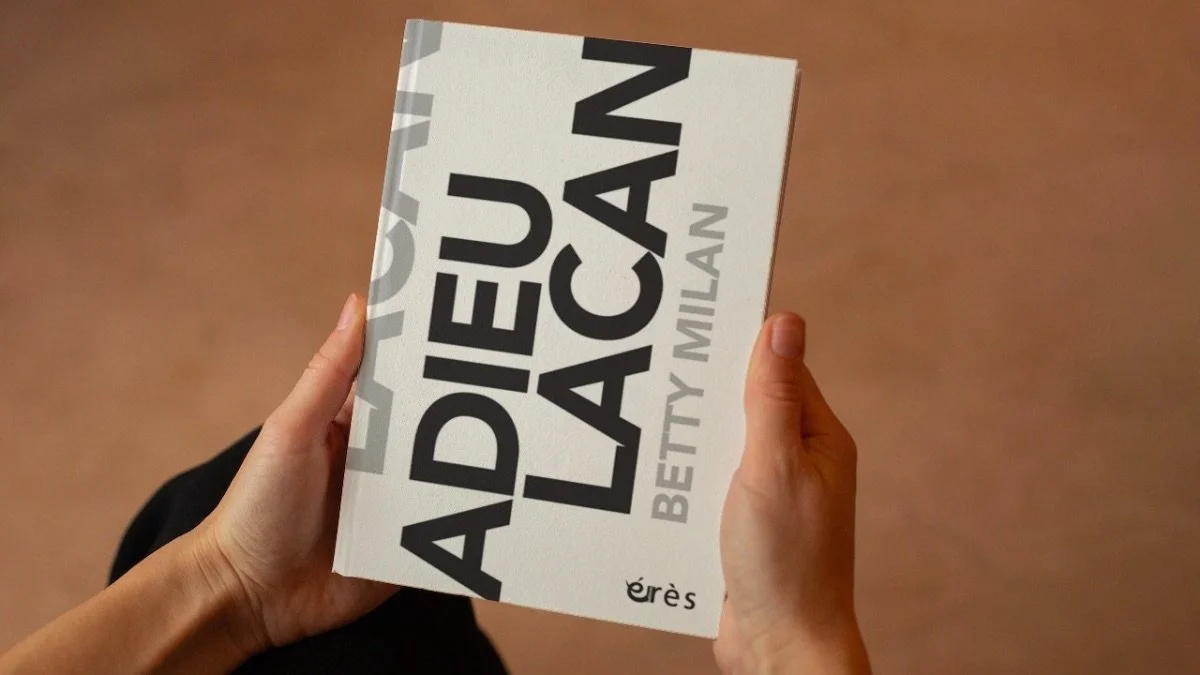
New Book: Milan, Betty.
Betty Milan has published a book with the title “Adieu Lacan,” named after the film I made based on two of her works that are contained in it. I wrote the postface to one of the works in the book. This is the first time my writing has been published in a book. It’s in French. The publisher is Eres. You can purchase the book from the publisher’s website. Please find above an image of the front cover, as well as the text in French and in English below.
Postface (FR)

Postface (EN)
I had been thinking for many years about making a film about psychoanalysis when I was given an opportunity by the Apres Coup Psychoanalytic Association in New York City to direct a staged reading of Betty Milan’s play “Goodbye Doctor” before an audience of its members, mostly clinicians and those working towards becoming clinicians, with the author present. I was immediately struck that her play appealed to this specialized audience while at the same time it had an accessibility on the level of its narrative–the story of a woman who wants to know why her own path to motherhood has become an impossible one–that I thought could help transmit Lacan’s work to a wider audience and also make a unique film. At the same time I was also struck by Betty Milan, the writer and psychoanalyst. Betty encouraged me the entire way, which was very important to me, since I wanted to take certain liberties, revealing that the doctor in question was Lacan and that the imminent death with which he is confronted is his own. I am forever grateful for the trust she placed in me. Of course, black and white films preceded films in color. The 4:3 aspect ratio was basically the standard aspect ratio of silent films. These were two choices I made at the start that had a profound effect on the final result, among them to emphasize temporality and the history of cinema. In “Archéologie du cinéma et mémoire du siecle,” published in 2000, the Iranian writer on film and modernity, Youssef Ishagpour, and the recently deceased French Swiss filmmaker Jean-Luc Godard discuss Godard’s HISTOIRE(S) DU CINEMA. In their discussion they articulate a distinction between cinema as it has been traditionally perceived as “à l’abris du temps” a shelter from time, and how it can be employed today as an “abris du temps” a shelter for time. In other words, in the age of the internet when the complexity of time is very often flattened and effaced by the insistence of the often manipulated and distracting present, cinema through its historicity is a place where temporality can be allowed to re-emerge. And cinema–thought of and used in this way–as an abris du temps is analogous, I would argue, to the practice of psychoanalysis, where the complexity of time can be given a chance to re- emerge. In other words, psychoanalysis and cinema, born at the same time but having lived their lives in regards to the dimension of time mainly estranged, now have the possibility of a changed relation to each other because of this new relation of cinema to time. This emphasis on time was also present in the way we filmed. We shot the film chronologically, in other words, we filmed the scenes in the order in which they appear in the screenplay. Among the few filmmakers who have worked this way consistently are Micheangelo Antonioni and Robert Altman. This was possible with ADIEU LACAN because principle photography took place in a single location. Working this way allows both the actors and the director to make discoveries in the moment of filming and incorporate them into the film as they go along in a way that is analogous to jazz improvisation. Doing things this way allowed me to sense the film’s internal timing and to take risks with the camera that I might otherwise have avoided. For example, keeping the image out of focus for an extended period of time and in the use of a technique for which I took as inspiration the form of the stichomathia in Greek tragedy. This very formal device where actors speak alternating lines of verse became for me the technique of moving the camera in a short rhythmic way between the two main actors in a scene of dialogue later in the film. In regards to this, I want to return to the conversation between Ishagpour and Godard where they observe that cinema can strive to present “the image of reality” or alternatively “the reality of the image.” The latter can be said to take us out of the story. I think in this film at different points I alternate between these two approaches, using the materiality of the image as an analogy for the materiality of speech in analysis. Let me end by referencing two works of media that influenced me in directing ADIEU LACAN. An important point of comparison for me was IN TREATMENT, the US 2008 TV. It was an example of what I wanted to avoid–which is not intended as a criticism of this show but only that I saw immediately that my goal was different. The camera is always parallel to the ground and at eye level as the camera goes from shot to reverse shot. The use of the camera always parallel to the ground in this series represented for me the kind of level and balanced relationship born of mutual respect that is intended to be maintained in therapy between therapist and patient. What I wanted to portray, on the other hand, was the subjective experience of transference in psychoanalysis; I wanted to express with the camera projections of knowledge and power and feelings of ignorance and powerlessness as frequently they arise in transference… for this reason, I asked my film’s cinematographer Valentina Caniglia to watch with me Carl Dreyer’s 1928 film JEANNE D’ARC starring Renee Falconetti. Dreyer’s film formed the foundation for our own approach. Although among my original reasons for wanting to make ADIEU LACAN was to better acquaint a wider audience with the work of Jacques Lacan, today I am also delighted at the thought that it may also serve this purpose for the work of Betty Milan.

ADIEU LACAN Now Streaming Worldwide
Exciting news to share: For those of you who live outside the English-speaking world and have wanted to see ADIEU LACAN, it is now possible. Starting immediately, here on my website you will find the following link to watch the film on Eventive.

David Patrick Kelly as Jacques Lacan
Watch ADIEU LACAN
I am now offering online screenings at group rates of ADIEU LACAN and—for the first time—of my latest film IKONOPHILE Z, which carries the tagline “a light romantic comedy about the extinction of all life on earth.” I recorded a song for the movie with the Romanian composer Silent Strike—who is also responsible for the movie’s wonderful score—which. I performed it in a persona I created under the moniker Death Driver. Tricky, the British record producer and rapper, heard the songit and signed it to his Berlin label False Idols. Consequently, IKONOPHILE Z will not be released until the fall at the earliest—to tie in with the release of the song, and likely an accompanying music video. If you are considering organizing an online advance group screening and would like to see the trailer sooner than that, please email me and I will make it available for you to watch.

Ismenia Mendes as Seriema
We are also in pre-pre-production on V13 (aka VIENNA 1913): while Europe is on the brink of WW1, two young men from different backgrounds, Hugo and Adolf, become friends. One, complaining of an irrational impulse towards a hatred of Jews, will undergo psychoanalysis with Sigmund Freud, while the other, a struggling artist obsessed with vegetarianism and German nationalism, will become Adolf Hitler. V13 is based on the play “Vienna 1913” by the late French psychoanalyst and writer Alain Didier-Weill. More upcoming news about V13 will follow in future issues of this newsletter.

Rendre le populaire populaire à nouveau
Richard Hamon a réalisé deux films documentaires qui devraient être particulièrement intéressants pour qui a, comme moi, une passion pour la culture américaine: Howard Fast, Histoire d’un Rouge, réalisé en 2004 et Jim Thompson, le Polar Dans la Peau, réalisé en 2011. Malheureusement, aucun de ces deux films n'est disponible aux Etats-Unis, et c'est un manque auquel il faudrait remédier. Dans mon cas particulier, Hamon est le cinéaste avec lequel j’ai réalisé mon premier court-métrage en 16mm, ANIMALS, en 1987. Ce film a marqué mon retour à la réalisation, alors que j'avais 31 ans, après mes premières expériences...
“Par comparaison avec la poésie, c’est la dimension d’équipe, de personnes travaillant ensembles, qui m’a attiré vers le cinéma…”
en super 8 que j'avais commencé à utiliser avant même mon adolescence. Dans l'entretien, Richard et moi réfléchissons à nos approches respectives du métier de cinéaste, à nos débuts dans le 7° Art. Richard Hamon poursuit sa pensée en mentionnant la Commune de Paris en 1871, pendant laquelle selon lui, la notion de « populaire » a émergé de manière dynamique et active. Je contraste cette pensée avec le fait que de nos jours, un film appelé “populaire” est un film reçu par un public international dès sa semaine de sortie – ce qui n'est pas habituellement pris pour le signe de son alliance avec l’anticapitalisme des communard(es), mais avec le capitalisme contemporain.
Je pense que ce contraste entre ces différentes significations du mot populaire, met en avant une juxtaposition importante de notre époque; lorsque beaucoup se sentent appelé à faire une révolution dans le but de contrer la destruction rapide et entropique de la planète, dont la cause est diversement attribuée à l'activité humaine ou au capitalisme. Que veut dire « révolutionnaire » à présent, comment cela est-il relié à la commune de Paris et à la signification de « populaire » aujourd’hui? Le sémioticien français Roland Barthes, avec qui Richard Hamon a étudié, a établi une distinction entre les textes écrits et les textes lus. Les textes lus sont ceux que nous consommons sans être conscients de l’acte d’auteur sous-entendu dans le texte ; par exemple lorsque nous lisons un article sur ce qui se passe en Ukraine aujourd'hui, sans prendre la peine de nous demander comment l'article a été écrit, et par qui. A l’inverse, pour illustrer le concept du texte écrit, nous pouvons prendre comme exemple « Finnegans Wake » de James Joyce. À moins d'être engagé dans la lecture du roman de Joyce, travaillant à y trouver un sens, et bien qu'il ne subsiste que des mots impénétrables en surface. Hollywood a été maître des textes lus, de tours en montagne russe pendant lesquels nous sommes censés être passifs, sans réfléchir, en nous contentant seulement de consommer le « texte ».
J’ai été jadis dans un comité d’une grande institution culturelle, avec pour tâche de choisir de nouveaux sièges pour une série de salles de projection à construire. Cela variait entre des fauteuils que nous pouvions complètement allonger – ce qui serait génial pour une perfusion -- et des sièges qui obligent les spectateurs à rester assis bien droits, comme le choisissent les gens qui ressentent le besoin d’utiliser leurs esprits de façon active à propos de problématiques sérieuses. Le philosophe et théoricien français Guy Debord soutenait qu’être spectateur était devenu la base de la société de consommation. Récemment, le théoricien français de la démocratie et de l’esthétique, Jacques Rancière, a questionné cette opposition dans son livre Le spectateur émancipé ; trouvant que, d’un côté cet engagement actif persiste dans l’audience, et de l'autre, il y a de nos jours beaucoup de formes de passivité qui sont dissimulées en tant qu’activisme. À propos de ce dernier, l’écrivain slovène Renata Salecl a argumenté dans son livre La tyrannie du choix, que dans nos sociétés modernes d’aujourd’hui, nous sommes devenus tellement préoccupés par la nécessité de faire des choix personnels – même au sens éthique pour l’environnement, le sexisme, le racisme – que nous perdons de vue la possibilité d’agir ensemble et de faire des choix collectifs au niveau institutionnel ou économique, ce qui serait beaucoup plus efficace pour effectuer de réels changements notamment dans ces domaines. Autrement dit, nous sommes sollicités afin d'agir en privé, individuellement, comme si cela était une nouvelle façon de conserver notre ignorance sur notre passivité collective et comment nous pourrions adresser le problème si nous n’étions pas si occupés par nos choix individuels. Bernard Stiegler, le grand philosophe français de la technologie, qui est mort juste avant le début de la pandémie, avait écrit sur la méthode anthropique de l’anthropocène, et le besoin de combattre ce dernier avec ce qu’il a appelé « néguentropie », ou « entropie négative » -- la capacité des êtres vivants, en particulier des humains, de contrer la tendance de désintégration de la matière. D’après Stiegler, nous devons, non pas rejeter la technologie, mais changer notre rapport à celle-ci. Le cinéma, comme Walter Benjamin l’a écrit dans L’œuvre d’Art à l’époque de sa reproduction technologique est une technologie qui marque un changement d'époque pour l'avènement de la modernité à la fin du XIXe siècle.
J'ai projeté mon film ADIEU LACAN en ligne pour les groupes qui ont demandé à voir le film. Dans la plupart des cas, je m'engage également dans une discussion avec chacun de ces groupes sur le film. La plupart de ces groupes sont des groupes préexistants organisés autour de la psychanalyse, le plus souvent lacanienne. Nos discussions ont été très stimulantes, en partie parce qu’elles rompent avec le chemin néguentropique que Jean-Luc Godard avait prophétisé pour le cinema. D’après Godard, nous étions jadis dans le monde du cinéma imaginé par les frères Lumières, c’est-à-dire, assis avec des inconnus dans une salle dans le noir, regardant ensemble le même écran et puis nous pouvions nous assoir dans un café pour parler du film. Alors que maintenant, nous sommes passés à l’expérience du « peepshow » imaginé par Thomas Edison comme le cinéma du futur. Les projections en ligne d’ADIEU LACAN ont été pour moi une prise de conscience d’une troisième possibilité de néguentropie. Un soir je discute de mon film en Visio avec un groupe qui se trouve au Mexique, et le soir d’après avec un groupe qui se trouve en Écosse., en Californie, au Brésil, etc. La technologie n’a pas seulement agit en fragmentant le public, mais en créant de nouvelles formes de collectivité qui pourraient servir de pont entre ce que le terme « populaire » voulait dire pour les communards de Paris en 1871 et ce que le terme signifie aujourd’hui.

Feminist Art Now: On The Work of Alisha Trimble
The work on the wall behind me, entitled Devour/Goya, is by Carolee Schneemann. The NY Times critic Holland Carter, in his 2019 obituary for Schneemann, who died at the age of 79, wrote that she was “a feminist visionary and one of the most influential artists of the late 20th century.”

Carolee Schneemann, Devour/Goya, 2006
In the same obituary Carter recalls that in 1999 Carolee Schneemann wrote to the MacArthur Foundation: “I am not the only woman artist with a distinguished history who has no way to sustain her work, nor provide for her future. I’m enclosing a bibliography as well as an exhibition and lecture sheet to clarify this extremely paradoxical history, the punishing facts of this mythic ‘career.’ ”
My rhetorical question to Alisha Trimble is, has this changed? Is the career of a woman artist in the United States any easier today than it was when Carolee Schneemann wrote this at the end of the 20th Century?
The critic and curator Lucy Lippard once said that feminist art rejects authoritarian certainties for an art of “openness, ambiguity, reciprocity.”
Openness, ambiguity and reciprocity are qualities that aptly express the strengths of Alisha Trimble’s work and I say this from the experience of incorporating some of her work into the video we made working together remotely during the first months of confinement necessitated by Covid 19 .
We both make cuts. It is said that in early Hollywood the reason that women were frequently film editors is because to the male hierarchy the editing table resembled a sewing machine and hence the work of an editor was considered women’s work. Making cuts inspired by those made by Trimble and spending time rearranging these and layering them was how I spent most of my time working on this video.

The apparently unmade bed behind Alisha Trimble while she dances for Prince Prospero resonates with many of us right now, who were until recently stuck at home--or still are. It emphasizes the domestic sphere that feminist art has persistently reconfigured and politicized, which at this time is a gesture whose importance has become even more obviously universal. Our confinement has been spatial but has made many of us more aware of our ideological confinement--as the scaffolding of our everyday lives has broken down—and we have been confronted with the persistent violence against black lives and also the violence against women and girls that has become even more frequent during this period. As we address the need to transform society, I predict a new wave of important works by feminist artists and a broader audience for this work.
One of the things I remember about meeting Alisha was her saying she lived in Lakeville, Connecticut, so I thought perhaps I could be helpful since I had once attended a private boys’ school in this area that had subsequently gone co-ed and so I felt might be interested in a local artist and dancer who is also a teacher of dance … so far that hasn’t panned out--but I began to know her work and we hatched this plan as Covid was breaking out to collaborate over Zoom.

The Masque of The Red Death The Zine, Alisha Trimble
Trimble has created a zine version of The Masque in connection to the video that includes a coloring book section. The eroticism in one of these drawings recalls the well-known illustrations made by the Irish artist Harry Clarke for an edition of Poe’s story published in 1919, during the 1918 flu epidemic almost exactly one hundred years ago. The presumption of immunity that erroneously circulates in the prince’s party in Poe’s story could be compared easily to the Trump White House but instead of the eroticism of Poe’s story the current ruling party produces from its denial an orgy of violence aimed at black lives, at undocumented migrants and at women.
Incipient fascism is not surprisingly already evident in the reaction online to this work of video art that Trimble and I made. For example, I deleted a post by a man who connected her dancing to mental illness and whose Facebook profile shows him cradling a military rifle with a long range scope. In recent weeks I listened to the Brazilian psychoanalyst Betty Fuks give a talk on her country’s president Bolsanaro and his use of the language of the Third Reich. During her talk she made mention of the 1989 documentary film by Peter Cohen entitled « The Architecture of Doom. » The film is about the aesthetic project of the Nazis and the centrality of this aesthetic project to their proclaimed goals. And now, similarly, in our global “society of the spectacle”--to use the term of Guy Debord to describe the overwhelming presence of still and moving images everywhere around us--there is an aesthetic project that is central to the nascent fascism of politicians like Bolsanaro, Trump and Putin. The populist curators of this aesthetic project of contemporary fascism express fear and disgust—a jouissance of ignorance, denial and aggression—towards any kind of ambiguity or complexity of meaning that offends a demand for transparency and instead elicits interpretation. The terms of disparagement recall frequently the Nazi exhibitions of modernist art that they labeled “degenerate,” comparing it to manifestations of mental illness.
One senses Trimble’s work is deeply personal and somatic, given the place of dance, fashion design and even in its foregrounding of the materiality of the signifier--as, for example, in her embroidered works-- but it is not hyper-personalized or reduced to the first person pronoun but instead lends itself to collective thinking. I hope our video stands as a testament to this dimension of her work.

L’Art Féministe Maintenant: À propos du travail d'Alisha Trimble
L'oeuvre sur le mur derrière moi intitulée «Devour / Goya» est de Carolee Schneemann. Le critique du NY Times, Holland Carter, dans sa nécrologie de 2019 pour Schneemann, décédée à l'âge de 79 ans, a écrit qu'elle était «une visionnaire féministe et l'une des artistes les plus influentes de la fin du XXe siècle».
Carolee Schneemann, Devour/Goya, 2006
Dans la même notice nécrologique, Carter rappelle qu'en 1999, Carolee Schneemann écrivait à la Fondation MacArthur: "Je ne suis pas la seule femme artiste avec une histoire distinguée qui n'a aucun moyen de soutenir son travail, ni de prévoir son avenir. Je joins une bibliographie ainsi qu’une fiche d’exposition et de conférence pour clarifier cette histoire extrêmement paradoxale, les faits pénibles de cette mythique «carrière». »
Ma question rhétorique à Alisha Trimble est la suivante: cela a-t-il changé? La carrière d'une femme artiste aux Etats-Unis est-elle plus facile aujourd'hui qu'elle ne l'était lorsque Carolee Schneemann écrivait cela à la fin du 20e siècle?
La critique et conservatrice Lucy Lippard a dit un jour que l'art féministe rejette certitudes autoritaires pour un art «d'ouverture, d'ambiguïté, de réciprocité».
L'ouverture, l'ambiguïté et la réciprocité sont des qualités qui expriment bien les forces du travail d'Alisha Trimble et je le dis à partir de l'expérience d'incorporer une partie de son travail dans la vidéo que nous avons réalisée en travaillant ensemble à distance pendant les premiers mois de confinement nécessités par Covid 19.
Nous faisons tous les deux des coupes. On dit qu’au début d’Hollywood, la raison pour laquelle les femmes étaient souvent monteuses de films est que, pour la hiérarchie masculine, la table de montage ressemblait à une machine à coudre et que, par conséquent, le travail d’un monteur était considéré comme un travail de femme. Faire des coupes inspirées de celles faites par Trimble et passer du temps à les réorganiser et à les superposer était la façon dont j'ai passé la plupart de mon temps à travailler sur cette vidéo.
Le lit apparemment défait derrière Alisha Trimble alors qu'elle danse pour le prince Prospero résonne avec beaucoup d'entre nous en ce moment, qui étaient jusqu'à récemment coincés à la maison - ou le sont toujours. Il met l'accent sur la sphère domestique que l'art féministe a constamment reconfigurée et politisée, ce qui en ce moment est un geste dont l'importance est devenue encore plus manifestement universelle. Notre confinement a été spatial mais a rendu beaucoup d'entre nous plus conscients de notre confinement idéologique - alors que l'échafaudage de notre vie quotidienne s'est effondré - et nous avons été confrontés à la violence persistante contre les vies noires et aussi à la violence contre les femmes et les filles qui est devenu encore plus fréquent pendant cette période. Alors que nous abordons le besoin de transformer la société, je prédis une nouvelle vague d'œuvres importantes d'artistes féministes et un public plus large pour ce travail.
L'une des choses dont je me souviens de sa rencontre avec Alisha, c'est qu'elle a dit qu'elle vivait à Lakeville, dans le Connecticut, alors j'ai pensé que je pourrais peut-être être utile car j'avais déjà fréquenté une école privée pour garçons dans cette région qui était par la suite devenue mixte ressenti pourrait être intéressé par une artiste et danseuse locale qui est également professeur de danse ... jusqu'à présent, cela n'a pas abouti - mais j'ai commencé à connaître son travail et nous avons élaboré ce plan alors que Covid commençait à collaborer par Zoom.
The Masque of The Red Death The Zine, Alisha Trimble
Trimble a créé une version zine de The Masque en relation avec la vidéo qui comprend une section livre de coloriage. L’érotisme de l’un de ces dessins rappelle les illustrations bien connues de l’artiste irlandais Harry Clarke pour une édition de l’histoire de Poe publiée en 1919, lors de l’épidémie de grippe de 1918 il y a presque exactement cent ans. La présomption d'immunité qui circule à tort dans le parti du prince dans l'histoire de Poe pourrait être comparée facilement à la Maison Blanche de Trump, mais au lieu de l'érotisme de l'histoire de Poe, le parti au pouvoir actuel produit à partir de son déni une orgie de violence visant des vies noires, à des sans-papiers. migrants et chez les femmes.
Le fascisme naissant n'est pas surprenant dans la réaction en ligne à cette œuvre d'art vidéo que Trimble et moi avons réalisée. Par exemple, j'ai supprimé un message d'un homme qui associait sa danse à la maladie mentale et dont le profil Facebook le montrait en train de bercer un fusil militaire à longue portée. Ces dernières semaines, j’ai écouté la psychanalyste brésilienne Betty Fuks parler du président de son pays Bolsanaro et de son utilisation de la langue du Troisième Reich. Au cours de son discours, elle a évoqué le film documentaire de 1989 de Peter Cohen intitulé «The Architecture of Doom». »Le film parle du projet esthétique des nazis et de la centralité de ce projet esthétique par rapport à leurs objectifs proclamés. Et maintenant, de même, dans notre «société du spectacle» globale - pour utiliser le terme de Guy Debord pour décrire la présence écrasante d'images fixes et en mouvement partout autour de nous - il y a un projet esthétique qui est au centre du fascisme de des politiciens comme Bolsanaro, Trump et Poutine. Les conservateurs populistes de ce projet esthétique du fascisme contemporain expriment la peur et le dégoût - une jouissance de l'ignorance, du déni et de l'agression - envers toute sorte d'ambiguïté ou de complexité de sens qui heurte une exigence de transparence et suscite au contraire une interprétation. Les termes de dénigrement rappellent fréquemment les expositions nazies d'art moderniste qu'ils qualifiaient de «dégénéré», en le comparant aux manifestations de la maladie mentale.
On sent que le travail de Trimble est profondément personnel et somatique, compte tenu de la place de la danse, du stylisme et même de sa mise en avant de la matérialité du signifiant - comme, par exemple, dans ses œuvres brodées - mais il n'est pas hyper-personnalisé ou réduit au pronom de la première personne mais se prête plutôt à la réflexion collective. J'espère que notre vidéo témoigne de cette dimension de son travail.

