Now Playing: Trailer

2021

Narrative

English

92 min

Adieu Lacan

The passion for ignorance is the worst passion of all.

Now Playing: Trailer

2021

Narrative

English

92 min

Adieu Lacan

The passion for ignorance is the worst passion of all.

Synopsis

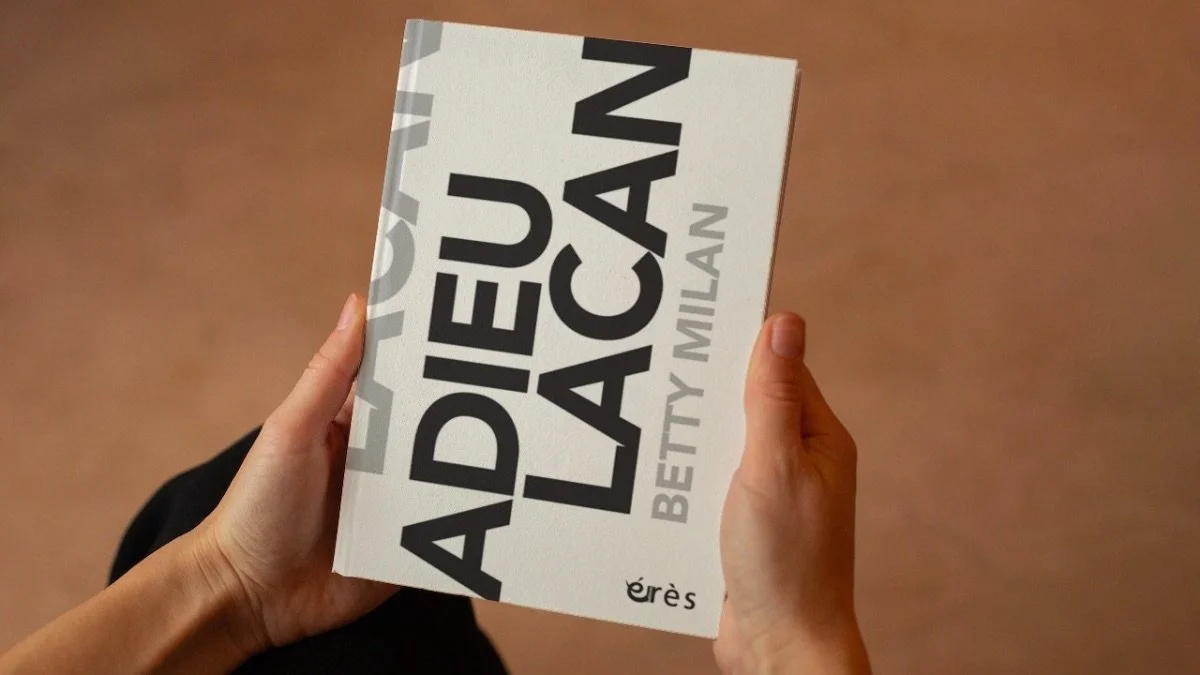
“With realistic acumen and artistic expertise, ADIEU LACAN portrays the struggles of a young woman, Seriema, who is trying to understand why her path to motherhood has reached an unbearable impasse. Following two miscarriages and the possible loss of her marriage, Seriema travels to Paris in 1972 to undergo psychoanalytic treatment with the maverick French analyst, Jacques Lacan. Her analysis is an attempt to help her to disentangle the enigma of her question: why has motherhood become a seeming impossibility?Inspired by the story of Betty Milan, a Brazilian psychoanalyst and writer, it follows closely her own actual psychoanalysis with Lacan. Based on her play “Goodbye, Doctor” and her novel “Lacan’s Parrot,” in which Milan recounts her analytic work, ADIEU LACAN offers an insightful and accurate account of an actual psychoanalytic cure.”

- Mavis Himes, Psychoanalyst and author of "The Power of Names."

Director's Statement

Jacques Lacan (1901-1981) was a controversial French psychoanalyst who today is widely recognized as one of the most important intellectuals of the 20th century. His work is known for its difficulty but Betty Milan’s writing--on which the film is based--makes him palpably human in a way that inspired me to make ADIEU LACAN.

I was fortunate to find in David Patrick Kelly an actor whose exceptional performance in the role of Lacan profoundly illuminates the psychoanalyst's passion for his work. The performance of Ismenia Mendes as Seriema, the young woman who chooses to do an analysis, forms the perfect counterweight to Lacan as played by David Patrick Kelly: her youth and adherence to the truth of her own experience makes their encounter a riveting one.

Cinematographer Valentina Caniglia and I were particularly inspired by Carl Theodor Dreyer’s film THE PASSION OF JOAN OF ARC. Dreyer’s classic silent film uses extreme angles to portray the radical asymmetry between the position of Joan of Arc and that of her accusers.

We used this same dynamic to represent the role of subjective transference that drives forward the analysis. I was drawn to Dreyer’s 1928 film after watching the drama series IN TREATMENT, starring Gabriel Byrne, which served as an example of what I wanted to avoid. This is not a criticism of the drama series but I was immediately aware how their use of the camera, which worked so well for telling their story of psychotherapy, was completely wrong for telling the story of psychoanalysis.

IN TREATMENT is constantly shot with a camera parallel to the ground at eye-level; the intricate movement of its coverage--largely confined to one room--is one of the principle accomplishments of the show. However, the level camera reflects a theoretical precept: we are watching a therapist intent on remaining in a level and balanced relationship with his client in an exchange in which both sides remain equals.

In psychoanalysis--at least in the work of Freud and Lacan--the analyst is in the position of the cause of desire for the person doing an analysis--a completely asymmetrical relationship, as anyone who has had parents or a caregiver or been in love can attest.

This approach in psychoanalysis is due to the theorization of transference, I felt it was crucial that I get this right: the high, low and often Dutch angles of Dreyer’s film were the inspiration for the solution that Cinematographer Caniglia and I worked out. 
In the months leading up to filming, we met repeatedly in order to formulate, review, throw out and totally revise our approach to filming each scene. I knew that--at the moment of filming--we could make decisions about the camera that, paradoxically, would be completely spontaneous and based on the actors' work because of our preparation.

I feel extremely fortunate and grateful for the work of all of the members of our small cast and crew. With a very limited budget and amount of time their dedication made the film possible and brought this important story to life.

Gallery

Reviews

Richard Ledes adds his camera to the interesting dramaturgy of the work, the close-ups, the detailed shots and the ellipsis behind the closing doors, achieving an optimal tempo and appealing to an intelligent spectator.

— Debora Levit, Miembro de Horizontes del Psicoanálisis, Autora de la novela Duelo de Fantasmas | Argentina

The film manages to demystify an analysis carried out by Lacan. It teaches psychoanalysts without falling into banality. Thank you for making it and sharing it with psychoanalysts. Thank you very much.

— Myriam Esther Cotrino, Psicoanalista, ANALÍTICA Asociación de Psicoanálisis de Bogotá | Colombia

The film is a gem. It shows the subjects who act in the analytic scene in the space created by what they say without knowing it. A ray of light in the night of our time.

— Paula Hochman, psychanalyste, Topologie en extension | Buenos Aires, Argentina

I thought it was a fantastic movie with great performances... I want to share it with other colleagues.

— Myriam Bisceglia | Argentina

A great act of filmmaking, thank you—a perfect, precise and concise expression of the Lacanian theory and practice of psychoanalysis.

— Cristian Andrei Tătaru | Romania

I’d like to comment on the delicacy, the sensibility, the feeling and the intensity that the director and actors have expressed with this movie. I loved the film! Congratulations! I am grateful that I had the opportunity to watch it.

— Eliane Carvalho Dalmácio, Analista, Corpo Freudiano Escola de Psicanálise seção | Rio de Janeiro

Sensational movie! The direction, the actors’ performances and the script are impeccable. The film is timely and a milestone for psychoanalysis and for the current psychoanalytic movement. The film humanizes its subject and promotes open dialogue—It is essential!

— Graziela Gabrielli da Cruz | Campinas, São Paulo, Brazil

This important, beautiful film, accomplishing the impossible—artfully portraying a successful psychoanalytic cure.

— Patricia Gherovici, author of Transgender Psychoanalysis

Freud thought a film could never transmit what happens in an analysis...but I am quite sure if Freud saw this film he would fall in love with it... at last psychoanalysis has reached the cinema.

— Marco Antonio Cortinho Jorge, Corpo Freudiano do Rio de Janeiro

I have just watched the movie Adieu Lacan. It is awesome and evokes admiration through many aspects - great actors, characters as well as the truly presented analysand-analyst bond and of course the image of Lacan. I am impressed by the contrast between the emergence of Seriema’s desire and the last Lacan’s years. Thank you for such an unforgettable experience!

— Yordana Hristozova | Bulgaria

...among many lovely qualities, a staging of quietude and devotion vital for psychoanalysis that allows the subject of desire to shift from being held in abeyance to the assumption of its responsability.

— Penny Georgiou | London, England

...for those of us who are studying to be Freudian-Lacanian analysts, it is extremely illuminating.

— Trudy Mercadal Ph.D. | Guatemala City, Guatemala

The movie is really great, it exceeded my expectations, knowing how hard it is to capture an analysis on film, yet it was done marvelously. Both main actors were amazing. I hope this movie gains the recognition it deserves. Also I hope to see more films like this in the future.

— Ramiro Marcos, psychologist and psychoanalyst | Buenos Aires, Argentina

Epistemic rigor; excellent performances; illuminating details; good pacing in the scenes, in regard to the words, silences, faces and cuts. I really liked it—congratulations and thank you!

— Anonymous | Argentina

A film notable for the novelty of the intimate staging of the analysis — revealing a third stage, that of the thoughts of the analyst, Lacan, and of the thoughts and gestures of the analysand, Seriema. Outstanding actors and direction — among many other qualities!!! Congratulations!!! An excellent movie.

— Anonymous | Brazil

Beautiful production. Very sensitive and full of great insights for psychoanalysts or not. I think I shall see it another 2 or 3 times to get the whole thing. Highly recommended ! thank you Richard Ledes and Betty Milan :)

— Fernanda Pulido Reis, Centro Português de Psicanálise (CPP-ALI)

...portrays the passion for the clinic not only of Lacan, but of the director and the actors. Do not miss it!!

— Gabriela Ocampo, member of ESLEP | Mexico

A gem of a film; in my opinion a true masterpiece that so gently, subtly and accurately portrays an analytic treatment, and more specifically a treatment that proceeds along the lines of a Lacanian cure.

— Mavis Himes, Psychoanalyst and author of The Power of Names

I thanked Dr. Himes and Dr. Ledes for giving us access to the wonderful film and opening up a way for us to enter and enlarge our fantasies of the Lacanian clinic, in an imaginative and touching way. Among its many elements the film, for me, captures the complexity and brutality identifications and the difficulties of giving birth to the self.

— Dr. Oren Gozlan, Clinical Psychologist & Psychoanalyst, Toronto Psychoanalytic Society | Canada

What seems admirable and unexpected to me is that it is possible to show the truth of Lacanian psychoanalysis on film. In addition to the quality of the cinematography, the clinic that Lacan dared to affirm is alive and questioning ours. I found Lacan’s character excellent and am grateful for the generosity with which Betty Milan lets herself be heard.

— Maria Belo, Centro Portugues de Psicanalise | Lisbon, Portugal

The film astonished us by working on the untranslatable.

— Maria Teresita Pullol, Letraducciones - Espacio Editorial en Psicoanálisis | Argentina

Thank you very much for giving us this very good and important film—really very complex to make—and with the depth it achieves.

— Germán Gárgano | Buenos Aires, Argentina

The closest thing to having met Lacan himself. From now on, a film which can’t be missed for whoever undergoes psychoanalytic training!

— Diego Zanelli

I liked very much the film. A wonderful job of directing and editing. The artists were phenomenal and well directed. I like the chocie of black and white and the directing. The film shows Lacan as anti-dogmatic.

— Renata Udler Cromberg, Psychoanalist | Brazil

First of all, I loved Adieu Lacan so much! I watched it twice and I knew very little about Lacan to start with. The direction, cinematography, and acting where stellar...

— Natalka Celuch | Canada

The film is born immediately as a classic and from now on it will be absolutely necessary for people in training to see the film.

— Mario Eduardo Costa Pereira, Corpo Freudiano do Rio de Janeiro

A very meaningful film. Great representation of an analysis brought to the screen.

— Eliana Rodrigues Pereira Mendes | Brazil

Richard Ledes adds his camera to the interesting dramaturgy of the work, the close-ups, the detailed shots and the ellipsis behind the closing doors, achieving an optimal tempo and appealing to an intelligent spectator.

— Debora Levit, Miembro de Horizontes del Psicoanálisis, Autora de la novela Duelo de Fantasmas | Argentina

I thanked Dr. Himes and Dr. Ledes for giving us access to the wonderful film and opening up a way for us to enter and enlarge our fantasies of the Lacanian clinic, in an imaginative and touching way. Among its many elements the film, for me, captures the complexity and brutality identifications and the difficulties of giving birth to the self.

— Dr. Oren Gozlan, Clinical Psychologist & Psychoanalyst, Toronto Psychoanalytic Society | Canada

...among many lovely qualities, a staging of quietude and devotion vital for psychoanalysis that allows the subject of desire to shift from being held in abeyance to the assumption of its responsability.

— Penny Georgiou | London, England

The film is a gem. It shows the subjects who act in the analytic scene in the space created by what they say without knowing it. A ray of light in the night of our time.

— Paula Hochman, psychanalyste, Topologie en extension | Buenos Aires, Argentina

The film astonished us by working on the untranslatable.

— Maria Teresita Pullol, Letraducciones - Espacio Editorial en Psicoanálisis | Argentina

The movie is really great, it exceeded my expectations, knowing how hard it is to capture an analysis on film, yet it was done marvelously. Both main actors were amazing. I hope this movie gains the recognition it deserves. Also I hope to see more films like this in the future.

— Ramiro Marcos, psychologist and psychoanalyst | Buenos Aires, Argentina

A great act of filmmaking, thank you—a perfect, precise and concise expression of the Lacanian theory and practice of psychoanalysis.

— Cristian Andrei Tătaru | Romania

The closest thing to having met Lacan himself. From now on, a film which can’t be missed for whoever undergoes psychoanalytic training!

— Diego Zanelli

A film notable for the novelty of the intimate staging of the analysis — revealing a third stage, that of the thoughts of the analyst, Lacan, and of the thoughts and gestures of the analysand, Seriema. Outstanding actors and direction — among many other qualities!!! Congratulations!!! An excellent movie.

— Anonymous | Brazil

Sensational movie! The direction, the actors’ performances and the script are impeccable. The film is timely and a milestone for psychoanalysis and for the current psychoanalytic movement. The film humanizes its subject and promotes open dialogue—It is essential!

— Graziela Gabrielli da Cruz | Campinas, São Paulo, Brazil

First of all, I loved Adieu Lacan so much! I watched it twice and I knew very little about Lacan to start with. The direction, cinematography, and acting where stellar...

— Natalka Celuch | Canada

...portrays the passion for the clinic not only of Lacan, but of the director and the actors. Do not miss it!!

— Gabriela Ocampo, member of ESLEP | Mexico

Freud thought a film could never transmit what happens in an analysis...but I am quite sure if Freud saw this film he would fall in love with it... at last psychoanalysis has reached the cinema.

— Marco Antonio Cortinho Jorge, Corpo Freudiano do Rio de Janeiro

A very meaningful film. Great representation of an analysis brought to the screen.

— Eliana Rodrigues Pereira Mendes | Brazil

I have just watched the movie Adieu Lacan. It is awesome and evokes admiration through many aspects - great actors, characters as well as the truly presented analysand-analyst bond and of course the image of Lacan. I am impressed by the contrast between the emergence of Seriema’s desire and the last Lacan’s years. Thank you for such an unforgettable experience!

— Yordana Hristozova | Bulgaria

The film manages to demystify an analysis carried out by Lacan. It teaches psychoanalysts without falling into banality. Thank you for making it and sharing it with psychoanalysts. Thank you very much.

— Myriam Esther Cotrino, Psicoanalista, ANALÍTICA Asociación de Psicoanálisis de Bogotá | Colombia

What seems admirable and unexpected to me is that it is possible to show the truth of Lacanian psychoanalysis on film. In addition to the quality of the cinematography, the clinic that Lacan dared to affirm is alive and questioning ours. I found Lacan’s character excellent and am grateful for the generosity with which Betty Milan lets herself be heard.

— Maria Belo, Centro Portugues de Psicanalise | Lisbon, Portugal

...for those of us who are studying to be Freudian-Lacanian analysts, it is extremely illuminating.

— Trudy Mercadal Ph.D. | Guatemala City, Guatemala

I thought it was a fantastic movie with great performances... I want to share it with other colleagues.

— Myriam Bisceglia | Argentina

Thank you very much for giving us this very good and important film—really very complex to make—and with the depth it achieves.

— Germán Gárgano | Buenos Aires, Argentina

Epistemic rigor; excellent performances; illuminating details; good pacing in the scenes, in regard to the words, silences, faces and cuts. I really liked it—congratulations and thank you!

— Anonymous | Argentina

I’d like to comment on the delicacy, the sensibility, the feeling and the intensity that the director and actors have expressed with this movie. I loved the film! Congratulations! I am grateful that I had the opportunity to watch it.

— Eliane Carvalho Dalmácio, Analista, Corpo Freudiano Escola de Psicanálise seção | Rio de Janeiro

I liked very much the film. A wonderful job of directing and editing. The artists were phenomenal and well directed. I like the chocie of black and white and the directing. The film shows Lacan as anti-dogmatic.

— Renata Udler Cromberg, Psychoanalist | Brazil

Beautiful production. Very sensitive and full of great insights for psychoanalysts or not. I think I shall see it another 2 or 3 times to get the whole thing. Highly recommended ! thank you Richard Ledes and Betty Milan :)

— Fernanda Pulido Reis, Centro Português de Psicanálise (CPP-ALI)

This important, beautiful film, accomplishing the impossible—artfully portraying a successful psychoanalytic cure.

— Patricia Gherovici, author of Transgender Psychoanalysis

The film is born immediately as a classic and from now on it will be absolutely necessary for people in training to see the film.

— Mario Eduardo Costa Pereira, Corpo Freudiano do Rio de Janeiro

A gem of a film; in my opinion a true masterpiece that so gently, subtly and accurately portrays an analytic treatment, and more specifically a treatment that proceeds along the lines of a Lacanian cure.

— Mavis Himes, Psychoanalyst and author of The Power of Names

Richard Ledes adds his camera to the interesting dramaturgy of the work, the close-ups, the detailed shots and the ellipsis behind the closing doors, achieving an optimal tempo and appealing to an intelligent spectator.

— Debora Levit, Miembro de Horizontes del Psicoanálisis, Autora de la novela Duelo de Fantasmas | Argentina

I have just watched the movie Adieu Lacan. It is awesome and evokes admiration through many aspects - great actors, characters as well as the truly presented analysand-analyst bond and of course the image of Lacan. I am impressed by the contrast between the emergence of Seriema’s desire and the last Lacan’s years. Thank you for such an unforgettable experience!

— Yordana Hristozova | Bulgaria

I thanked Dr. Himes and Dr. Ledes for giving us access to the wonderful film and opening up a way for us to enter and enlarge our fantasies of the Lacanian clinic, in an imaginative and touching way. Among its many elements the film, for me, captures the complexity and brutality identifications and the difficulties of giving birth to the self.

— Dr. Oren Gozlan, Clinical Psychologist & Psychoanalyst, Toronto Psychoanalytic Society | Canada

The film manages to demystify an analysis carried out by Lacan. It teaches psychoanalysts without falling into banality. Thank you for making it and sharing it with psychoanalysts. Thank you very much.

— Myriam Esther Cotrino, Psicoanalista, ANALÍTICA Asociación de Psicoanálisis de Bogotá | Colombia

...among many lovely qualities, a staging of quietude and devotion vital for psychoanalysis that allows the subject of desire to shift from being held in abeyance to the assumption of its responsability.

— Penny Georgiou | London, England

What seems admirable and unexpected to me is that it is possible to show the truth of Lacanian psychoanalysis on film. In addition to the quality of the cinematography, the clinic that Lacan dared to affirm is alive and questioning ours. I found Lacan’s character excellent and am grateful for the generosity with which Betty Milan lets herself be heard.

— Maria Belo, Centro Portugues de Psicanalise | Lisbon, Portugal

The film is a gem. It shows the subjects who act in the analytic scene in the space created by what they say without knowing it. A ray of light in the night of our time.

— Paula Hochman, psychanalyste, Topologie en extension | Buenos Aires, Argentina

...for those of us who are studying to be Freudian-Lacanian analysts, it is extremely illuminating.

— Trudy Mercadal Ph.D. | Guatemala City, Guatemala

The film astonished us by working on the untranslatable.

— Maria Teresita Pullol, Letraducciones - Espacio Editorial en Psicoanálisis | Argentina

I thought it was a fantastic movie with great performances... I want to share it with other colleagues.

— Myriam Bisceglia | Argentina

The movie is really great, it exceeded my expectations, knowing how hard it is to capture an analysis on film, yet it was done marvelously. Both main actors were amazing. I hope this movie gains the recognition it deserves. Also I hope to see more films like this in the future.

— Ramiro Marcos, psychologist and psychoanalyst | Buenos Aires, Argentina

Thank you very much for giving us this very good and important film—really very complex to make—and with the depth it achieves.

— Germán Gárgano | Buenos Aires, Argentina

A great act of filmmaking, thank you—a perfect, precise and concise expression of the Lacanian theory and practice of psychoanalysis.

— Cristian Andrei Tătaru | Romania

Epistemic rigor; excellent performances; illuminating details; good pacing in the scenes, in regard to the words, silences, faces and cuts. I really liked it—congratulations and thank you!

— Anonymous | Argentina

The closest thing to having met Lacan himself. From now on, a film which can’t be missed for whoever undergoes psychoanalytic training!

— Diego Zanelli

I’d like to comment on the delicacy, the sensibility, the feeling and the intensity that the director and actors have expressed with this movie. I loved the film! Congratulations! I am grateful that I had the opportunity to watch it.

— Eliane Carvalho Dalmácio, Analista, Corpo Freudiano Escola de Psicanálise seção | Rio de Janeiro

A film notable for the novelty of the intimate staging of the analysis — revealing a third stage, that of the thoughts of the analyst, Lacan, and of the thoughts and gestures of the analysand, Seriema. Outstanding actors and direction — among many other qualities!!! Congratulations!!! An excellent movie.

— Anonymous | Brazil

I liked very much the film. A wonderful job of directing and editing. The artists were phenomenal and well directed. I like the chocie of black and white and the directing. The film shows Lacan as anti-dogmatic.

— Renata Udler Cromberg, Psychoanalist | Brazil

Sensational movie! The direction, the actors’ performances and the script are impeccable. The film is timely and a milestone for psychoanalysis and for the current psychoanalytic movement. The film humanizes its subject and promotes open dialogue—It is essential!

— Graziela Gabrielli da Cruz | Campinas, São Paulo, Brazil

Beautiful production. Very sensitive and full of great insights for psychoanalysts or not. I think I shall see it another 2 or 3 times to get the whole thing. Highly recommended ! thank you Richard Ledes and Betty Milan :)

— Fernanda Pulido Reis, Centro Português de Psicanálise (CPP-ALI)

First of all, I loved Adieu Lacan so much! I watched it twice and I knew very little about Lacan to start with. The direction, cinematography, and acting where stellar...

— Natalka Celuch | Canada

This important, beautiful film, accomplishing the impossible—artfully portraying a successful psychoanalytic cure.

— Patricia Gherovici, author of Transgender Psychoanalysis

...portrays the passion for the clinic not only of Lacan, but of the director and the actors. Do not miss it!!

— Gabriela Ocampo, member of ESLEP | Mexico

The film is born immediately as a classic and from now on it will be absolutely necessary for people in training to see the film.

— Mario Eduardo Costa Pereira, Corpo Freudiano do Rio de Janeiro

Freud thought a film could never transmit what happens in an analysis...but I am quite sure if Freud saw this film he would fall in love with it... at last psychoanalysis has reached the cinema.

— Marco Antonio Cortinho Jorge, Corpo Freudiano do Rio de Janeiro

A gem of a film; in my opinion a true masterpiece that so gently, subtly and accurately portrays an analytic treatment, and more specifically a treatment that proceeds along the lines of a Lacanian cure.

— Mavis Himes, Psychoanalyst and author of The Power of Names

A very meaningful film. Great representation of an analysis brought to the screen.

— Eliana Rodrigues Pereira Mendes | Brazil